
Urdu Fruit Names Worksheets for Kids (پھلوں کے نام)
Age Group: 3–6 years No. of Pages: 77 Format: Printable PDF
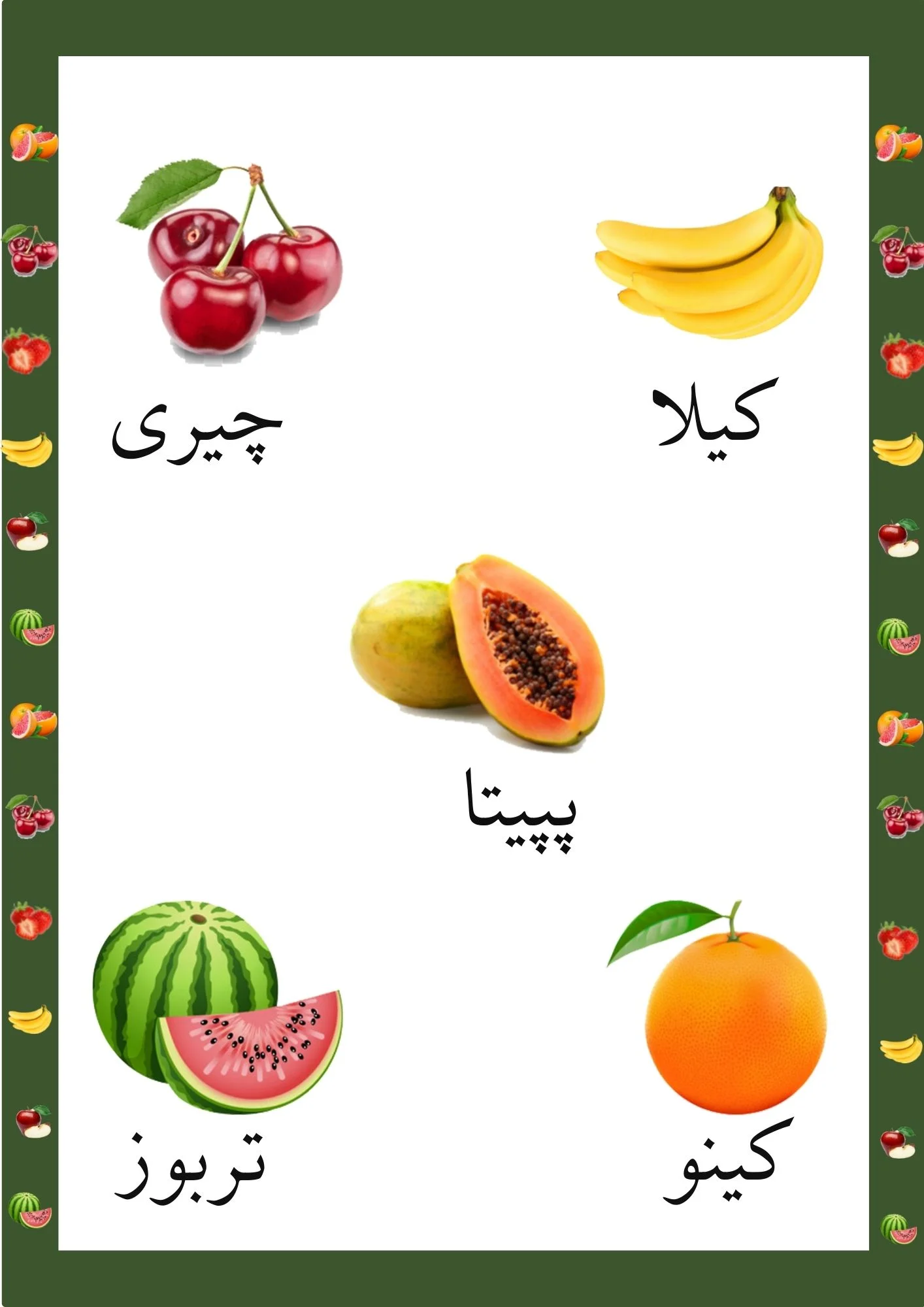
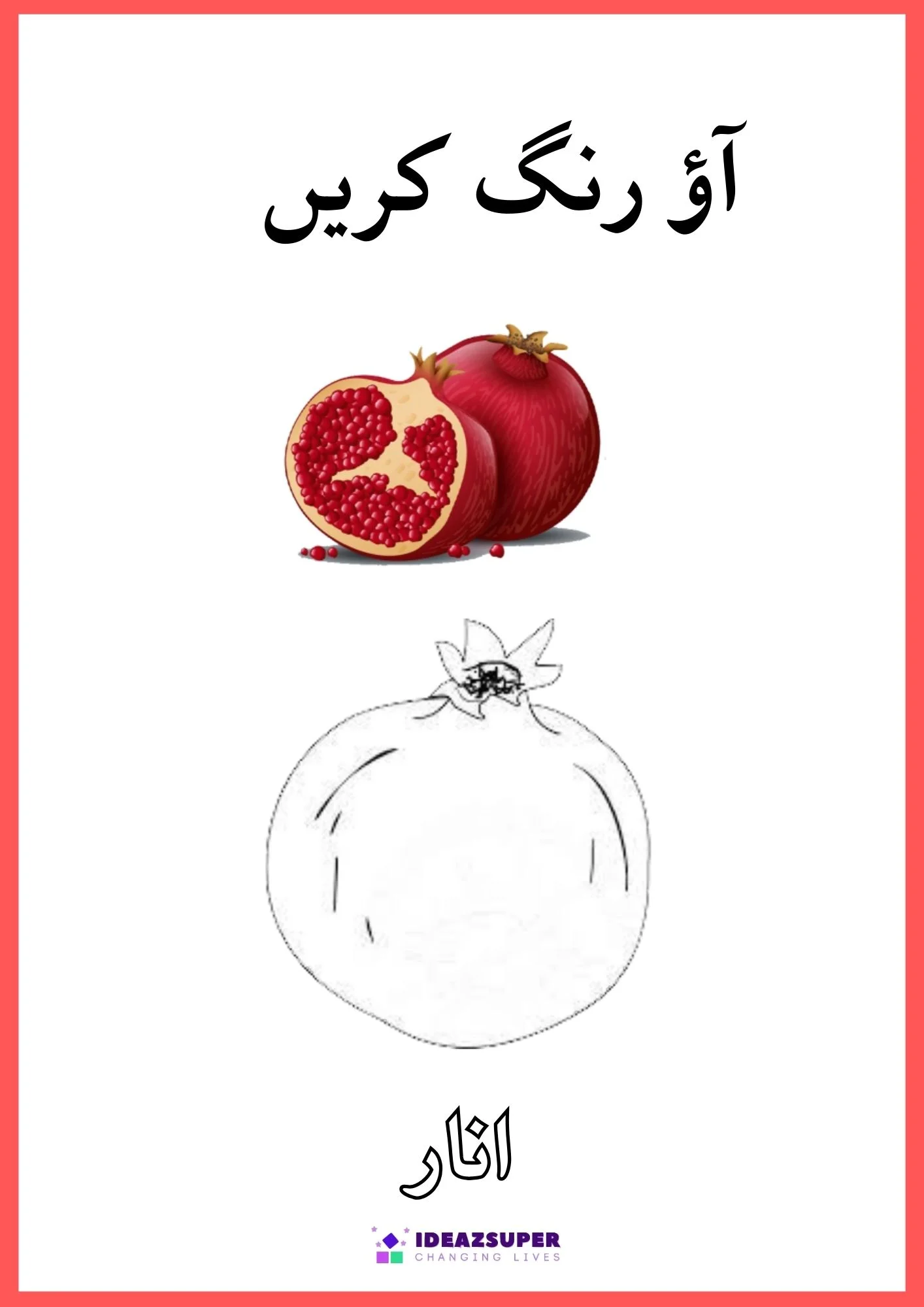
These Urdu Fruit Names worksheets (پھلوں کے نام) teach children aged 3–6 the Urdu names of everyday fruits such as کیلا، سیب، کینو، انار، تربوز and پپیتا. The 77-page printable workbook is the largest set in the series, with name cards, matching, colouring and early reading activities.
Get This Worksheet
About This Worksheet
Fruits are part of every child’s day, which makes them a great theme for Urdu vocabulary. Children can point to real fruit at home or in the market and say its Urdu name, so the words move quickly from the page into everyday speech.
Alongside name cards and colouring, the workbook includes two thinking puzzles that suit fruit especially well: matching each fruit to its cut half and matching it to its shadow. Later pages build reading with first letters, ticking the correct name and writing numbers next to pictures.
Activities in This Workbook
- Learn the fruit names: picture cards with each fruit’s Urdu name
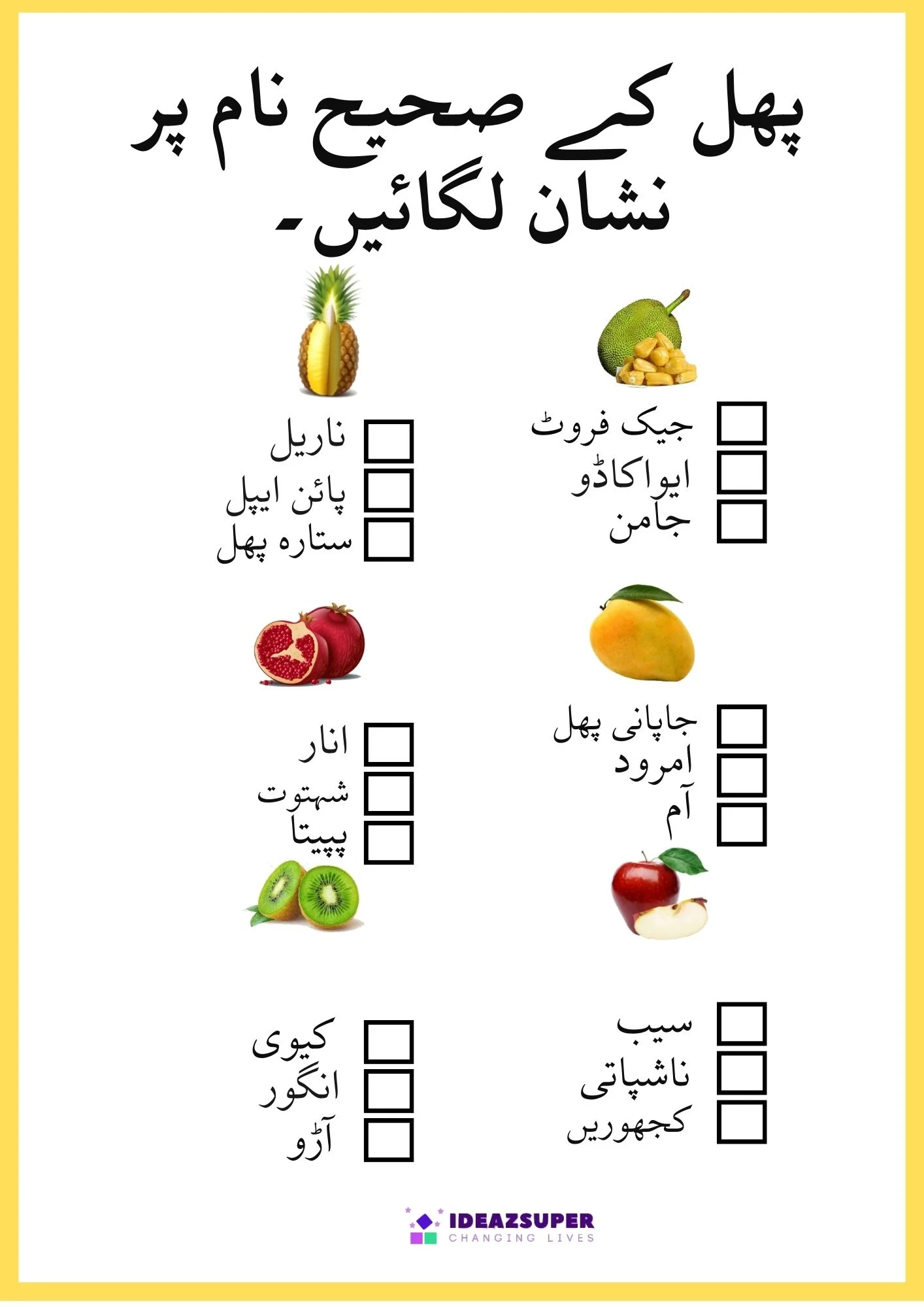
- Tick the correct name (پھل کے صحیح نام پر نشان لگائیں)
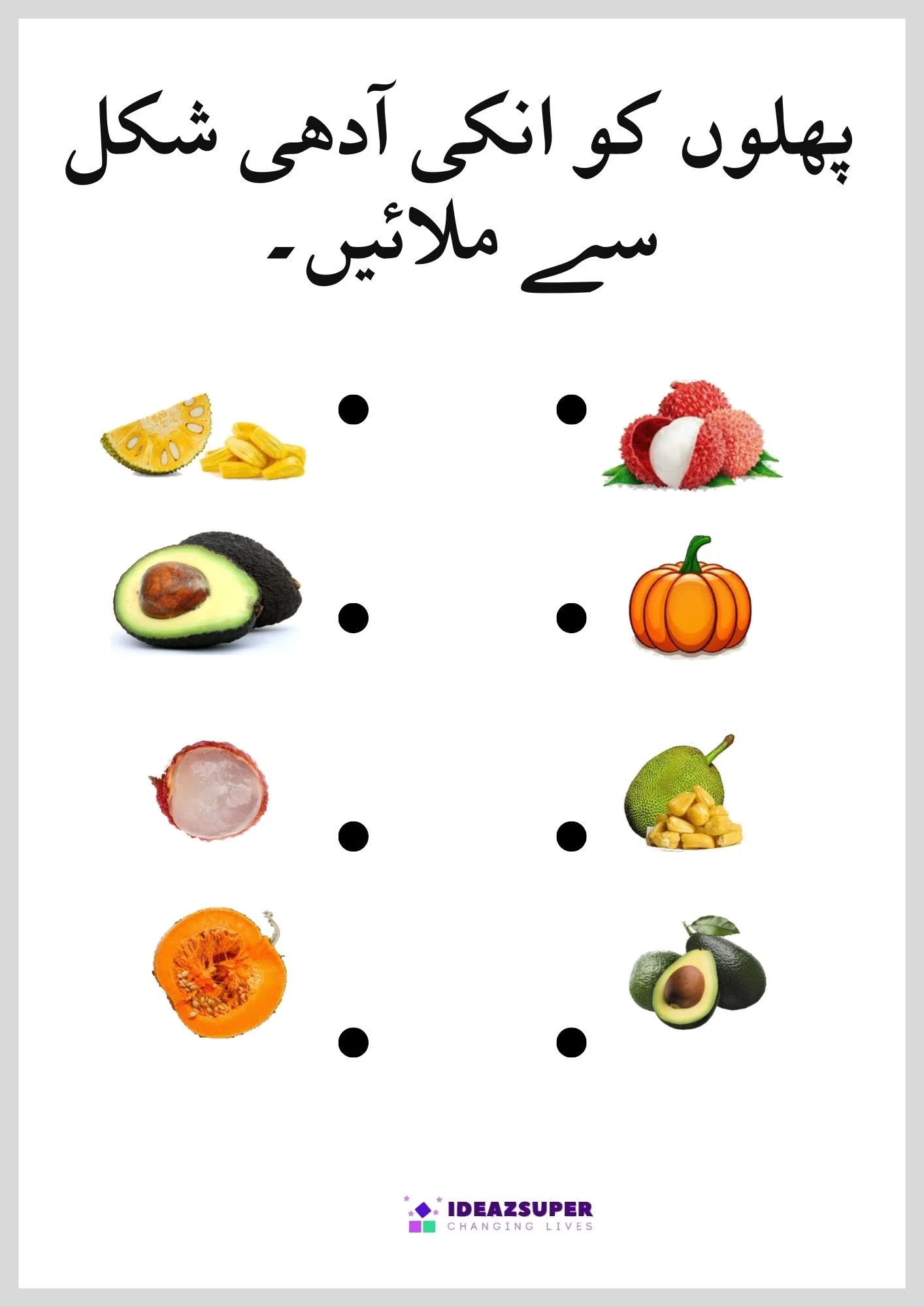
- Match fruits to their cut halves (پھلوں کو انکی آدھی شکل سے ملائیں)
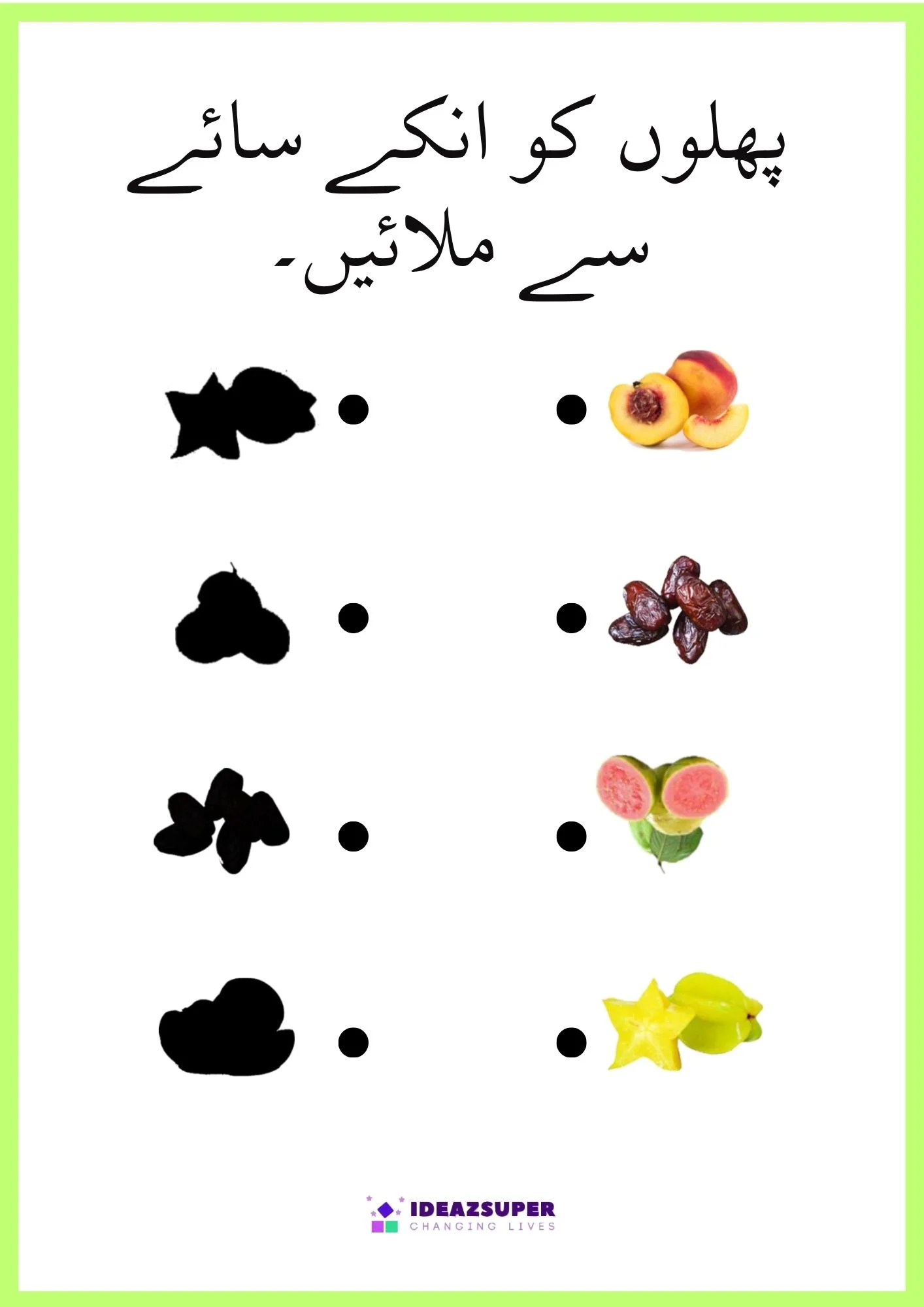
- Shadow matching (پھلوں کو انکے سائے سے ملائیں)
- Colouring pages (آؤ رنگ کریں): colour a large fruit and read its name
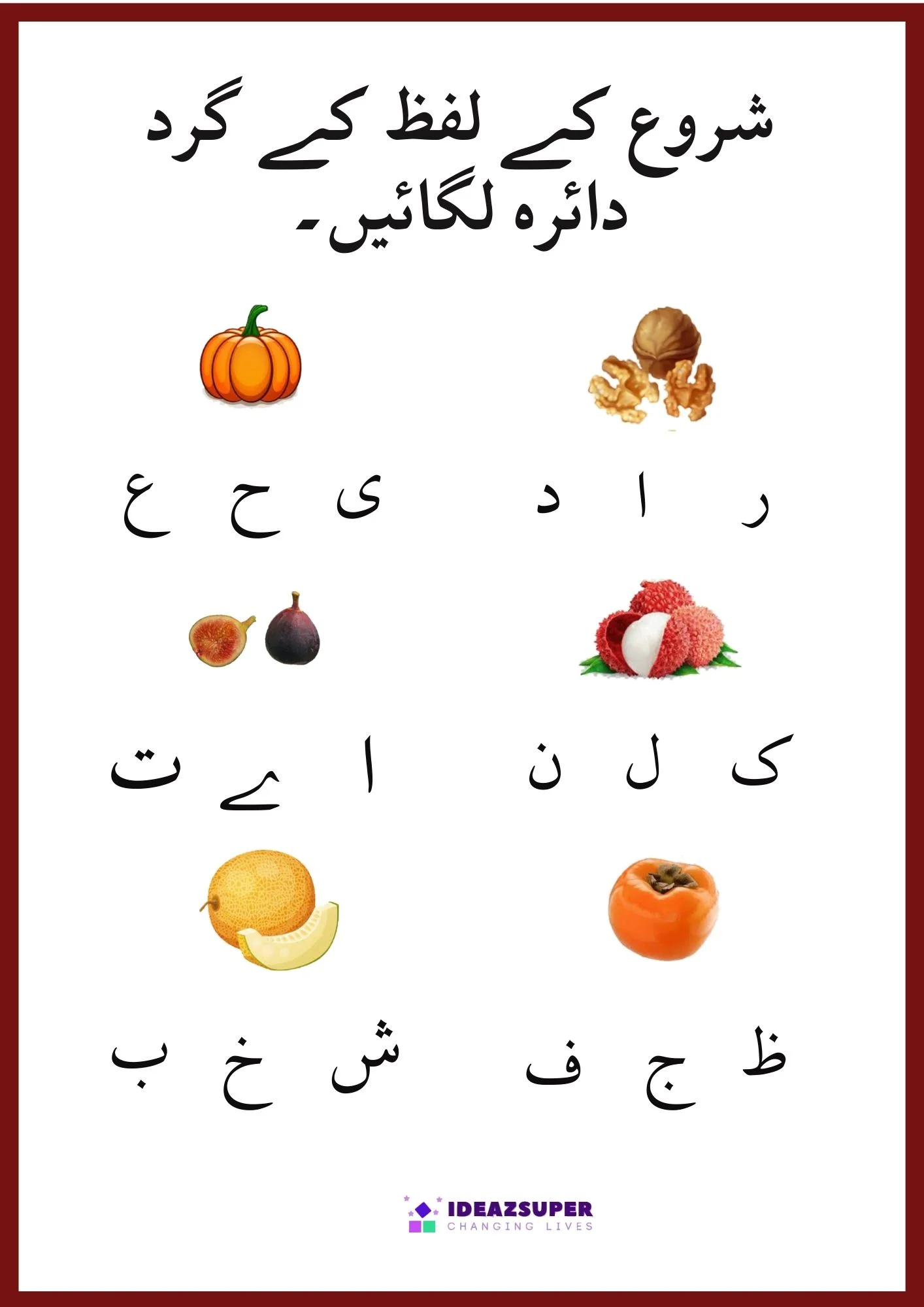
- First letter (شروع کے لفظ کے گرد دائرہ لگائیں): circle the first letter of each fruit
- Number the pictures (پھلوں کا نمبر انکی تصویر کے سامنے لکھیں)
- Match the columns (کالم ملائیں): join identical fruits
- Match fruits to their names (فروٹ کو انکے نام سے ملائیں)
Skills Your Child Practises
- Learning Urdu names of common fruits
- Reading simple Urdu words
- Visual thinking with halves and shadows
- Beginning sounds and first letters
- Number writing
- Fine motor skills through colouring
How to Use This Worksheet
- Start with the name pages and say each word aloud together in Urdu.
- Do two or three activity pages per sitting, mixing matching, colouring and writing.
- Point to real objects or pictures at home to connect the words to everyday life.
- Let your child colour the colouring pages as a reward after the harder activities.
- Revisit the name pages often until your child can name every picture without help.
What’s Next?
Continue the series with Urdu Vegetable Names (سبزیوں کے نام), or build early reading with our Urdu letter worksheets.
Where This Worksheet Fits
This workbook is part of the IdeazSuper Urdu vocabulary workbook series (اردو ذخیرہ الفاظ). Each workbook teaches one theme with the same mix of name cards, matching, colouring and reading activities:
- Urdu Bird Names (پرندوں کے نام)
- Urdu Animal Names (جانوروں کے نام)
- Urdu Fruit Names (پھلوں کے نام) (this workbook)
- Urdu Vegetable Names (سبزیوں کے نام)
- Urdu Professions (پیشوں کے نام)
- Urdu Body Parts (جسم کے حصے)
- Urdu Colours (رنگوں کی پہچان)
- Urdu Shapes (شکلوں کے نام)
More Worksheets
Frequently Asked Questions
Which fruits are included?
Everyday and seasonal fruits such as کیلا (banana), سیب (apple), کینو (kinnow), انار (pomegranate), تربوز (watermelon), پپیتا (papaya), انگور (grapes) and more.
What age is this workbook for?
Ages 3–6. Colouring and matching pages suit younger children, while first letter and word pages suit older ones.
What is the half-shape matching activity?
Children look at a whole fruit and draw a line to the picture of the same fruit cut in half, which builds visual thinking.
How many pages are there?
The full workbook has 77 printable pages. A few sample pages are shown above.
Get 1 New Worksheet Every Week
Join 10000+ parents and teachers. No spam, unsubscribe anytime.
Looking for more Urdu practice? Browse all our free Urdu worksheets for preschool and kindergarten (اردو ورک شیٹس), with haroof identification, beginning sounds, tracing and writing, Do Harfi Ilfaz, assessments and admission test practice for ages 3–6, all in one place.