
Urdu Learning for Kids: Where to Start (Ages 3–5)
Teaching Urdu to young children can be a joyful and meaningful experience—especially when done at the right developmental stage. Between the ages of 3 to 5 years, children are naturally curious, visually responsive, and highly receptive to sounds. This makes it the ideal time to introduce Urdu learning in a gentle, playful, and structured way.
At the age of 4, particularly in a Montessori environment, the focus should not be on writing or memorization. Instead, children learn best through:
- Urdu letter recognition
- Sound awareness (Urdu phonics)
- Picture association and matching
This approach builds a strong foundation for reading without pressure or frustration.
How to Learn Urdu for Kids the Right Way
Parents often ask:
“What is the best way to teach Urdu to kids?”
The answer is simple:
👉 One letter at a time, using pictures, sounds, and repetition.
Just like English phonics, children should first:
- Recognize the Urdu harf
- Hear and repeat its sound
- Connect it with a familiar picture
This method is especially effective for:
- Preschoolers
- Montessori kids
- Beginners with no prior Urdu exposure
How IdeazSuper Helps Your Child Learn Urdu
At IdeazSuper, we have carefully designed Montessori-friendly Urdu learning resources specifically for 3 to 5 year olds. These resources are widely used by parents, homeschoolers, and Montessori teachers.
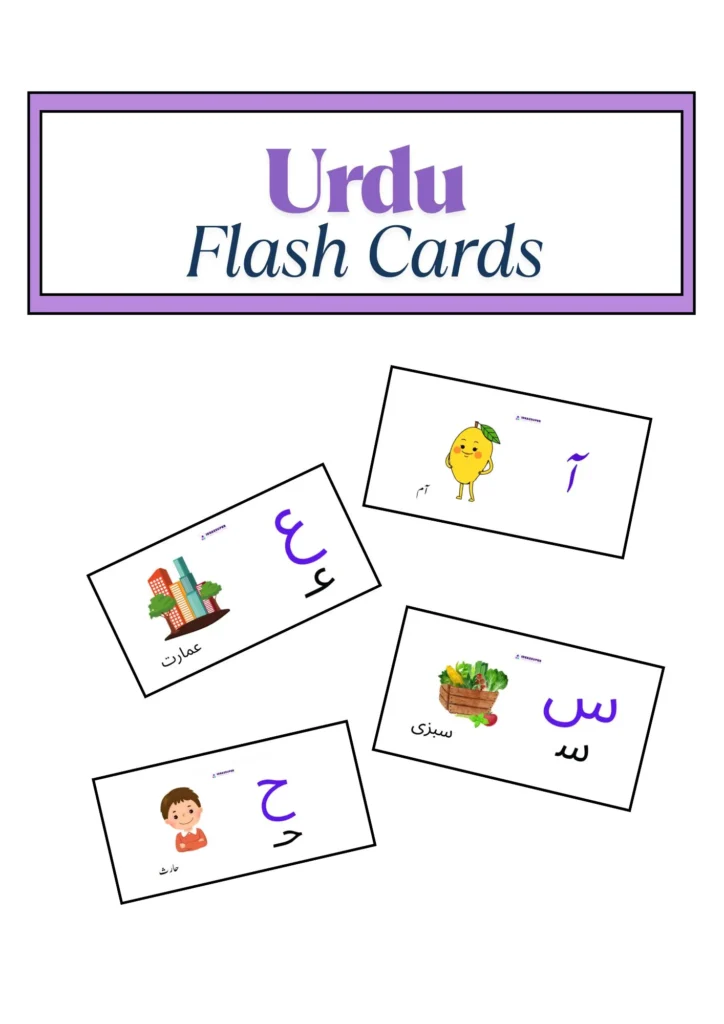
1. Urdu Huroof Recognition Worksheets
Our Urdu worksheets for kids focus on one letter at a time (Alif to Yay) to avoid cognitive overload.
Key features:
- One Urdu letter per worksheet
- Clear, child-friendly pictures for strong visual association
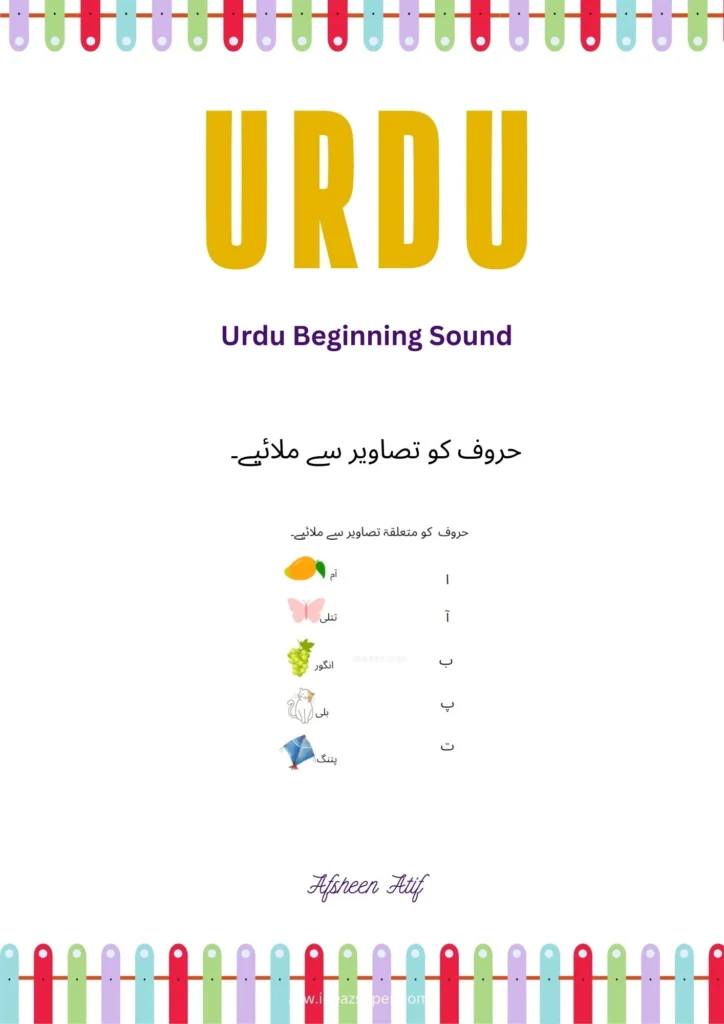
- Matching activities (harf → picture)
- Non-writing and low-pressure tasks
- Perfect for beginners and preschool learners
These Urdu learning worksheets PDF are ideal for children who are still developing fine motor skills.
2. Urdu Phonics & Sound Awareness Worksheets
Understanding Urdu phonics is essential for early reading confidence.
Our phonics-based worksheets help children:
- Focus on the sound of each Urdu letter
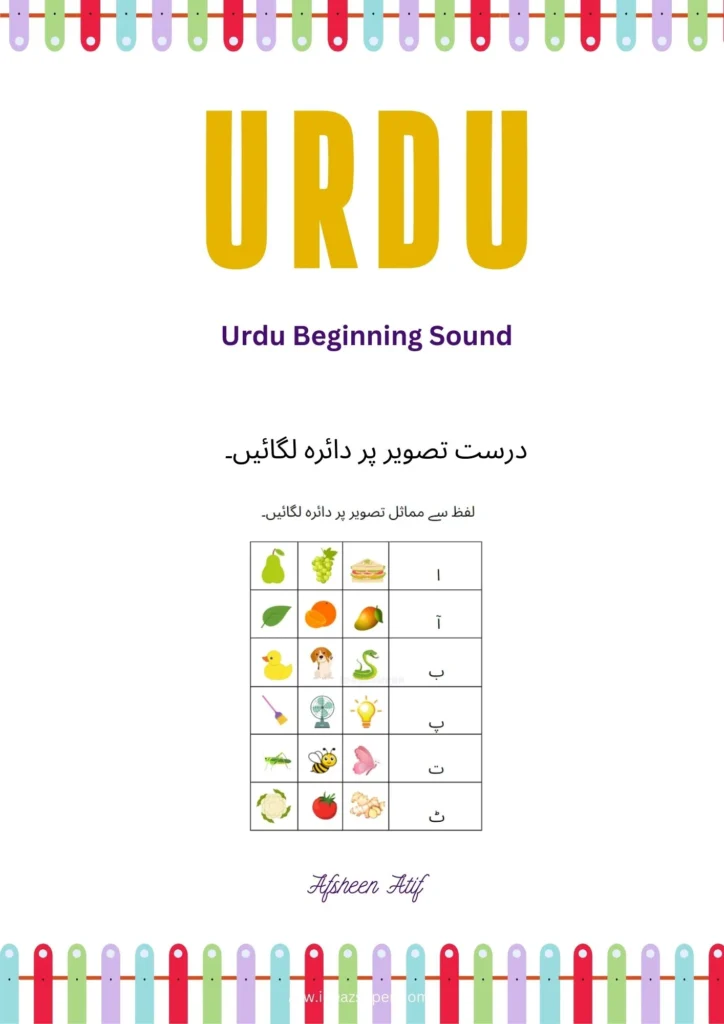
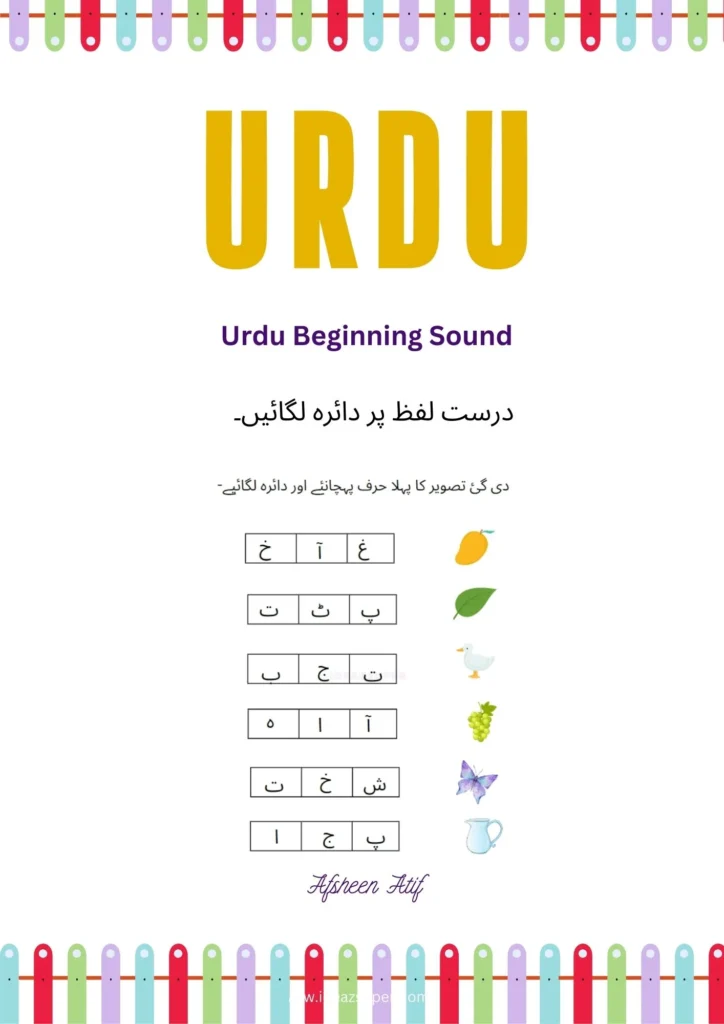
- Identify beginning sounds
- Understand the difference between letter names and letter sounds
Just as children learn A says “ah” in English, these worksheets help them connect Urdu sounds with meaning naturally.
3. Video Support for Urdu Learning (YouTube)
To make learning easier and more engaging, each Urdu letter is supported by a short video on the IdeazSuper YouTube channel.
These videos help children:
- Hear correct Urdu pronunciation
- Connect sound with shape
- Learn through repetition and visuals
🎥 Watch Urdu Alphabet Videos for Kids:
👉 https://www.youtube.com/@IdeazSuper
This multi-sensory approach (watch + listen + practice) is highly effective for young learners.
How to Use These Urdu Resources at Home (Step-by-Step)
Parents often struggle with how to use worksheets effectively. Here is a simple, Montessori-aligned weekly plan:
Step 1: One Letter Per Week
- Start with 1 Urdu letter per week
- Download FREE Urdu PDF Book aligned with YouTube videos
- Watch the related Urdu alphabet video together
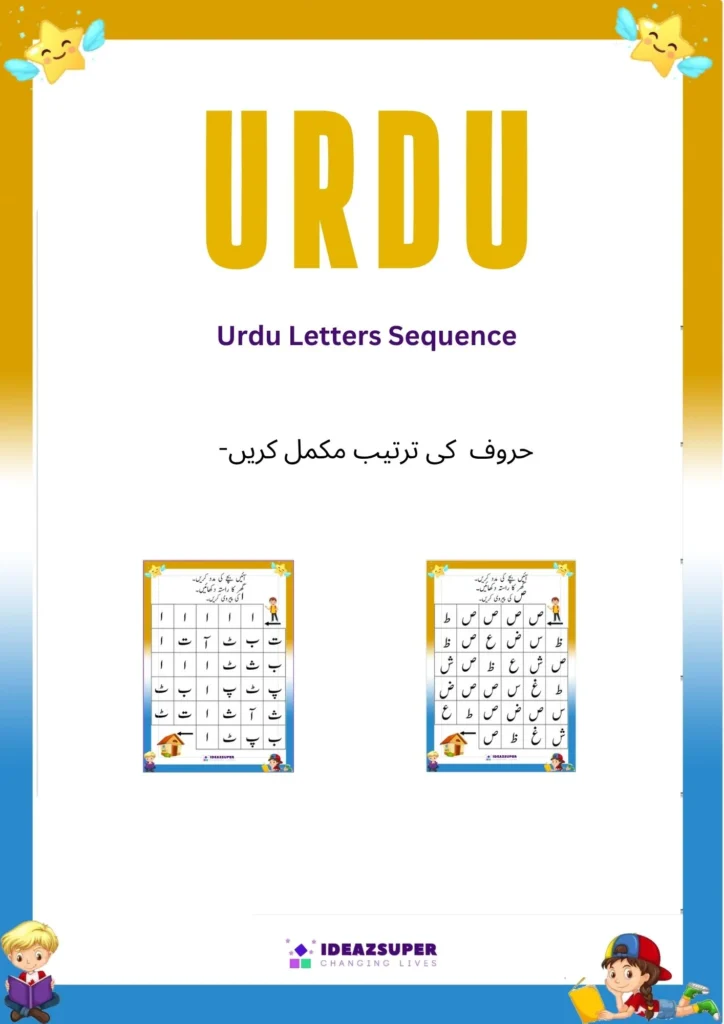
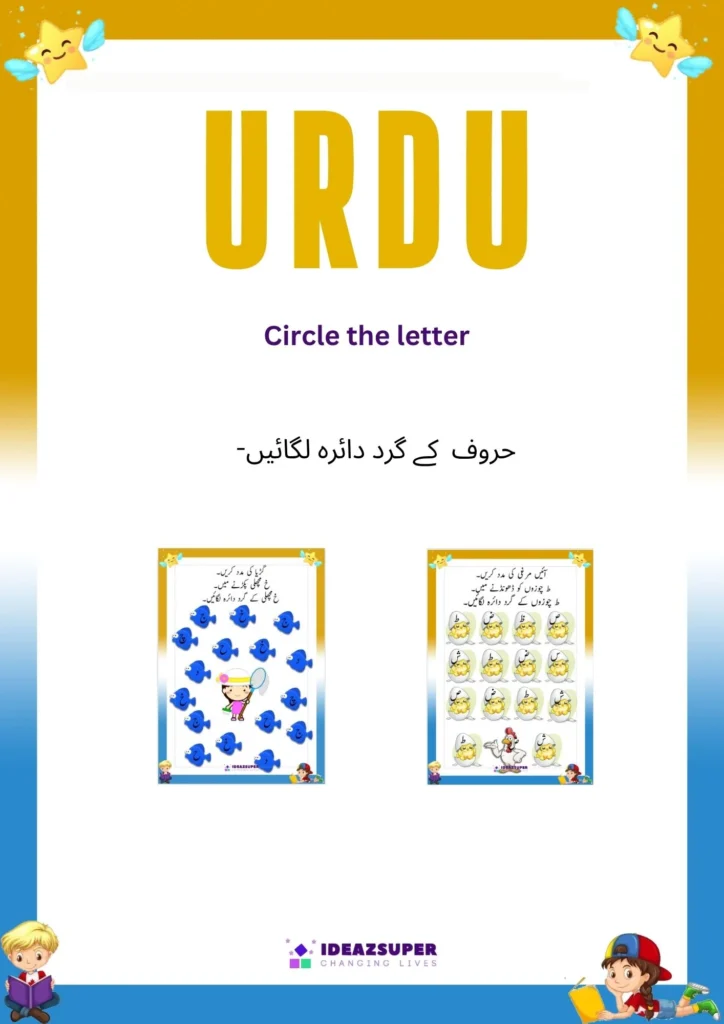
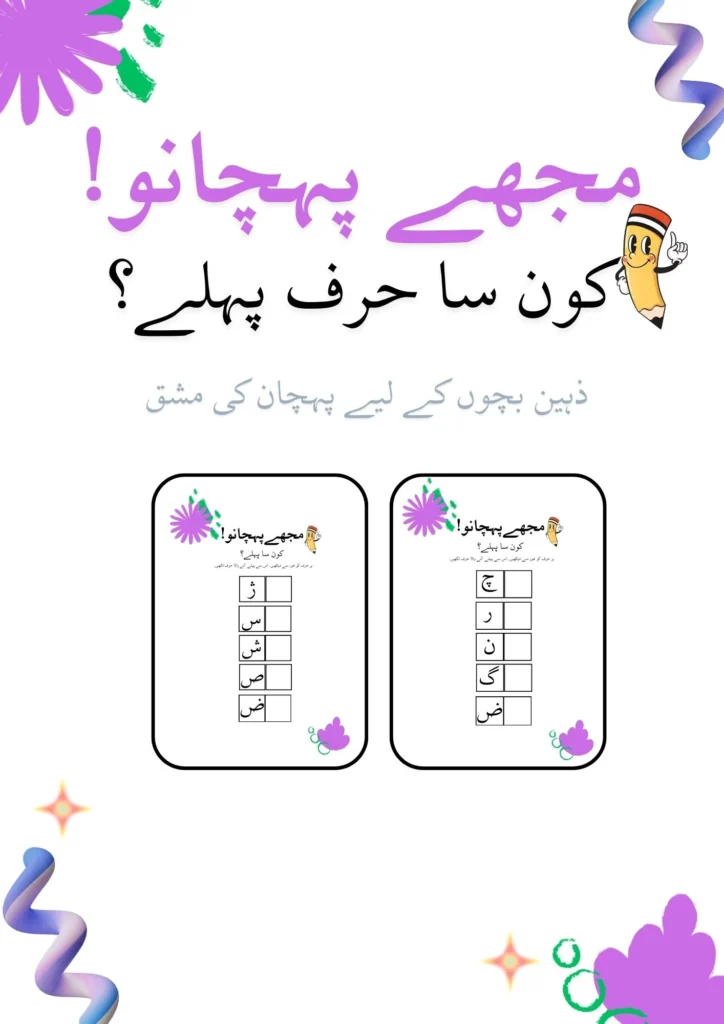
Step 2: Urdu Alphabet Identification Worksheet
- Use these 2 worksheets to assess kids’ skills of Urdu alphabet identification
- Use the assessment worksheet for an understanding of the alphabet, phonics, and beginning sound.
Repeat the same letter for 3 to 4 days.

Step 3: Revision
- On Day 5 and 6, revise all previous letters
- Watch videos and do additional worksheets.
- Watch quiz videos
Addressing Common Learning Challenges
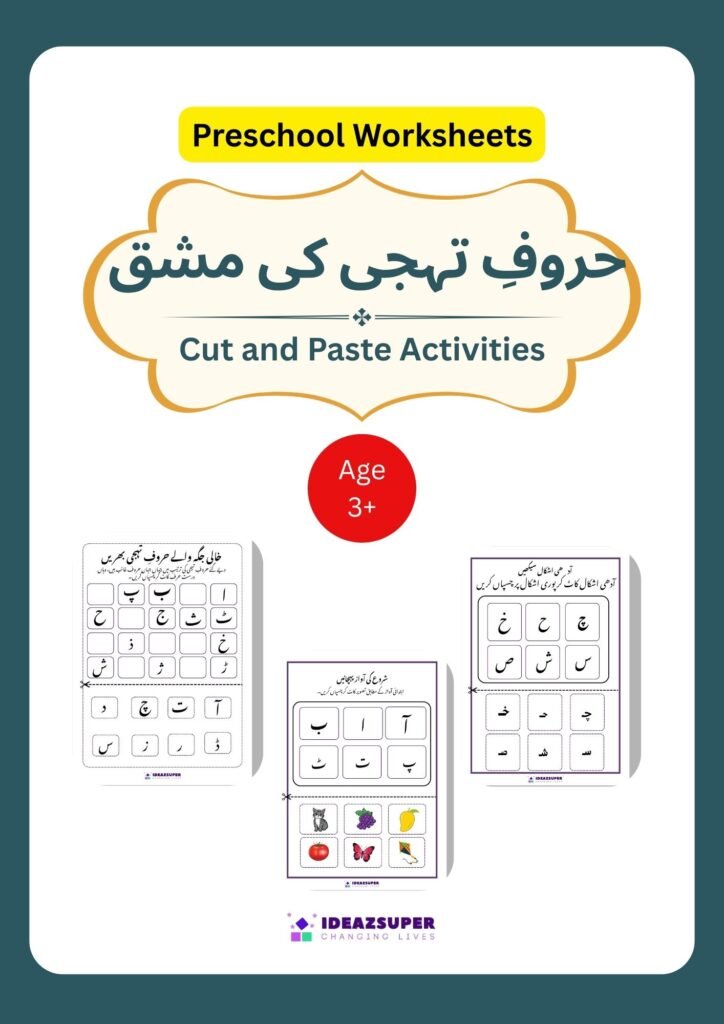
Some Urdu letters can be confusing for young learners. To support clarity, we include worksheets for:
These help children confidently differentiate similar-looking letters.

Montessori Tips for Urdu Learning at Home
✔ Keep sessions short and playful
✔ Avoid pressure and forced writing
✔ Focus on recognition before writing
✔ Repeat often, without stress
“When learning is joyful and meaningful, children don’t just remember letters — they fall in love with language.”
Explore Urdu Learning Resources by IdeazSuper
📘 Explore Urdu Worksheets & Learning Resources:
👉 https://www.ideazsuper.com/urdu-worksheets-for-kids
🎥 Watch & Learn with Urdu Alphabet Videos:
👉 https://www.youtube.com/@IdeazSuper
If you’d like, we can also recommend a complete Urdu starter bundle, specially designed for 4-year-olds in Montessori settings.
We’re always here to support your child’s Urdu learning journey.
Please feel free to reach out with any questions 🌱
Frequently Asked Questions (FAQ): Urdu Learning for Kids
What is the best age to start learning Urdu?
The best age to start Urdu learning is between 3 to 5 years. At this stage, children learn naturally through pictures, sounds, and repetition, rather than writing.
How can I teach Urdu to a 4-year-old at home?
You can teach a 4-year-old Urdu by focusing on one letter at a time, using picture-based worksheets, phonics activities, and short Urdu alphabet videos. Montessori-style, non-writing activities work best.
Should my child learn writing before reading Urdu?
No. Writing is not required at the beginning. Children should first learn Urdu letter recognition, sounds, and picture association. Writing can be introduced later when the child is developmentally ready.
Are Urdu worksheets good for preschool and Montessori kids?
Yes. Montessori-friendly Urdu worksheets that include matching, circling, and picture identification are ideal for preschool and Montessori children aged 3 to 5.
What should a child learn first in Urdu?
A child should first learn:
- Urdu huroof recognition
- Letter sounds (Urdu phonics)
- Matching letters with pictures
This builds a strong foundation for reading.
How often should I practice Urdu with my child?
Practice 10–15 minutes a day. Focus on one letter for 3 to 4 days, then revise previous letters weekly. Short and consistent practice works best.
Are there Urdu learning videos available for kids?
Yes. IdeazSuper offers short and engaging Urdu alphabet videos for kids that help with pronunciation, sound recognition, and visual learning.
How can I make Urdu learning fun for my child?
Keep learning playful and stress-free. Use colorful worksheets, videos, repetition, and praise. Avoid pressure and allow your child to learn at their own pace.


