
Kaaf (ک)
Urdu Letter Kaaf (ک) — Preschool Haroof (Free Worksheets)
How to use this page
Work through the steps in order — watch, identify, hear the sound, colour, trace, write, then check. Most children finish in 10–15 minutes; some steps can be split across two days.
1 Watch
Letter Kaaf (ک) Sound & Shape
Start by watching a short video together. Seeing and hearing ک modelled first gives your child a reference point before any activity begins.
2 Colour
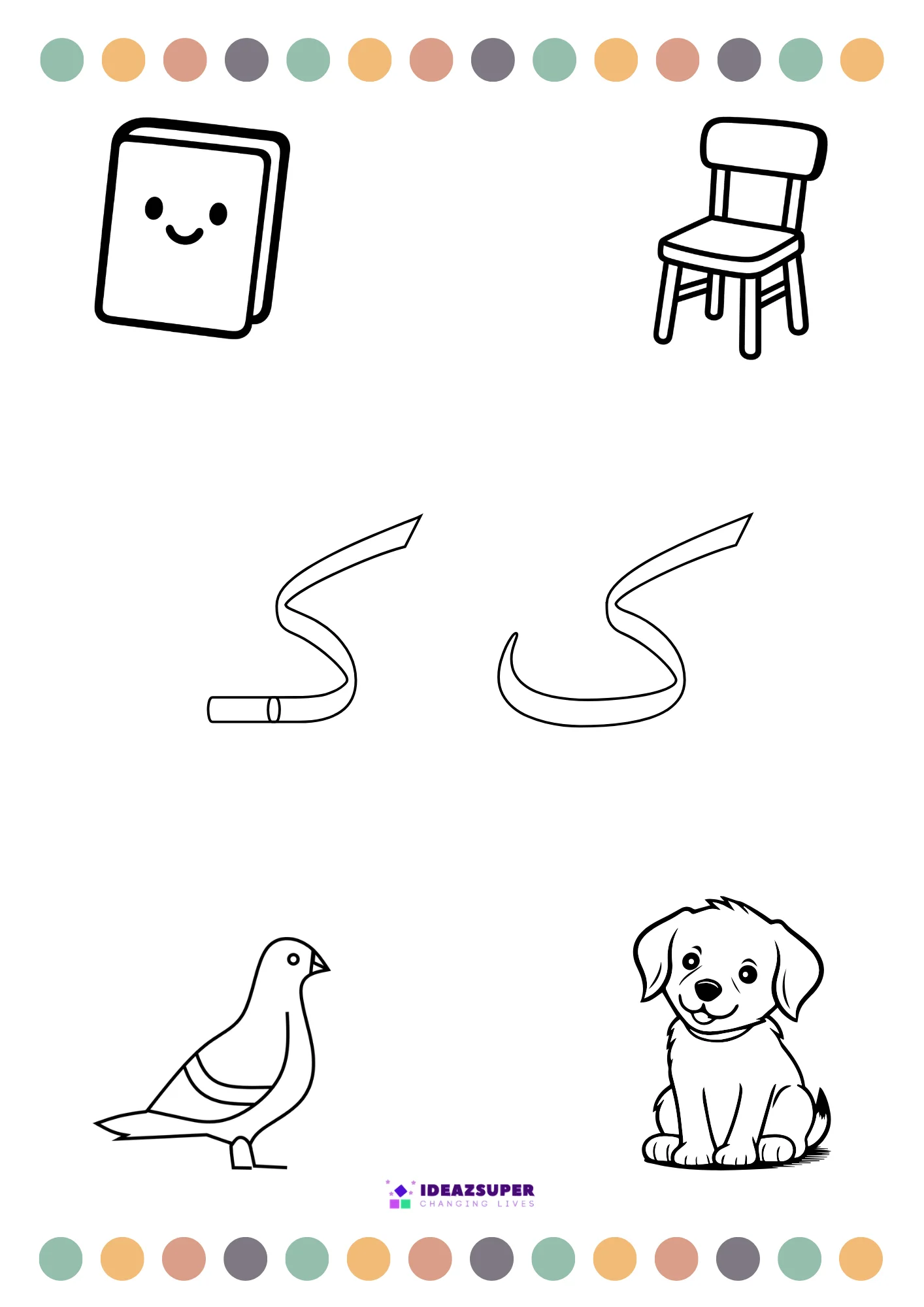
Colouring ک helps your child spend relaxed, hands-on time with its shape while building fine motor control with a crayon or pencil. This page pairs the letter with a picture for کتاب (Kitab — Book), so your child connects the shape to its sound while colouring.
3 Identify
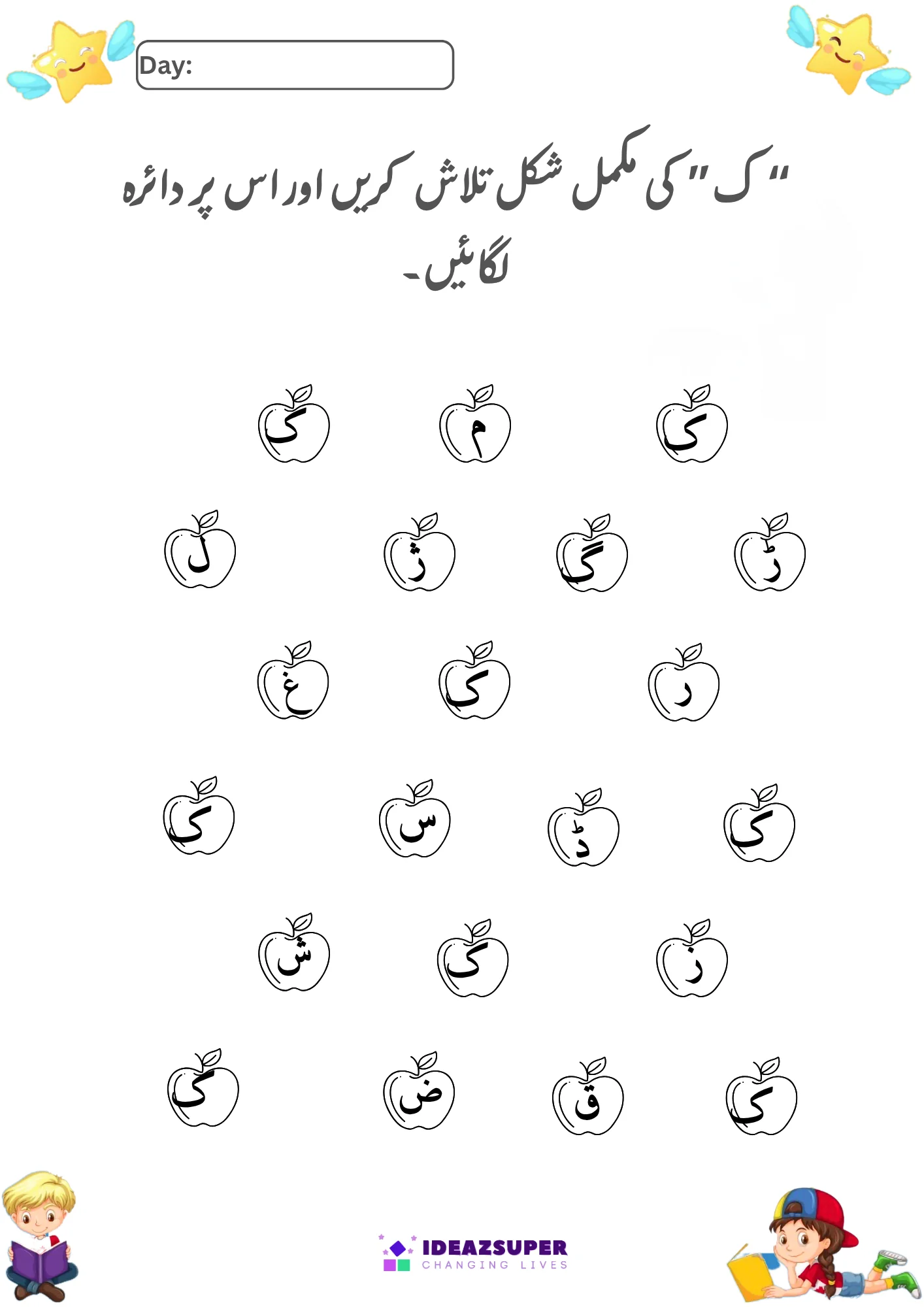
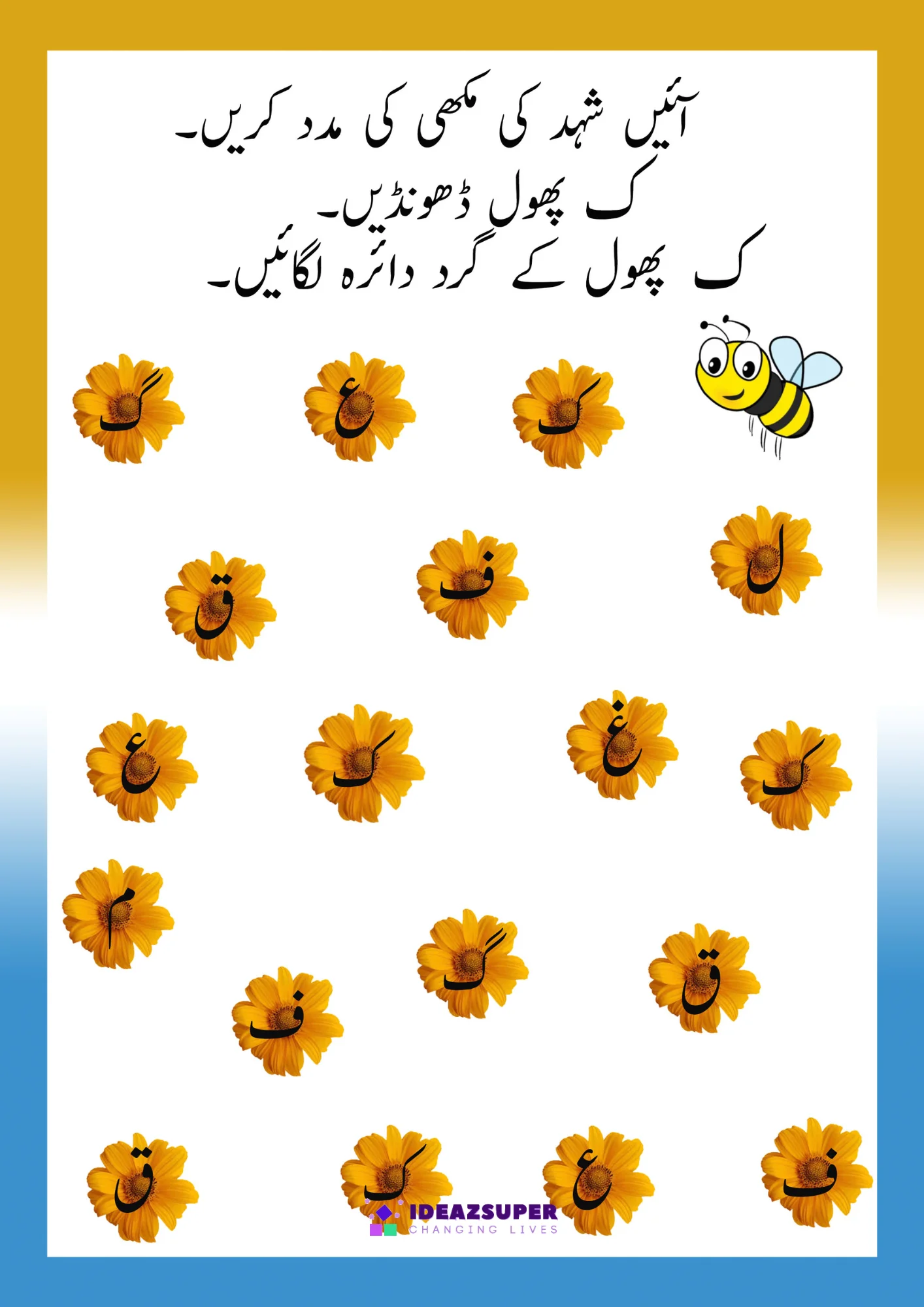
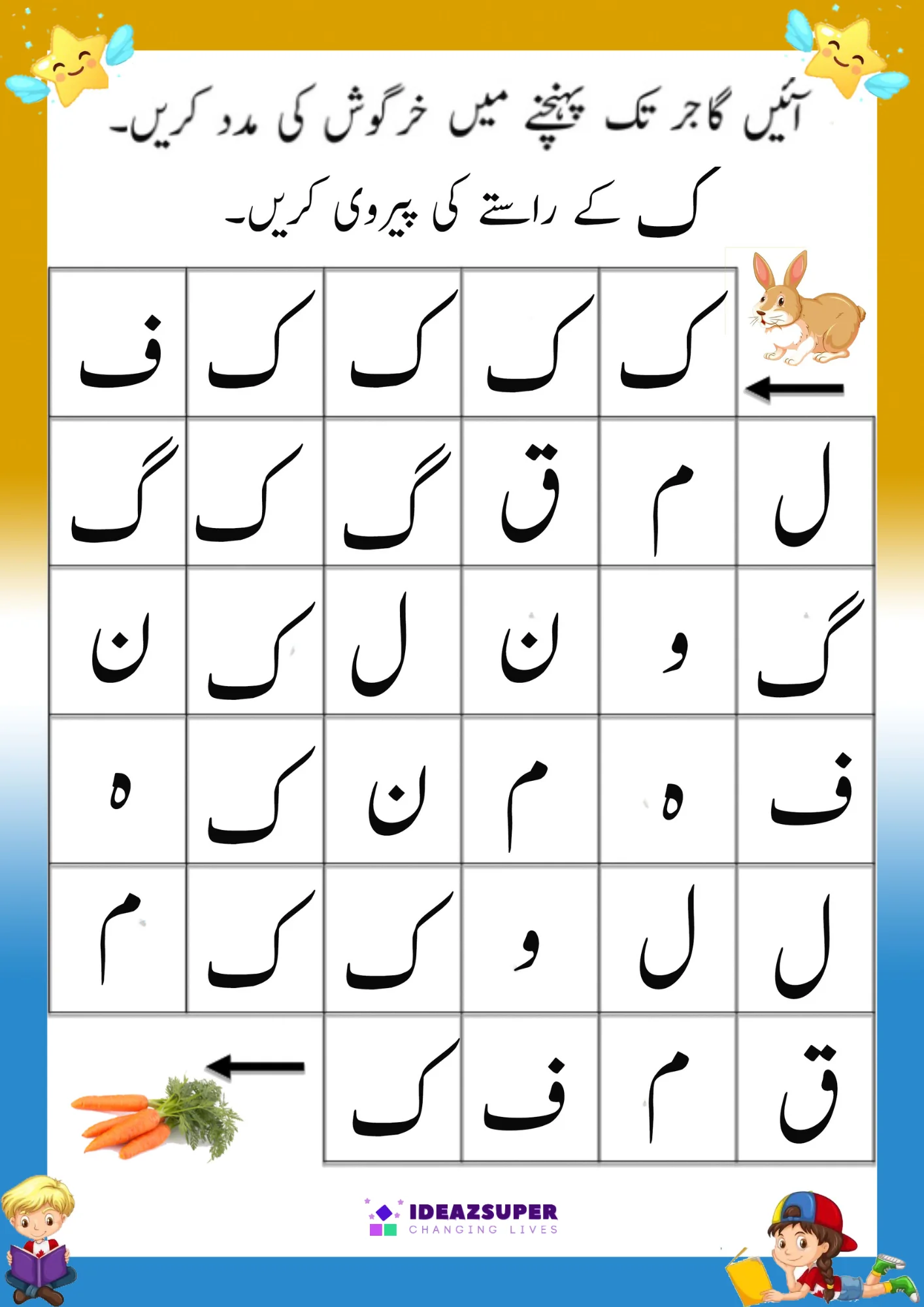
Kaaf has a distinctive angular shape, closely related to Gaaf, which adds an extra stroke. These activities ask your child to circle, find, or match the correct letter among similar-looking ones.
For more practice, try our free Urdu haroof identification worksheets and Adhi Ashkal (half letter) worksheets.
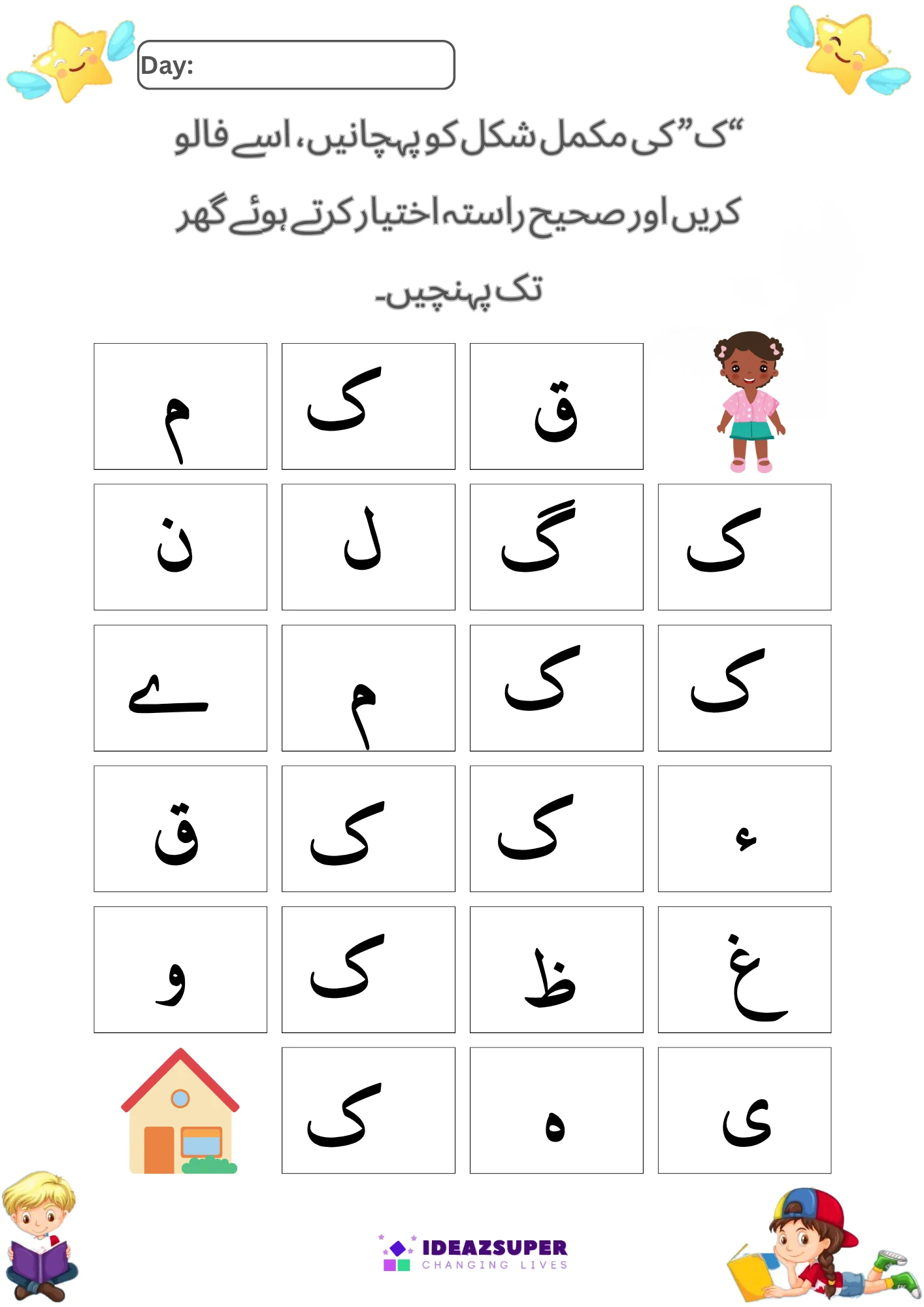
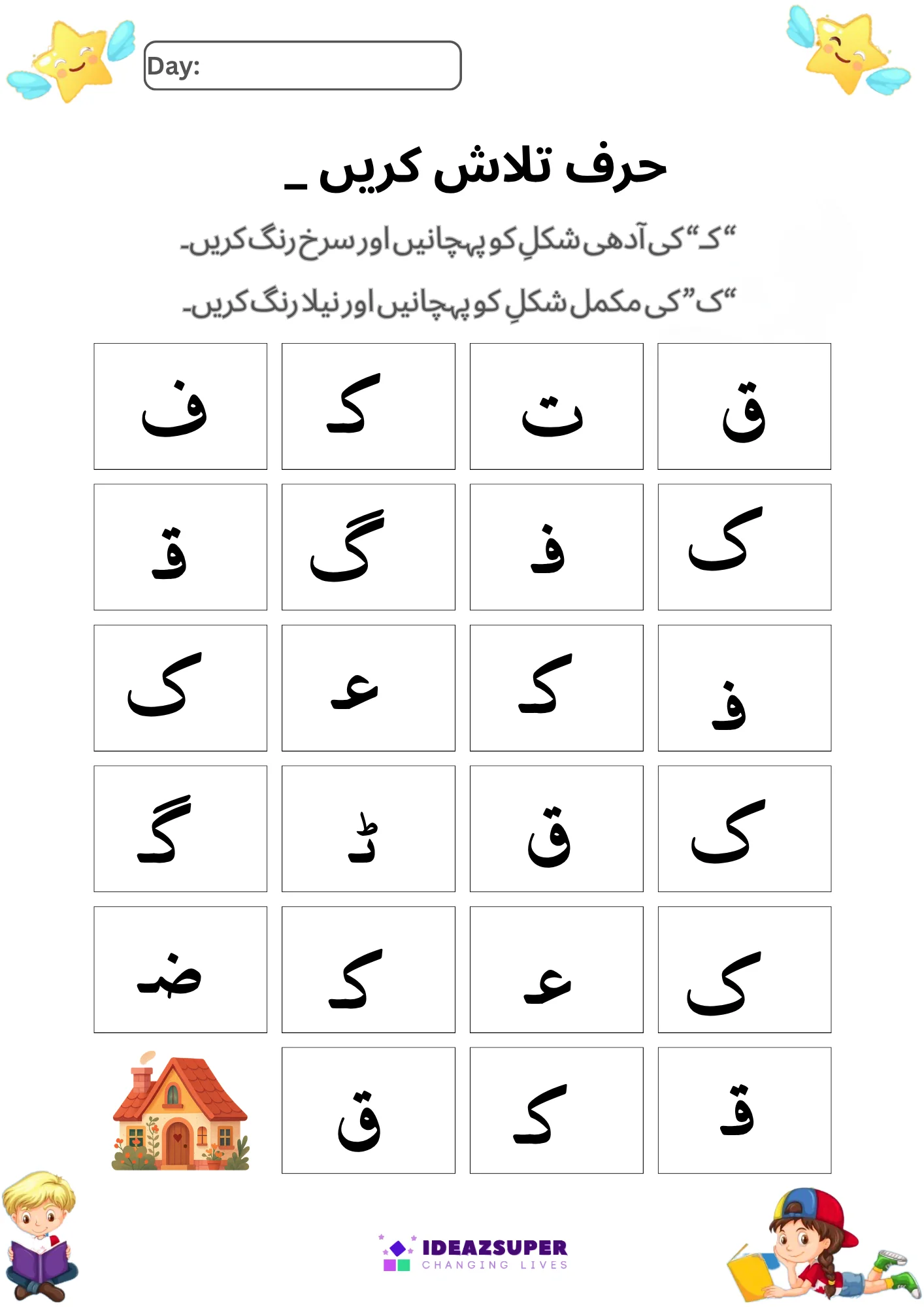
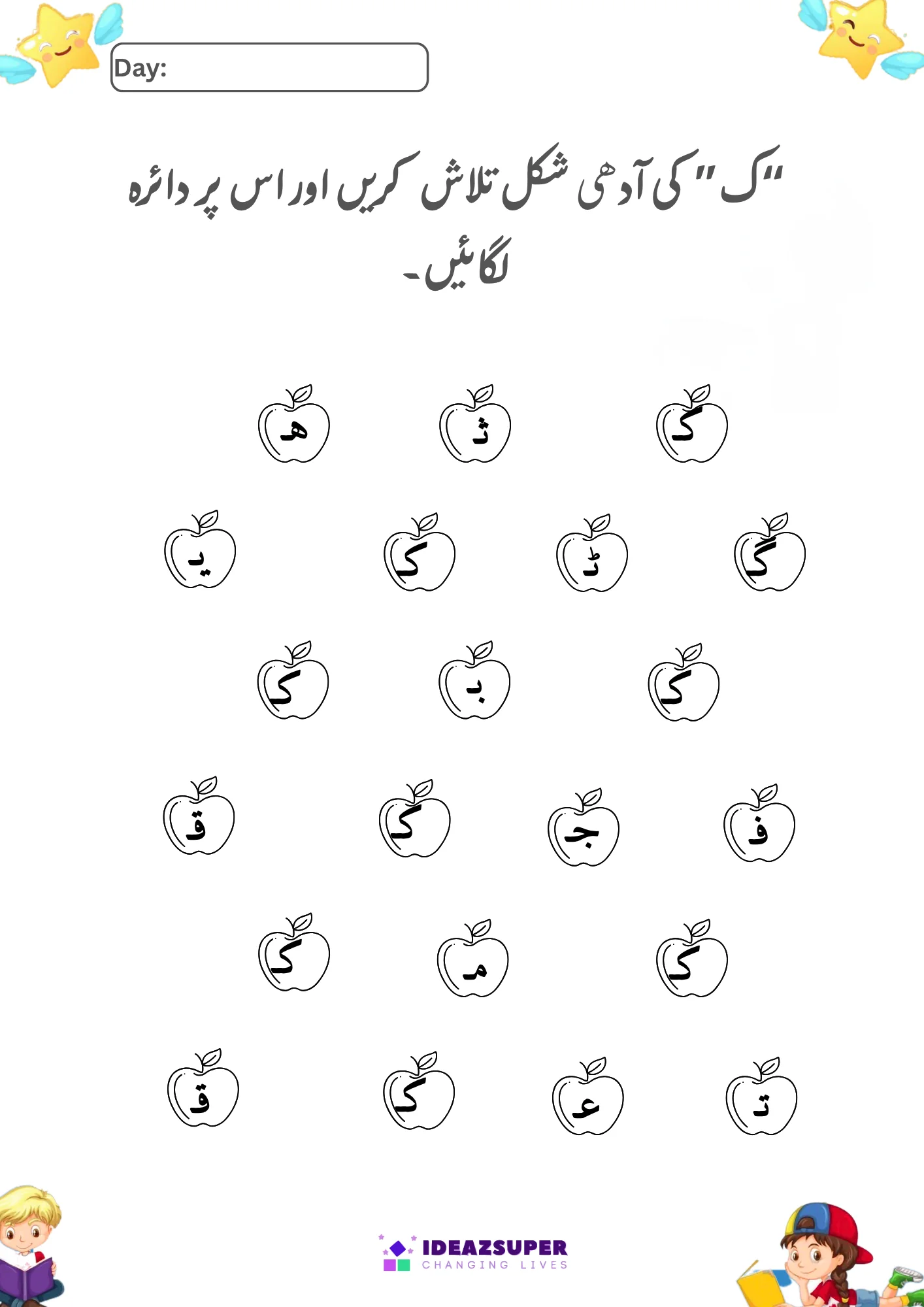
💡 Say it out loud
While your child works through the sheet, say: “Kaaf — Kitab.” Verbal repetition alongside the worksheet helps your child connect the letter, sound, and familiar words.
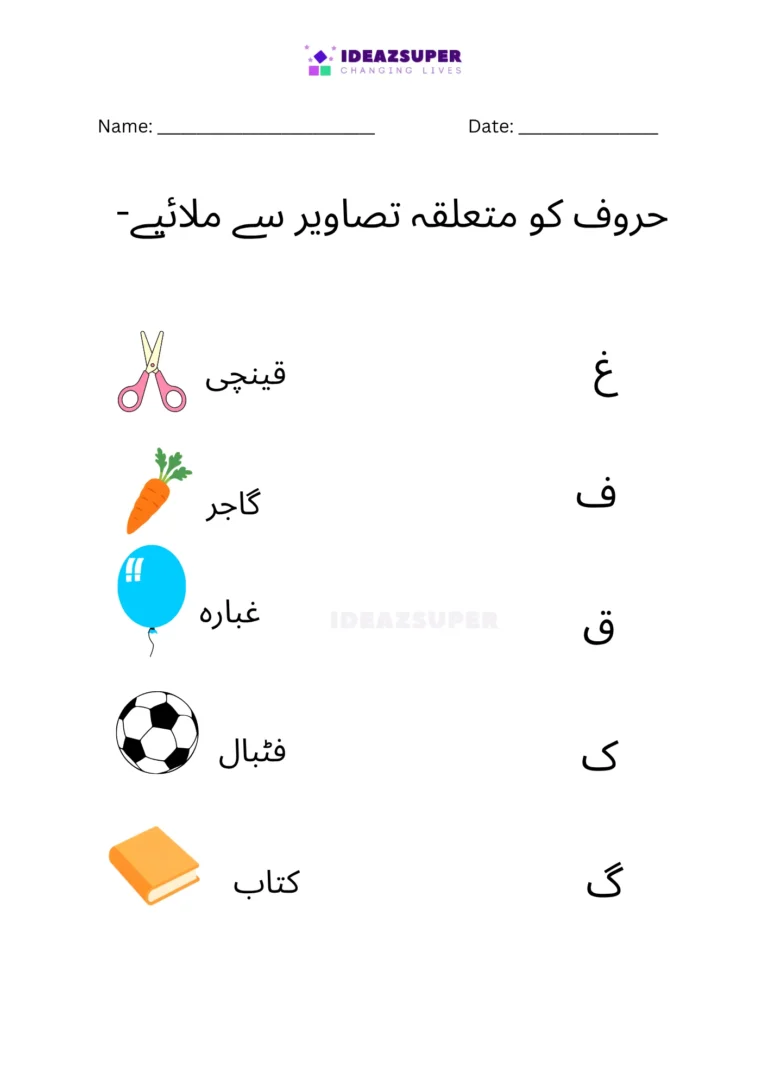
4 Connect
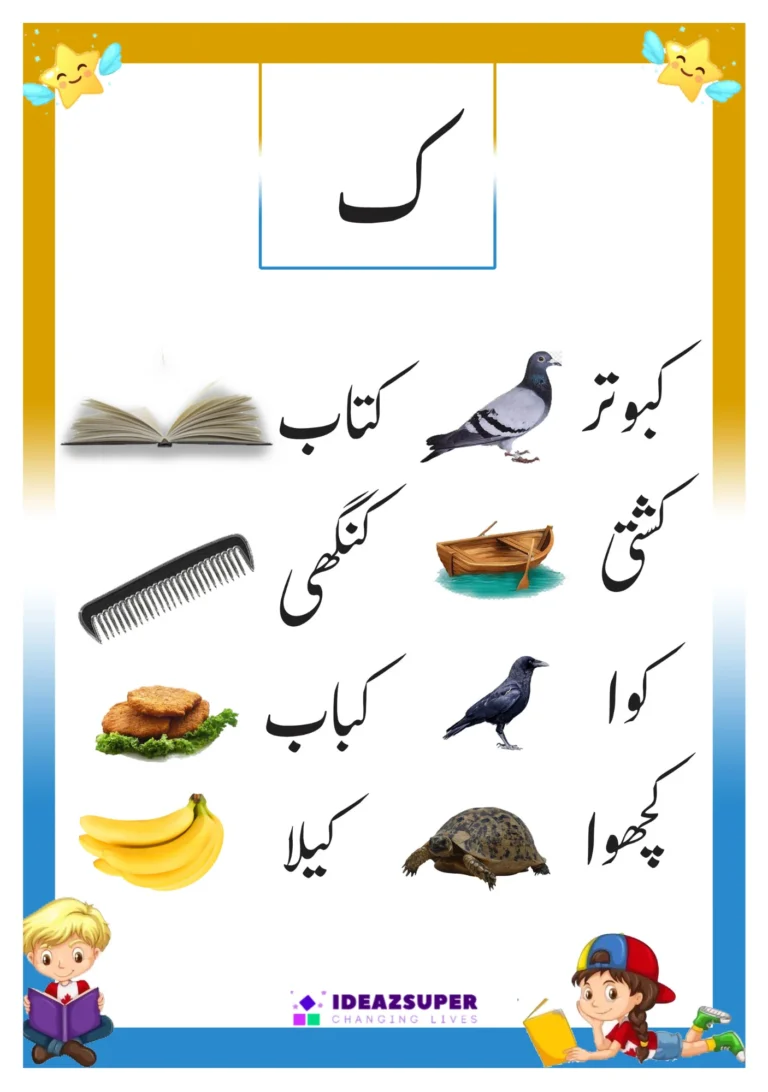
Kaaf says /k/ — ک
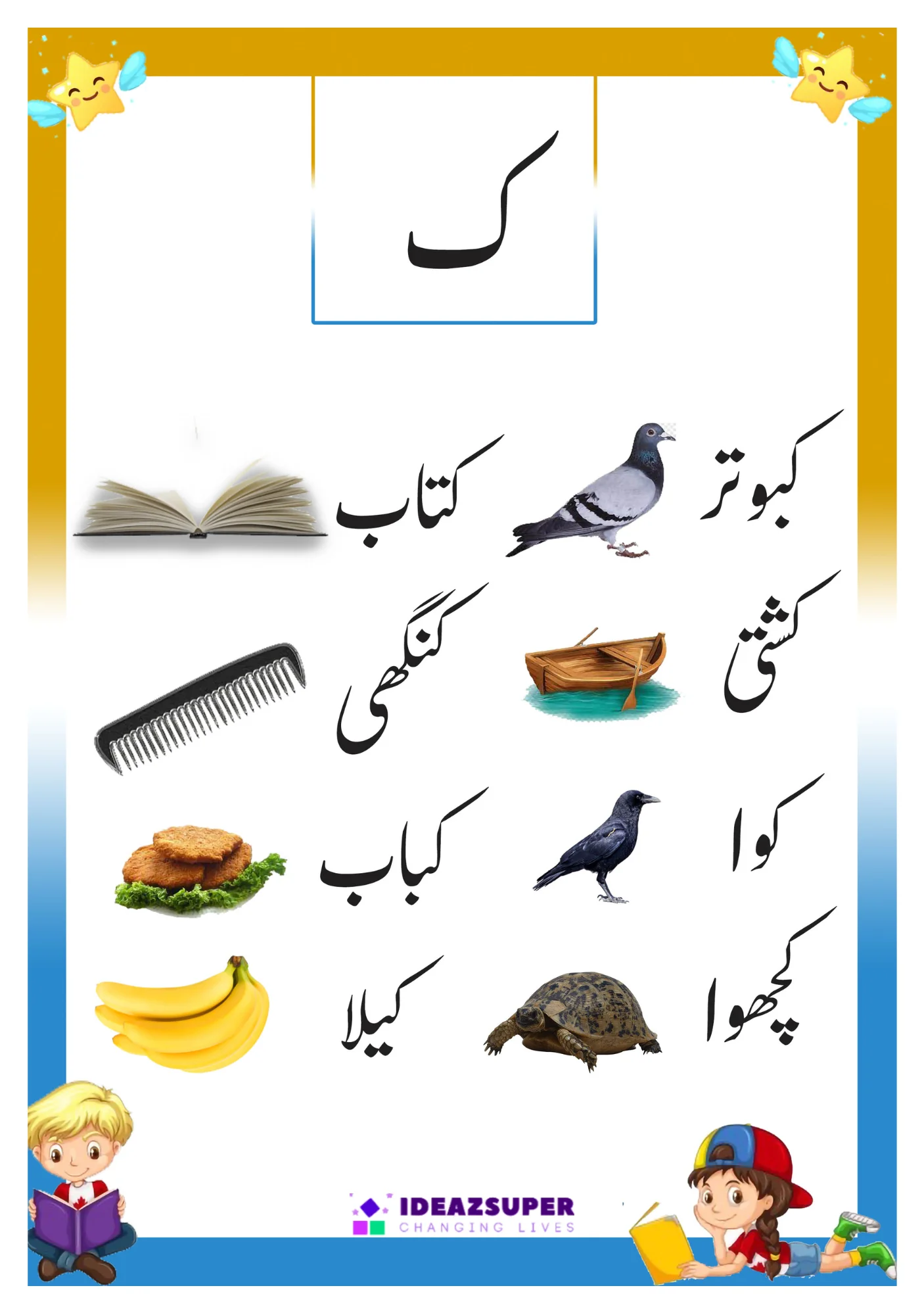
Kaaf represents a /k/ sound close to the English “k”. These activities connect the shape of the letter to its beginning sound using pictures your child already recognises.
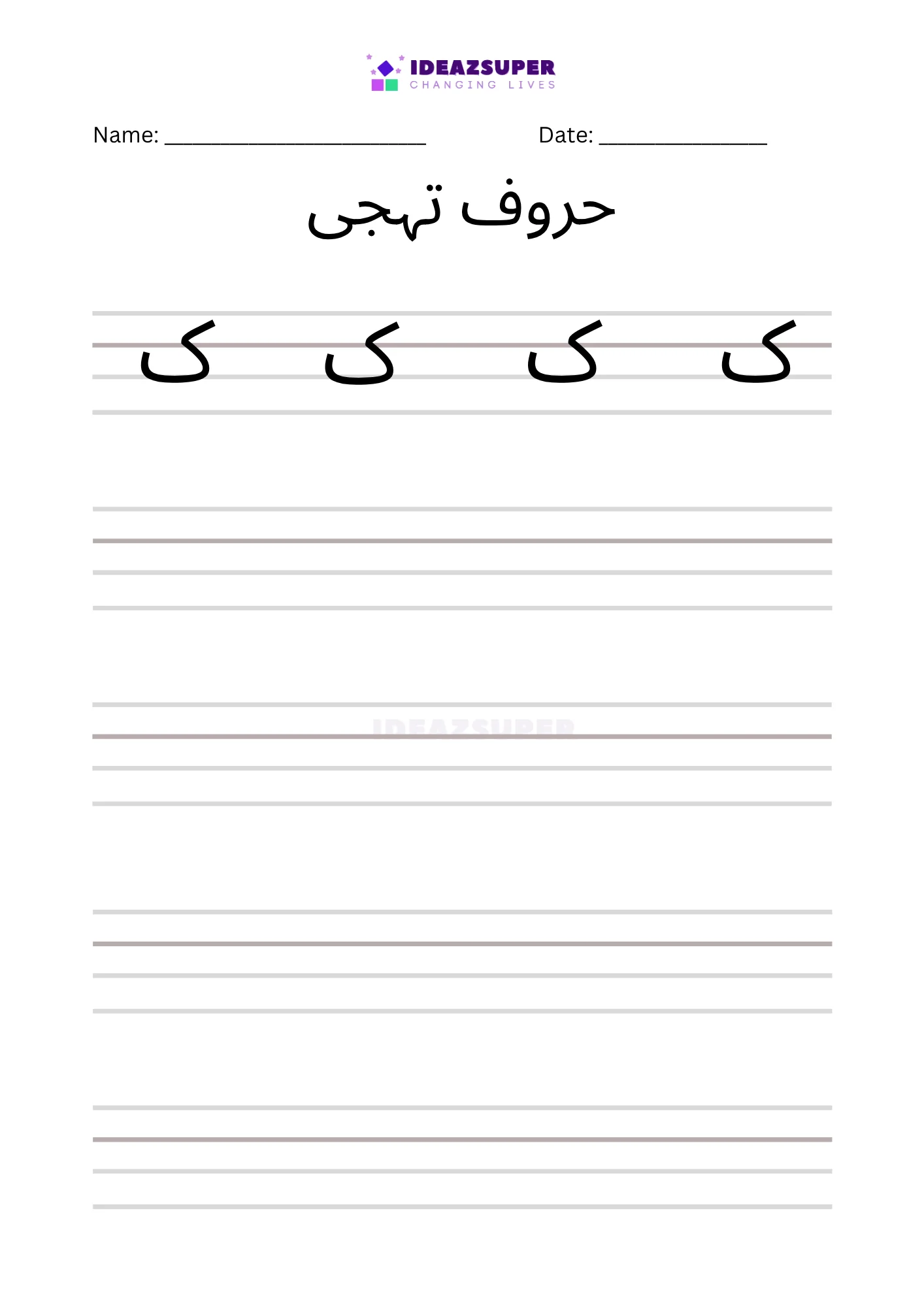
5 Trace
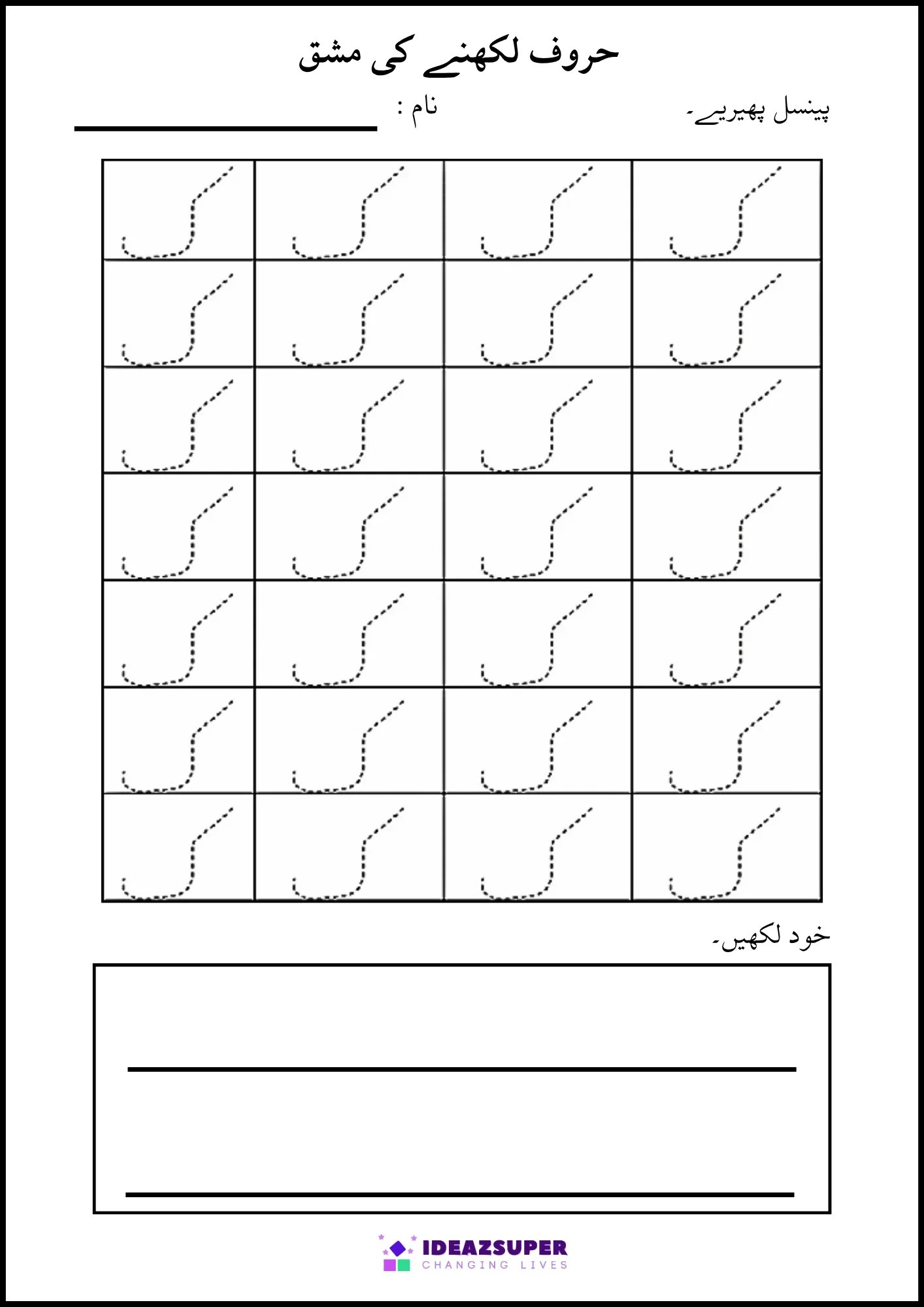
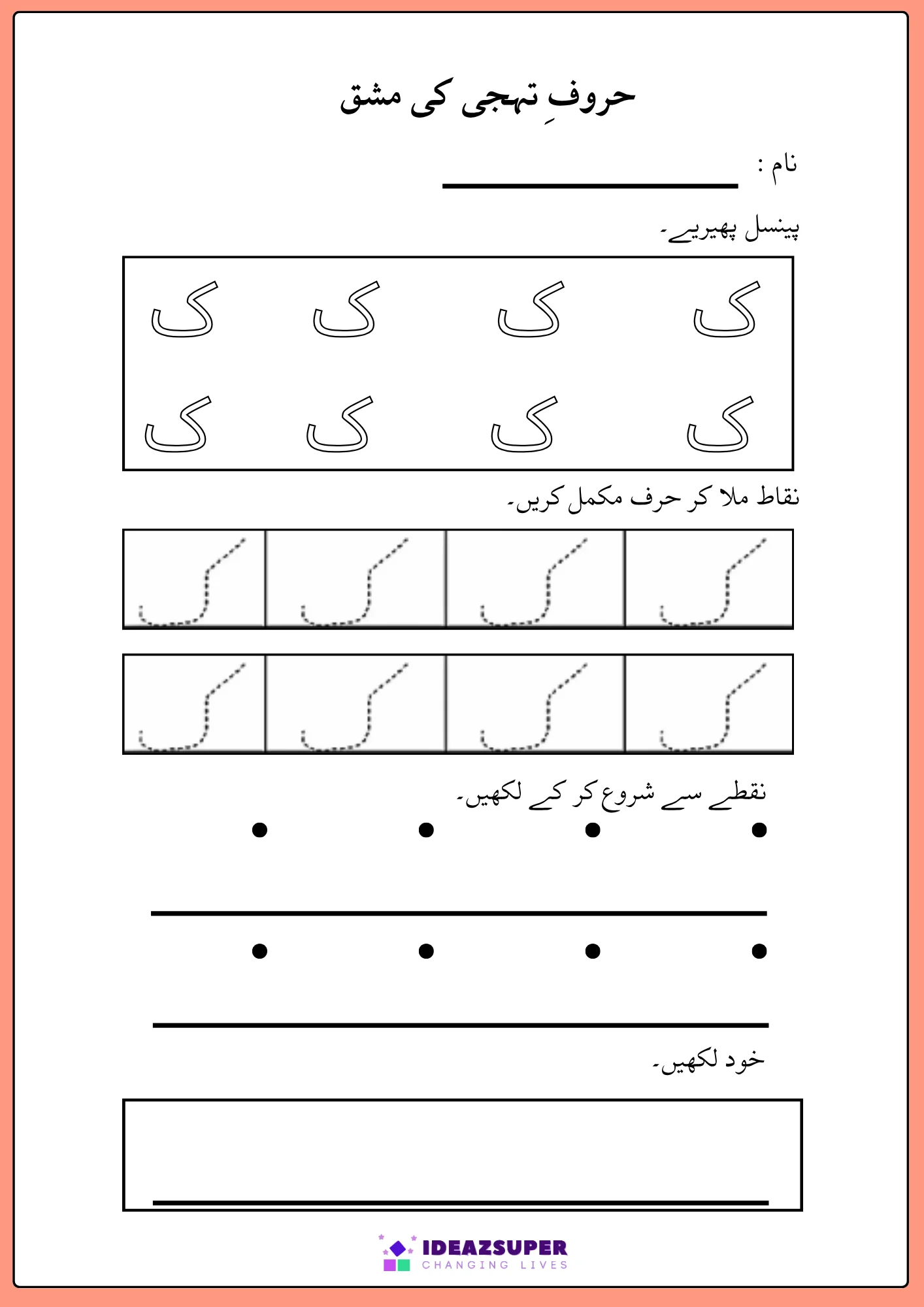
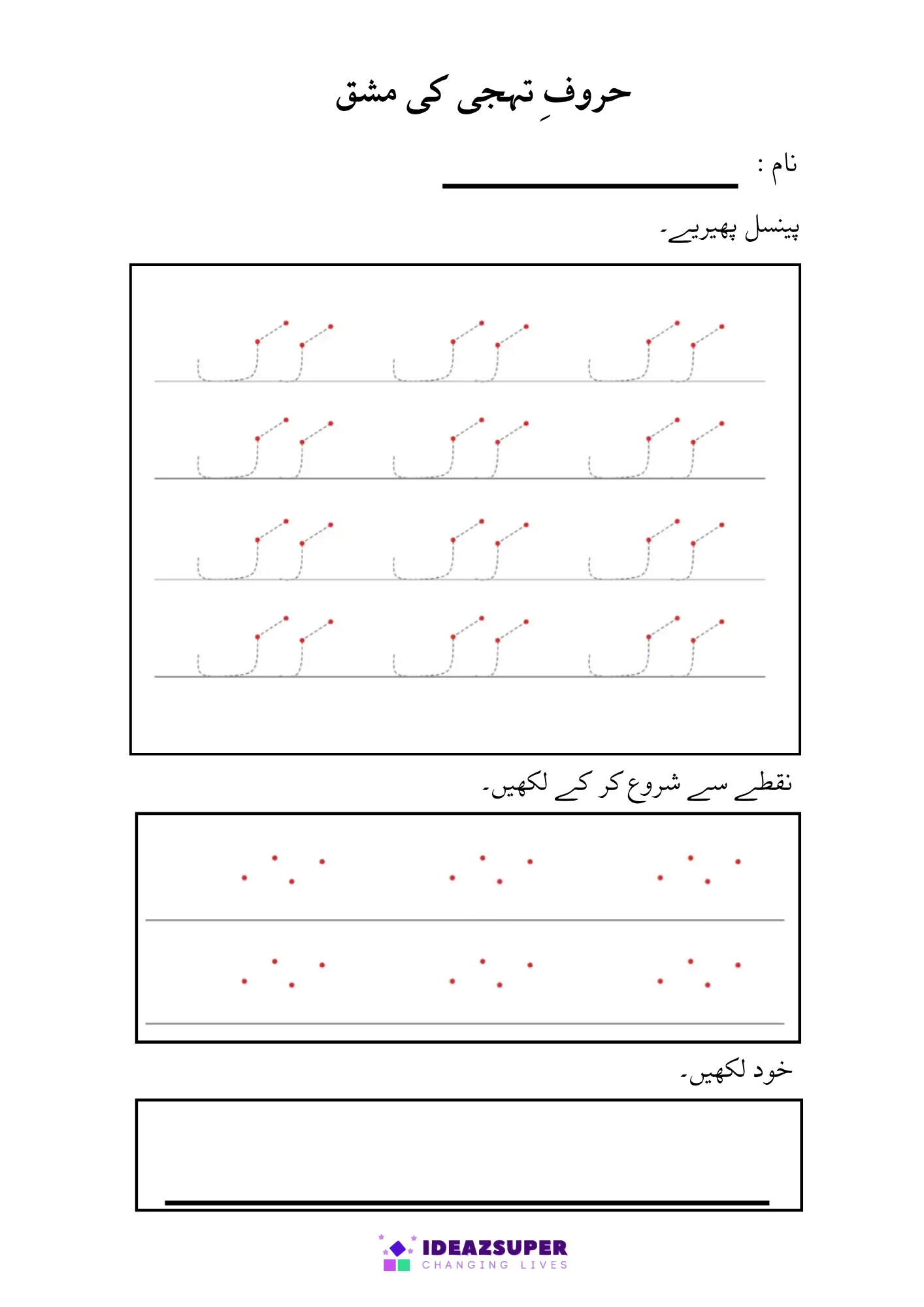
Learn the Correct Stroke
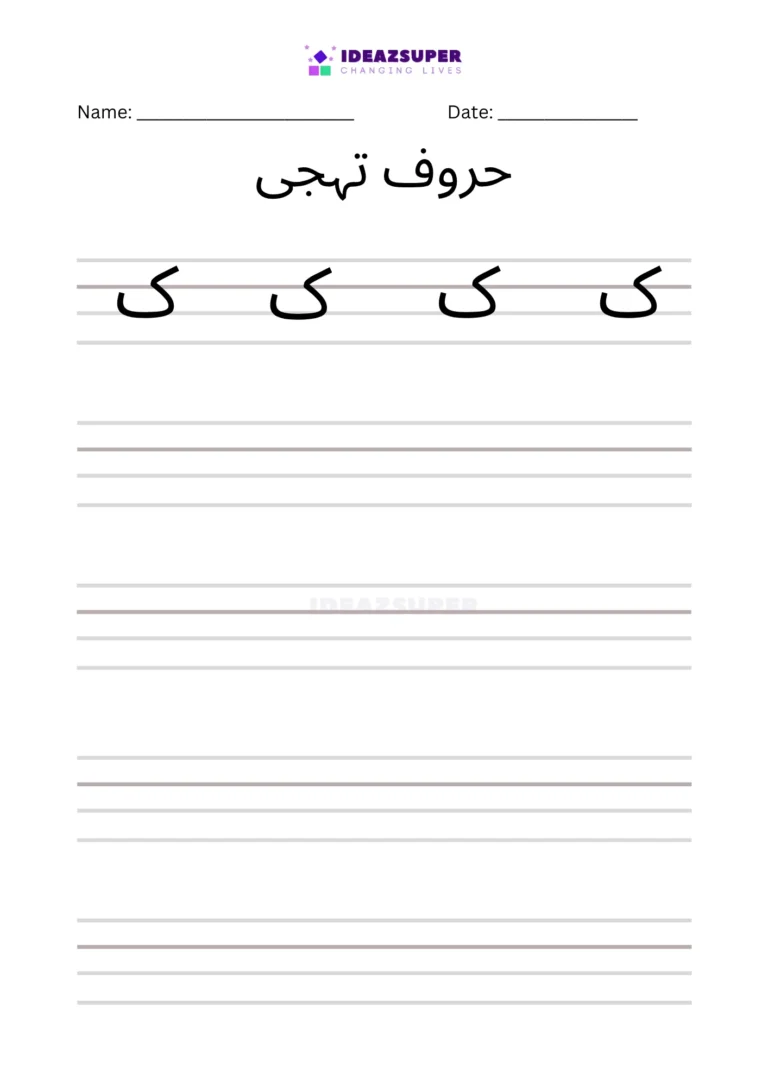
Kaaf is a joining letter, so its angular shape adjusts slightly depending on where it falls in a word. Tracing helps your child build the correct starting point and stroke direction before attempting it freehand.
6 Write Independently
No Dotted Guide
Once tracing feels comfortable, move to writing ک without the guide. If it feels tricky at first, that’s a normal early stage — steady practice, not correction, is what builds it into muscle memory.
For extra handwriting practice, see our Urdu tracing and writing worksheets.
7 Check
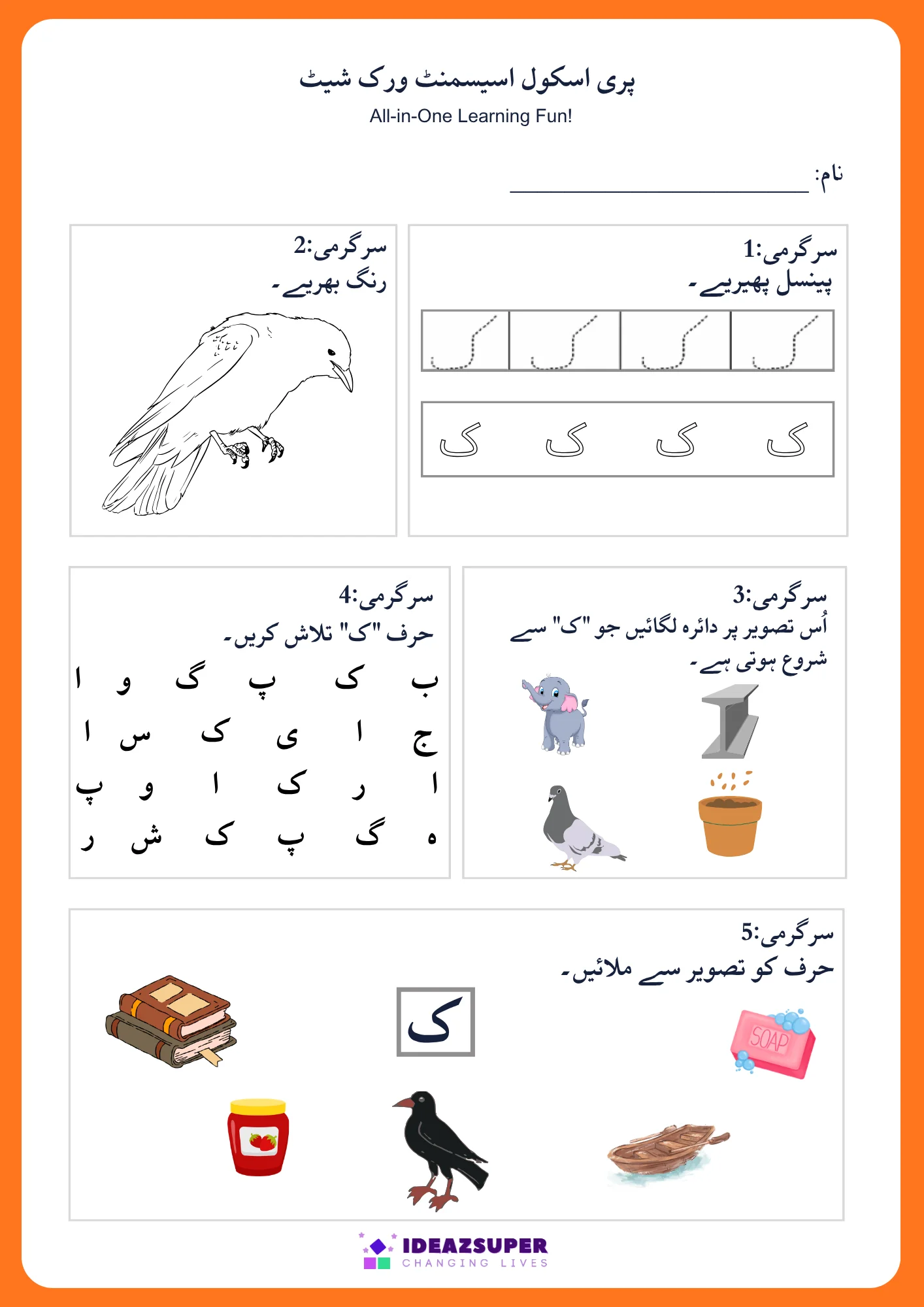
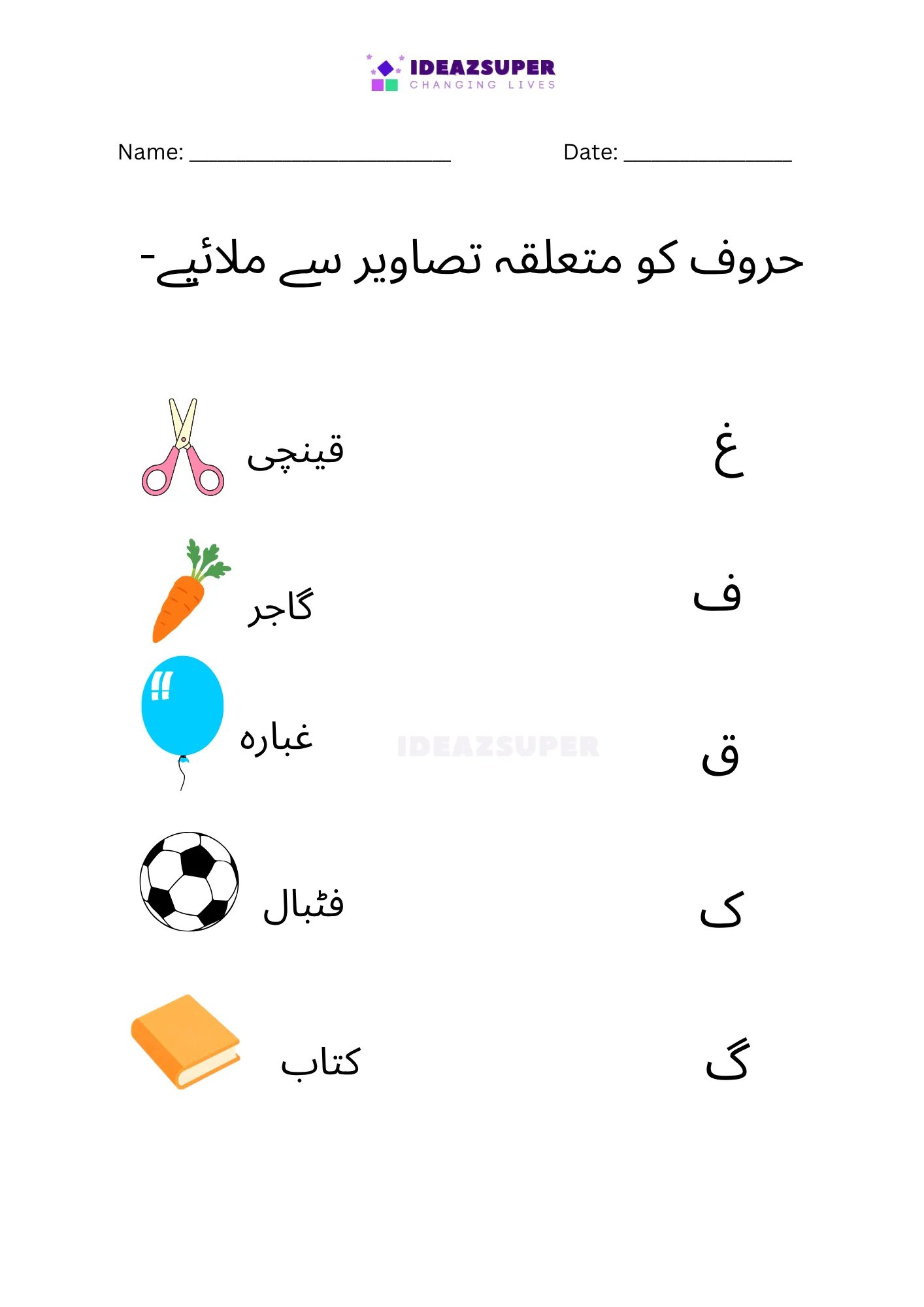
A short assessment lets you confirm your child recognises, sounds out, and writes ک confidently before moving on. This is designed to be completed after your child has worked through at least 3 of the activities above.
For a broader check across several haroof, try our Urdu assessment worksheets.
🏆 Celebrate
Letter Kaaf (ک) Certificate
Once your child passes the check, print this certificate together. It’s a small moment that makes them want to come back for Letter گ.
Click here to submit 3 completed worksheets and get a free printable certificate.
What’s next? The Gaaf (گ) Learning Path is coming soon. Meanwhile, revise the haroof you have learned so far. You can also browse our free Urdu worksheets or see all Learning Paths.
Frequently Asked Questions
How is Kaaf different from Gaaf?
Kaaf and Gaaf share a similar angular base shape, but Gaaf has an extra small stroke that Kaaf doesn’t. Kaaf makes a /k/ sound close to English “k,” while Gaaf makes a /g/ sound close to English “g” — different enough by ear that listening alongside the shape helps confirm which is which.
Is Kaaf one of the more common letters in Urdu?
Yes — Kaaf appears frequently in everyday Urdu vocabulary, making it a reliable letter for building general reading confidence once the basic shape is familiar.
Is it okay to teach Urdu letters out of the traditional Qaida order?
This Learning Path follows the standard Alif-to-Yay sequence used in most Pakistani schools and Qaida books, which is the safest default if your child will eventually sit a school admission test. If you’re teaching purely at home with no test in mind, grouping visually similar letters together (like the Bay/Pay/Tay/Say family) can also work well.
How many activities does my child need to finish before getting the certificate?
Complete at least 3 activities from this page, then complete the assessment sheet to earn your certificate.