
Alif (ا)
Urdu Letter Alif (ا) — Preschool Haroof (Free Worksheets)
How to use this page
Work through the steps in order — watch, identify, hear the sound, colour, trace, write, then check. Most children finish in 10–15 minutes; some steps can be split across two days.
1 Watch
Letter Alif (ا) Sound & Shape
Start by watching a short video together. Seeing and hearing ا modelled first gives your child a reference point before any activity begins.
2 Colour
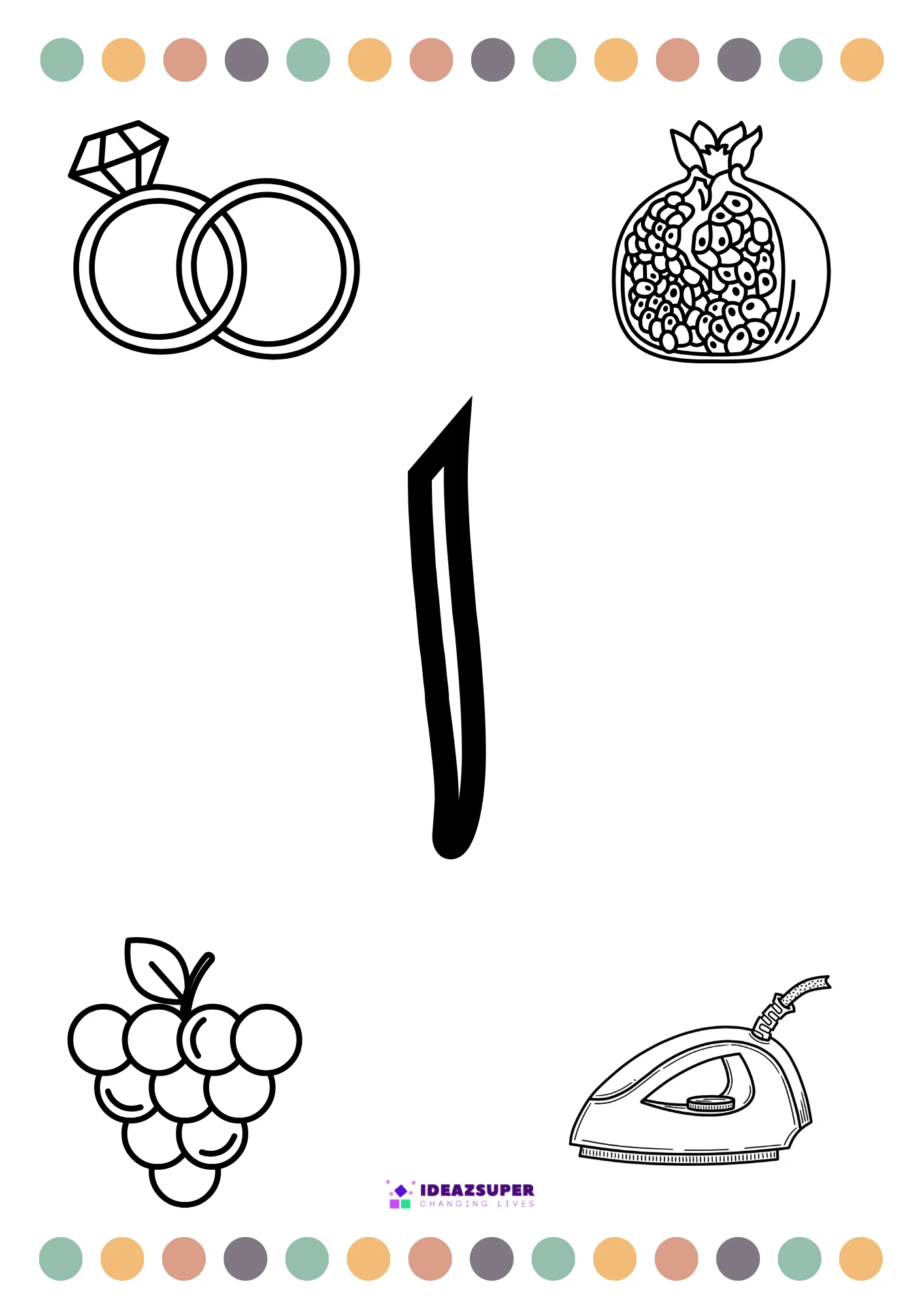
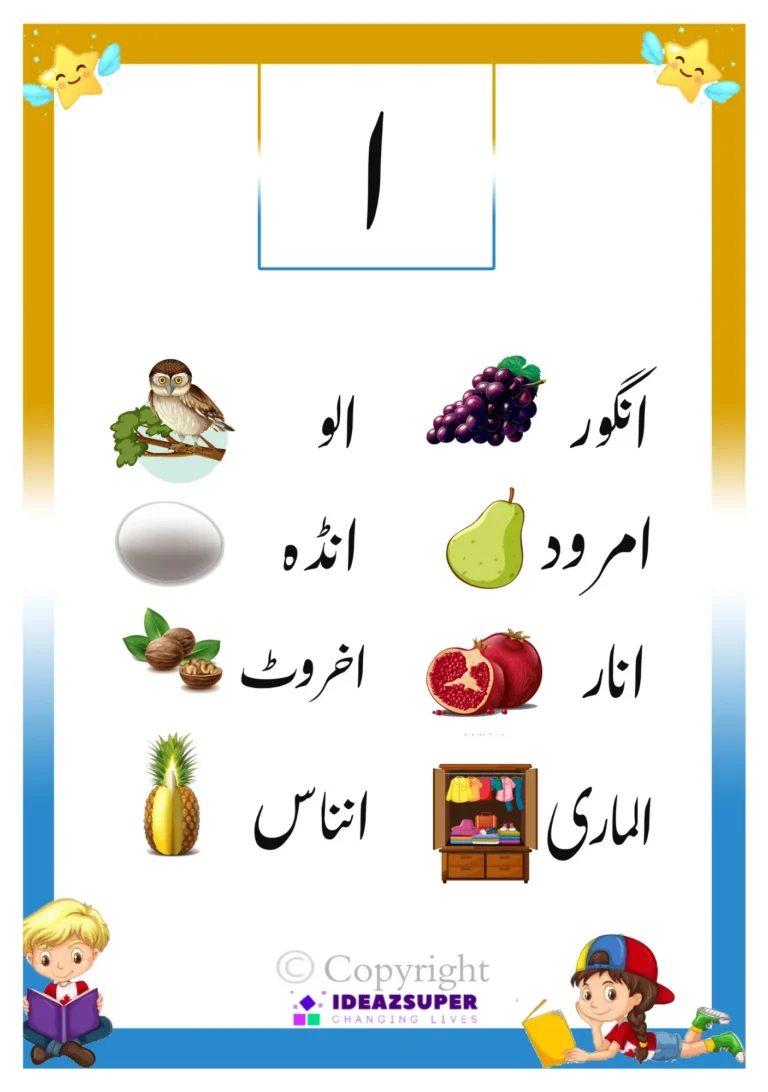
Colouring ا helps your child spend relaxed, hands-on time with its shape while building fine motor control with a crayon or pencil. This page pairs the letter with a picture for انار (Anaar — Pomegranate), so your child connects the shape to its sound while colouring.
3 Identify
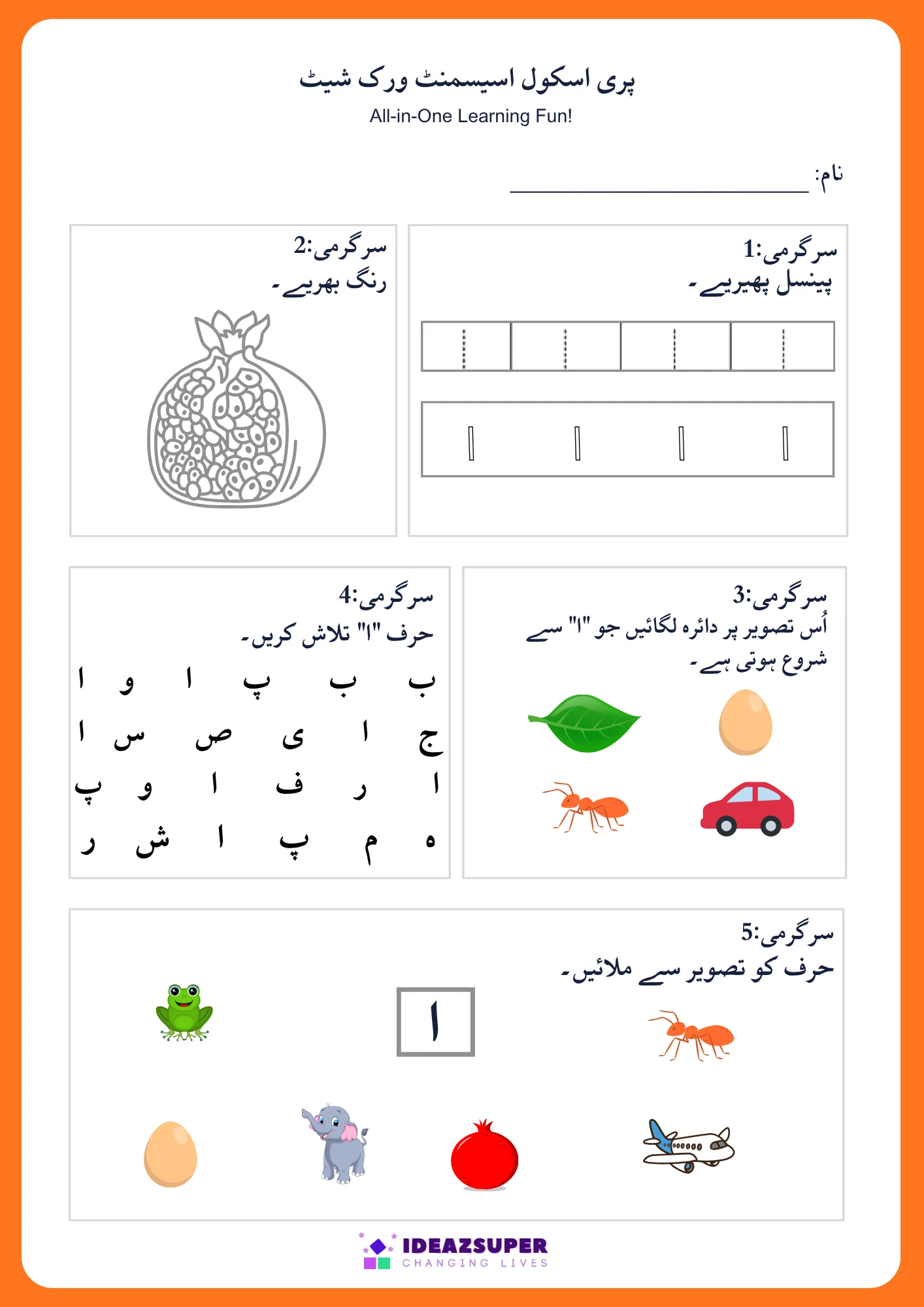
Alif has the simplest shape in the alphabet — a single vertical stroke — so identification practice mainly focuses on telling it apart from other tall, straight-stroke letters like Laam and Kaaf. These activities ask your child to circle, find, or match the correct letter among similar-looking ones.
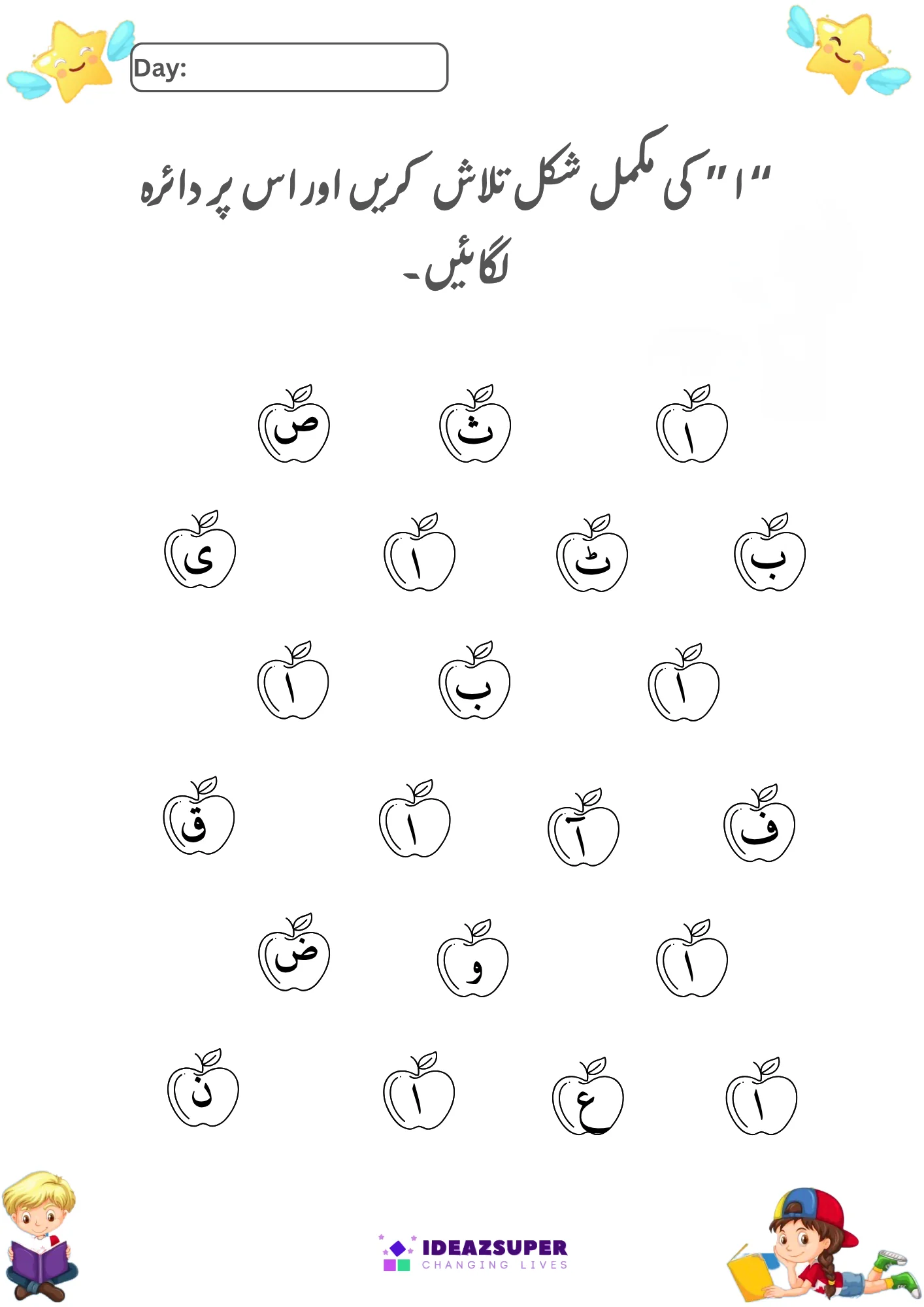
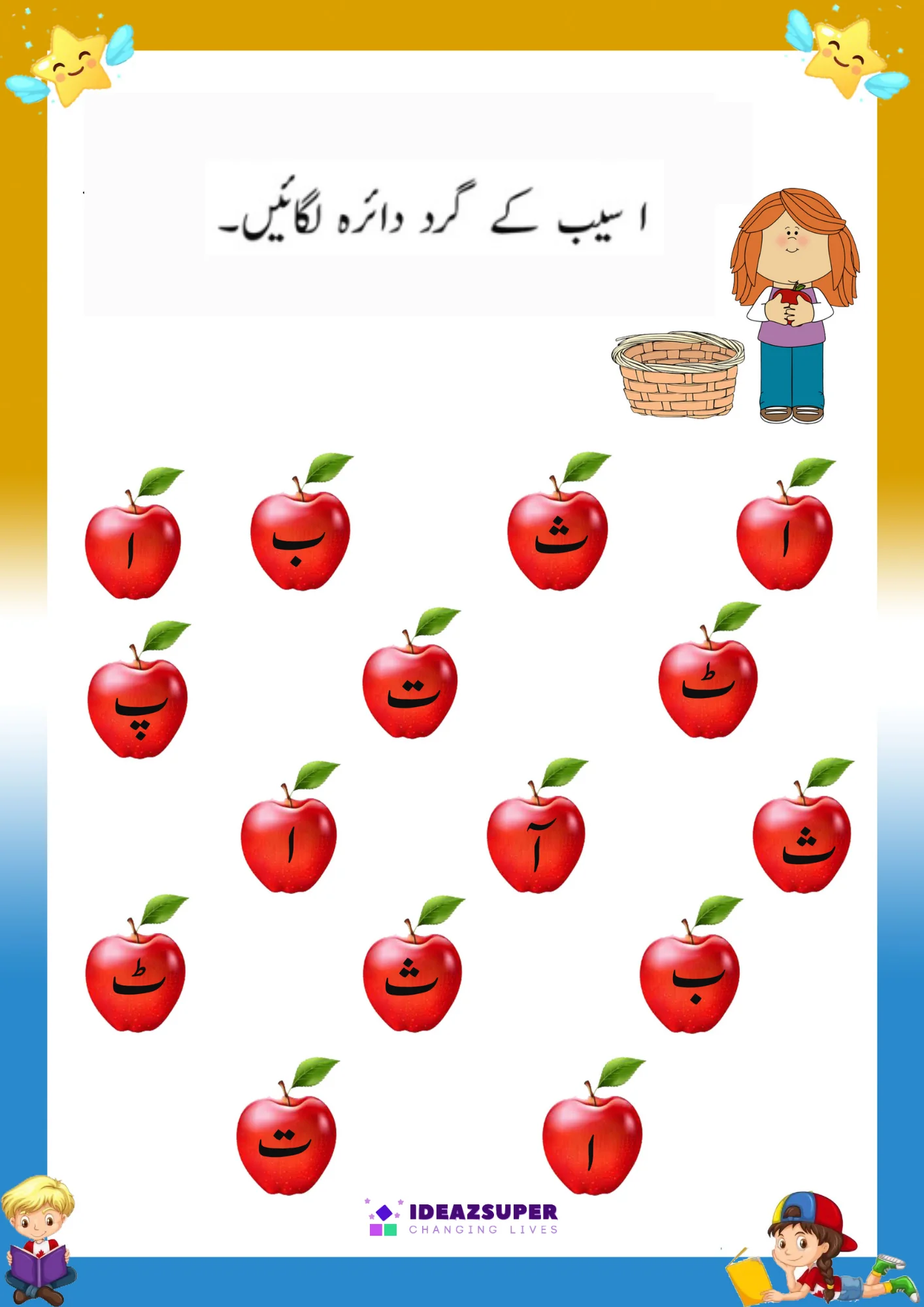
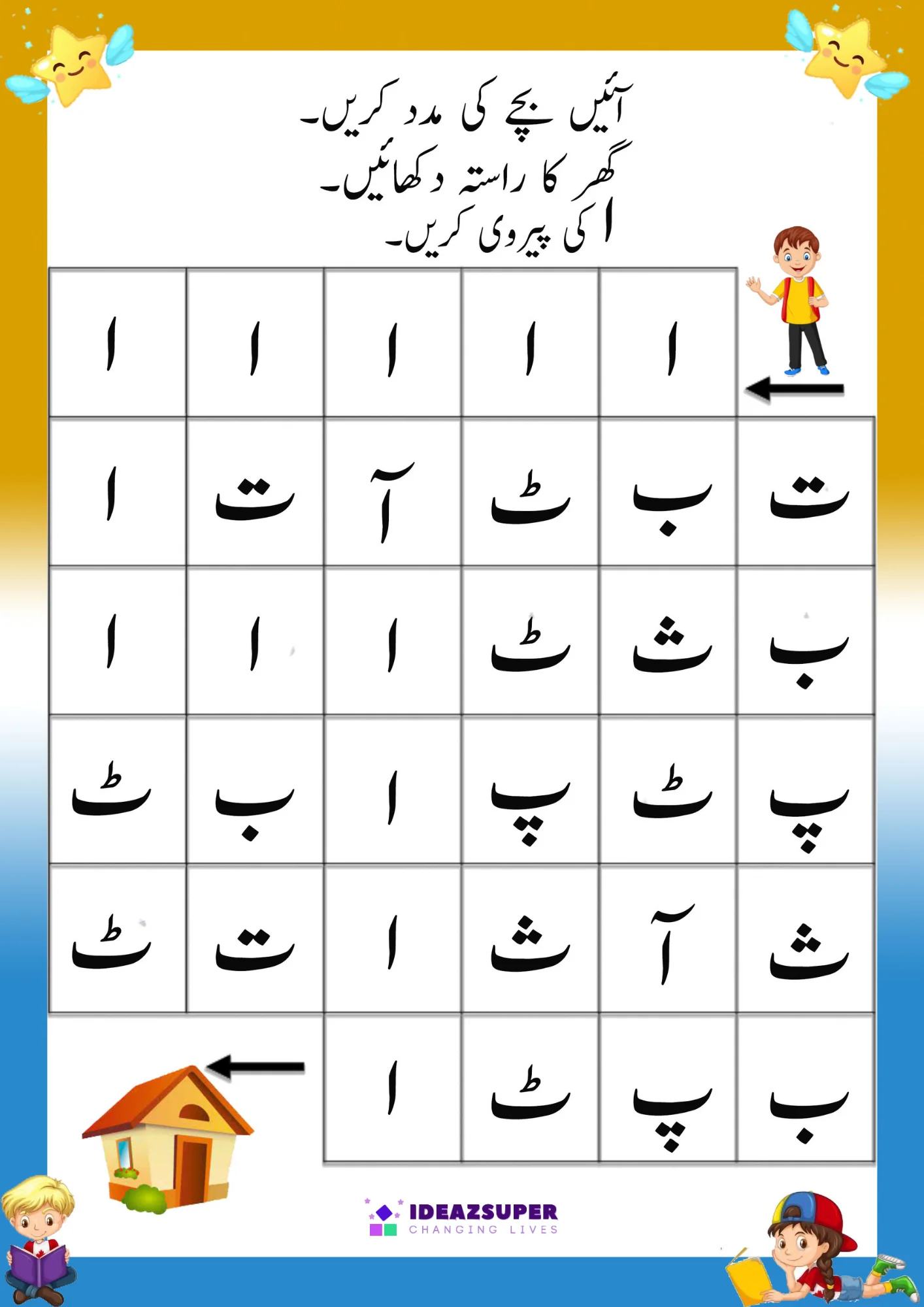
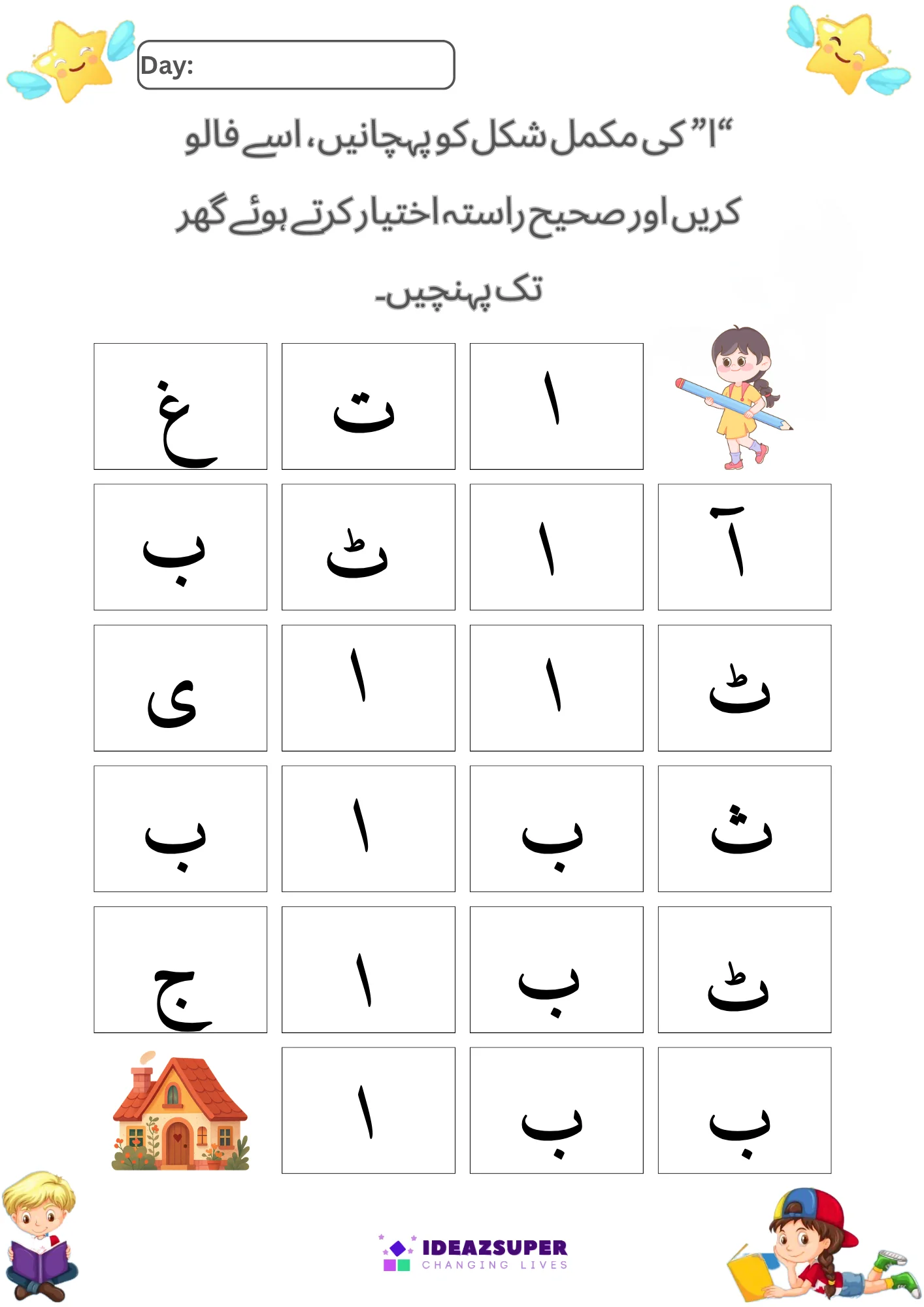
💡 Say it out loud
While your child works through the sheet, say: “Alif — Anaar, Aam, Angoor.” Verbal repetition alongside the worksheet helps your child connect the letter, sound, and familiar words.
4 Connect
Alif says /a/
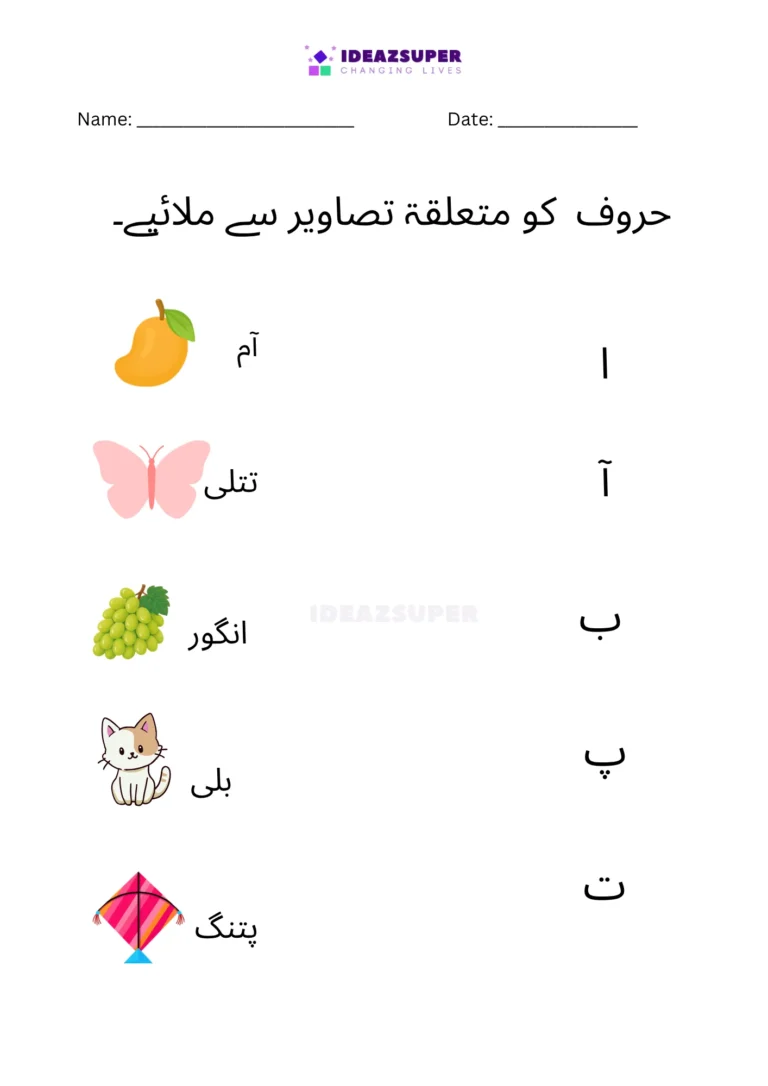
Alif is a vowel-carrier rather than a true consonant — on its own it represents a long /aa/ sound, as in the first sound of Anaar (pomegranate). These activities connect the shape of the letter to its beginning sound using pictures your child already recognises.
5 Trace
Learn the Correct Stroke
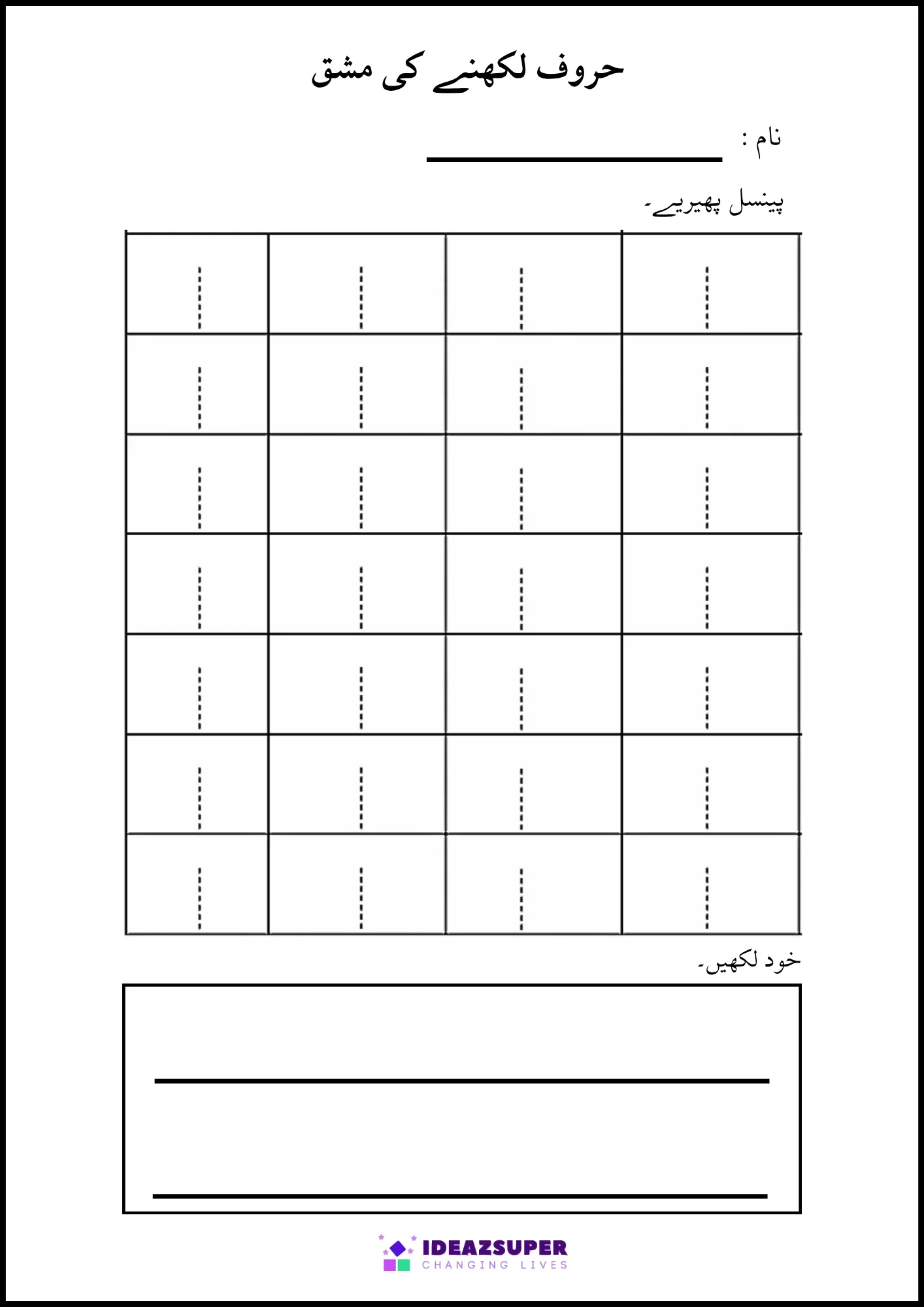
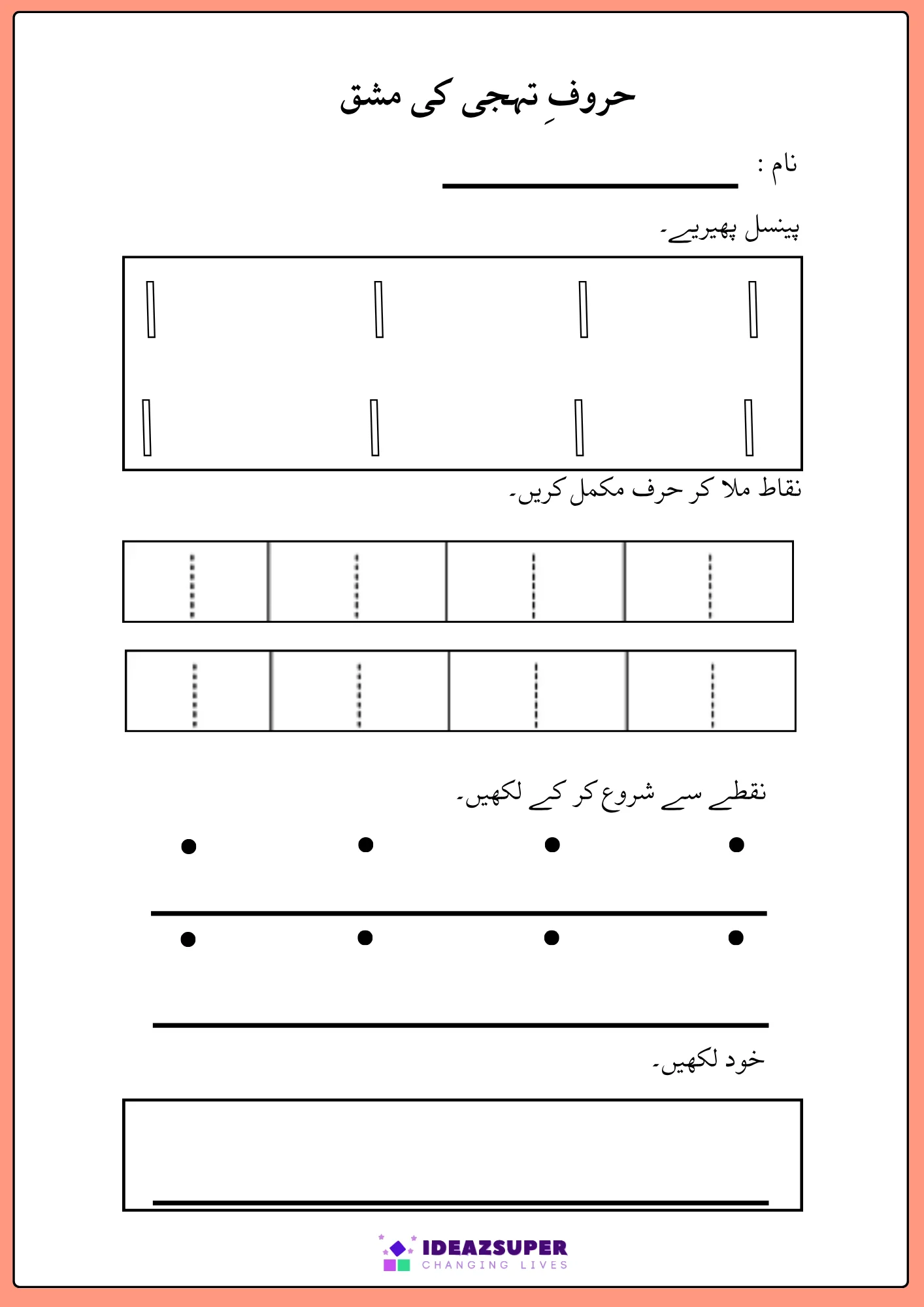
Alif is one of the seven letters that never connects to the letter after it, so tracing it always means practising it as a fully separate stroke, even inside a word. Tracing helps your child build the correct starting point and stroke direction before attempting it freehand.
6 Write Independently
No Dotted Guide
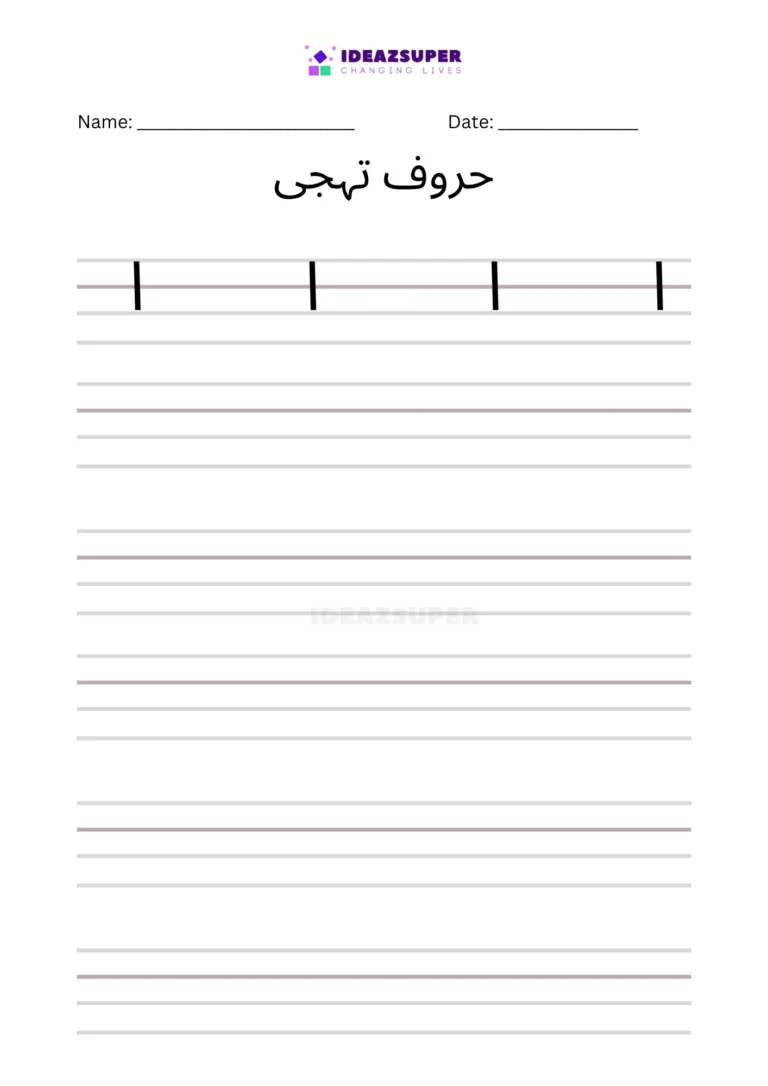
Once tracing feels comfortable, move to writing ا without the guide. If it feels tricky at first, that’s a normal early stage — steady practice, not correction, is what builds it into muscle memory.
ℹ️ Only do this once 1–5 are solid
Blending is the payoff step, not a starting point. If your child hasn’t mastered identification and sound yet, come back to this after another week of practice.
7 Check
A short assessment lets you confirm your child recognises, sounds out, and writes ا confidently before moving on. This is designed to be completed after your child has worked through at least 3 of the activities above.
🏆 Celebrate
Letter Alif (ا) Certificate
Once your child passes the check, print this certificate together. It’s a small moment that makes them want to come back for Letter ب.
Click here to submit 3 completed worksheets and get a free printable certificate.
Frequently Asked Questions
Why does Alif never join to the next letter?
Alif is one of seven Urdu letters (along with Dal, Zaal, Ray, Zay, Zhay, and Wao) that never connect to the letter that follows them. This is a fixed rule of the script, not something your child needs to memorise abstractly — repeated exposure to words containing Alif makes the pattern familiar naturally.
Does Alif always make the same sound?
Mostly yes — Alif typically represents a long /aa/ sound. Combined with certain diacritical marks it can shift slightly, but at this stage your child only needs the standard long /aa/ sound used in everyday words like Anaar.
At what age should a child start learning Alif?
Identification can start from age 3. Tracing is appropriate once your child can hold a pencil with reasonable control, usually 3.5–4. Independent writing typically follows a few weeks after tracing feels easy.
How many activities does my child need to finish before getting the certificate?
Complete at least 3 activities from this page, then complete the assessment sheet to earn your certificate.