
Pay (پ)
Urdu Letter Pay (پ) — Preschool Haroof (Free Worksheets)
How to use this page
Work through the steps in order — watch, identify, hear the sound, colour, trace, write, then check. Most children finish in 10–15 minutes; some steps can be split across two days.
1 Watch
Letter Pay (پ) Sound & Shape
Start by watching a short video together. Seeing and hearing پ modelled first gives your child a reference point before any activity begins.
2 Colour
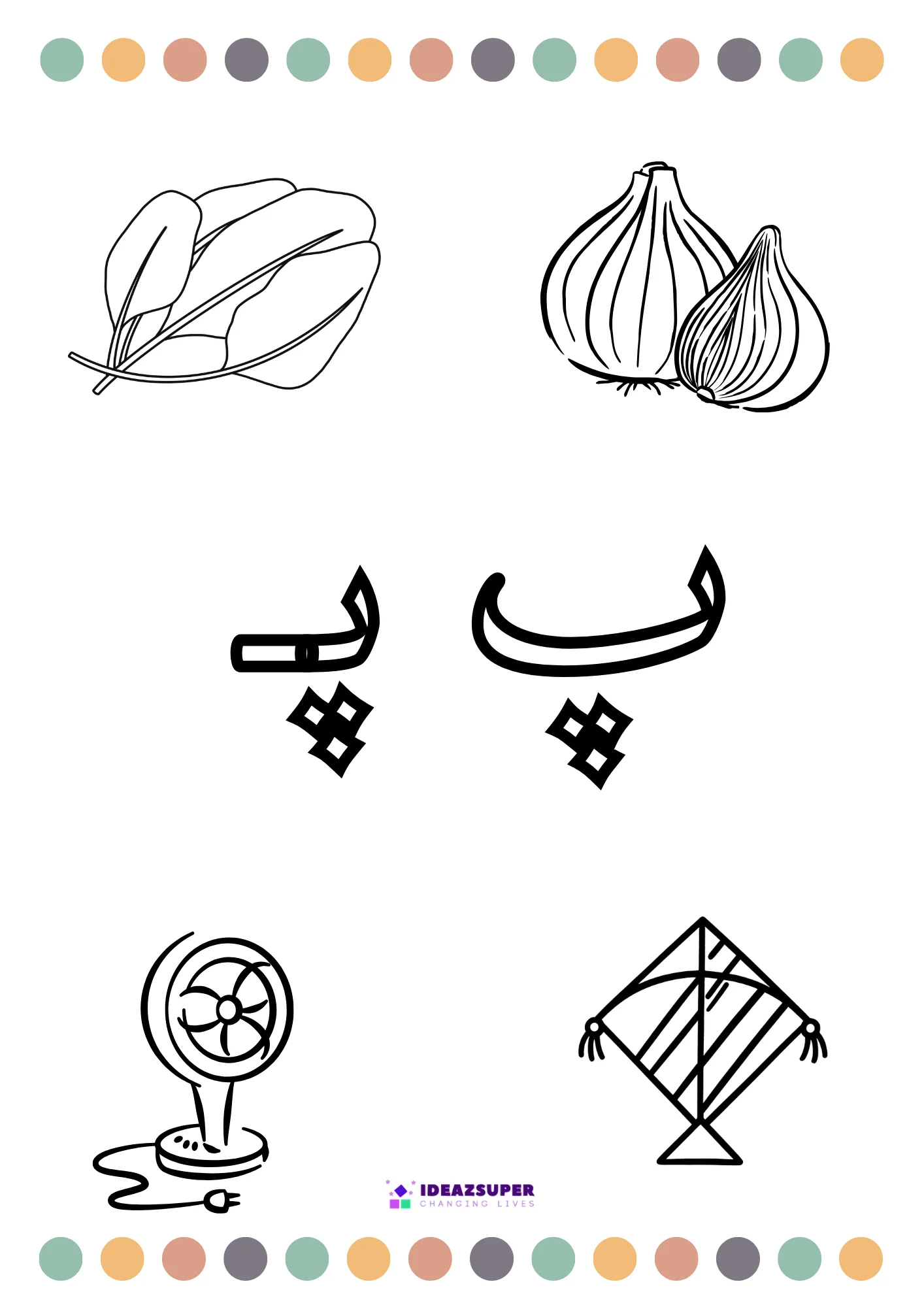
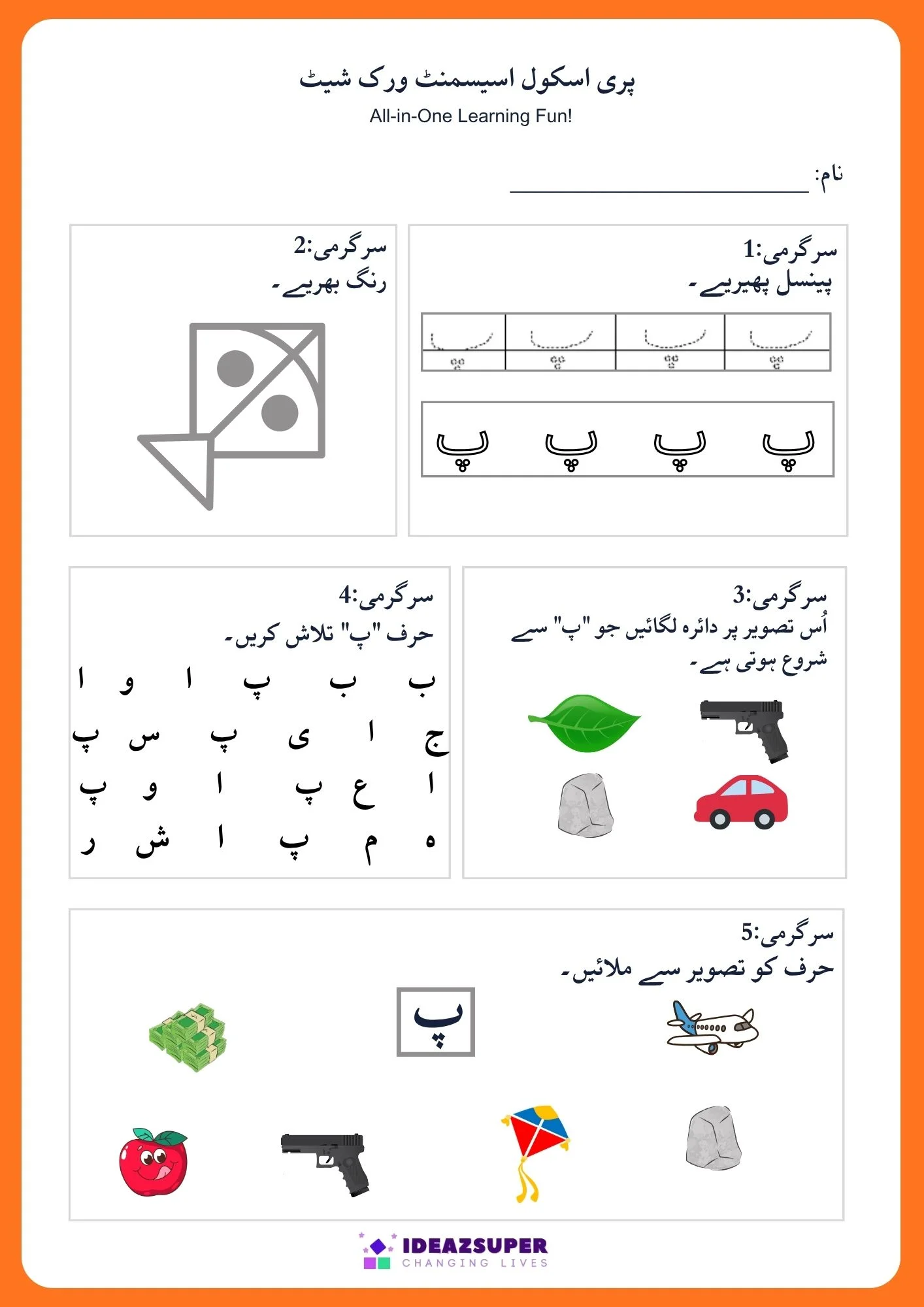
Colouring پ helps your child spend relaxed, hands-on time with its shape while building fine motor control with a crayon or pencil. This page pairs the letter with a picture for پتنگ (Patang — Kite), so your child connects the shape to its sound while colouring.
3 Identify
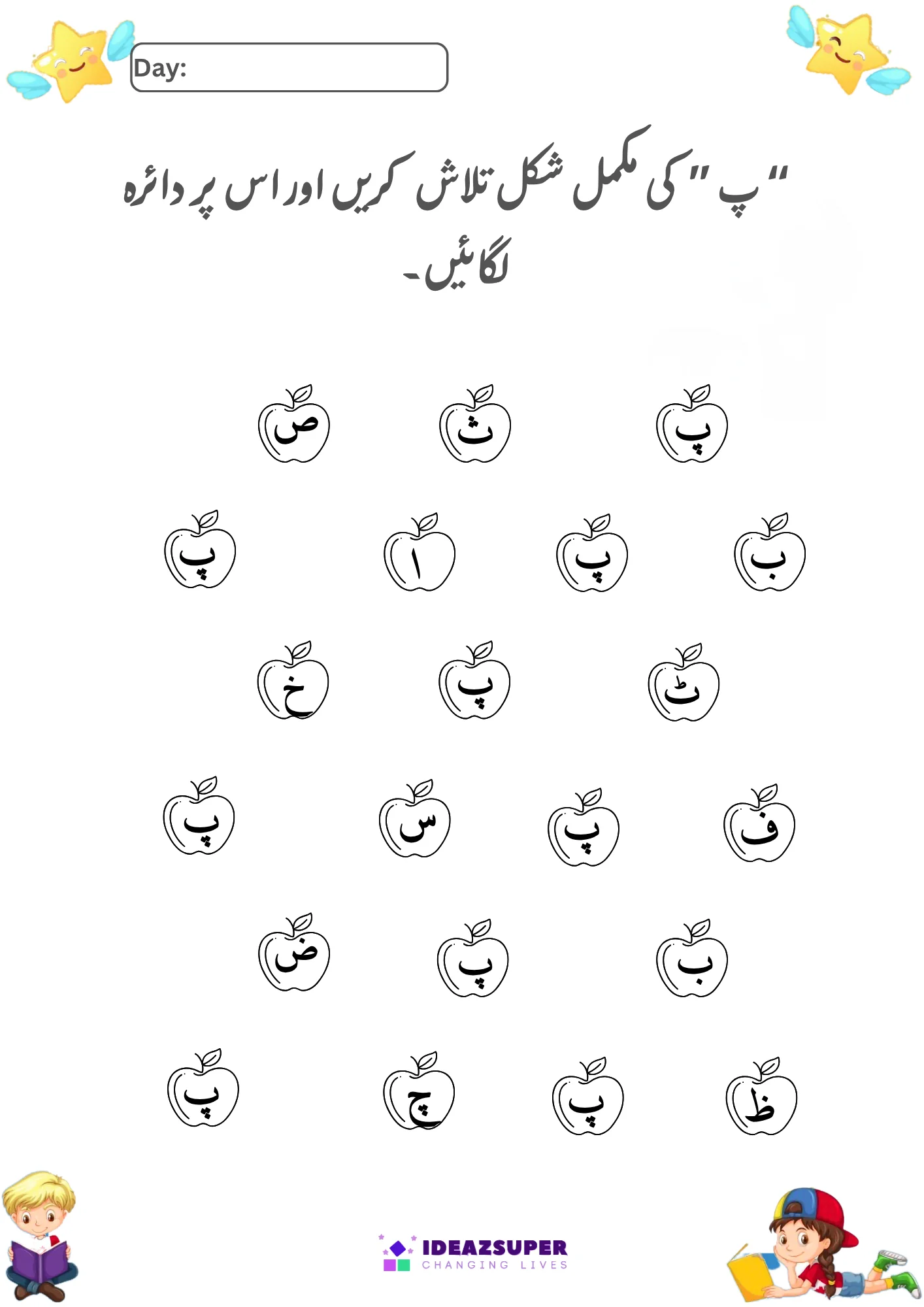
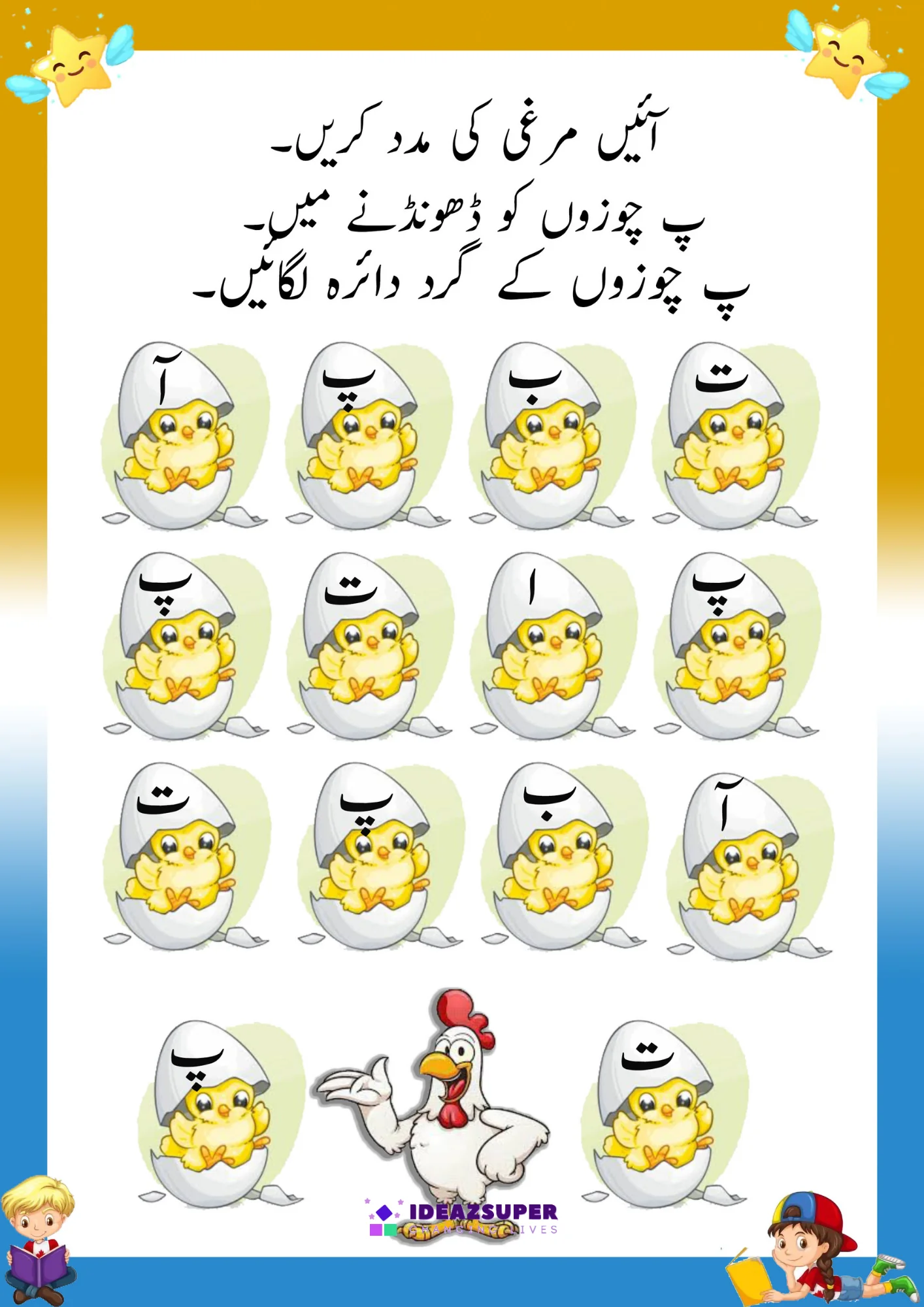
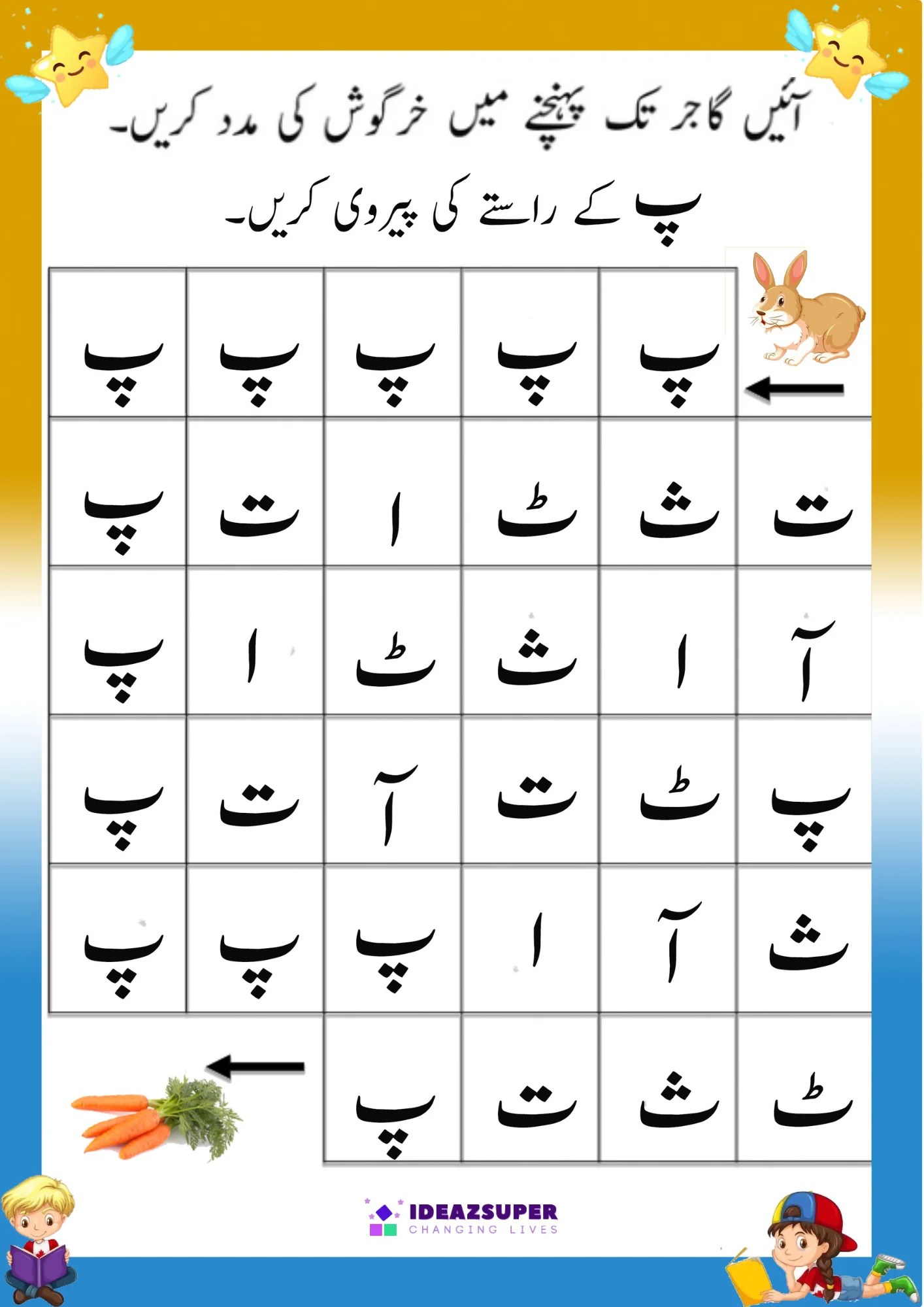
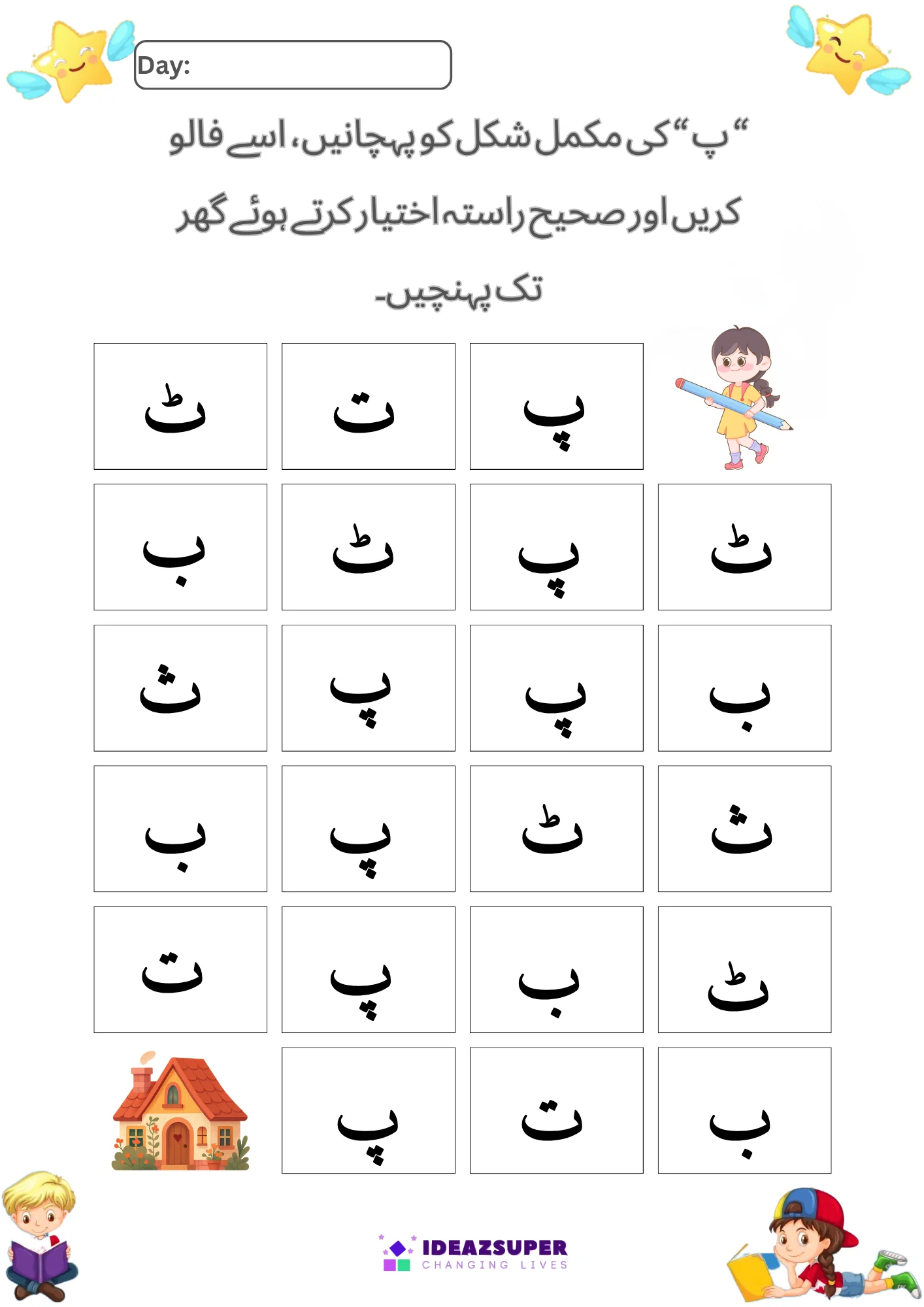
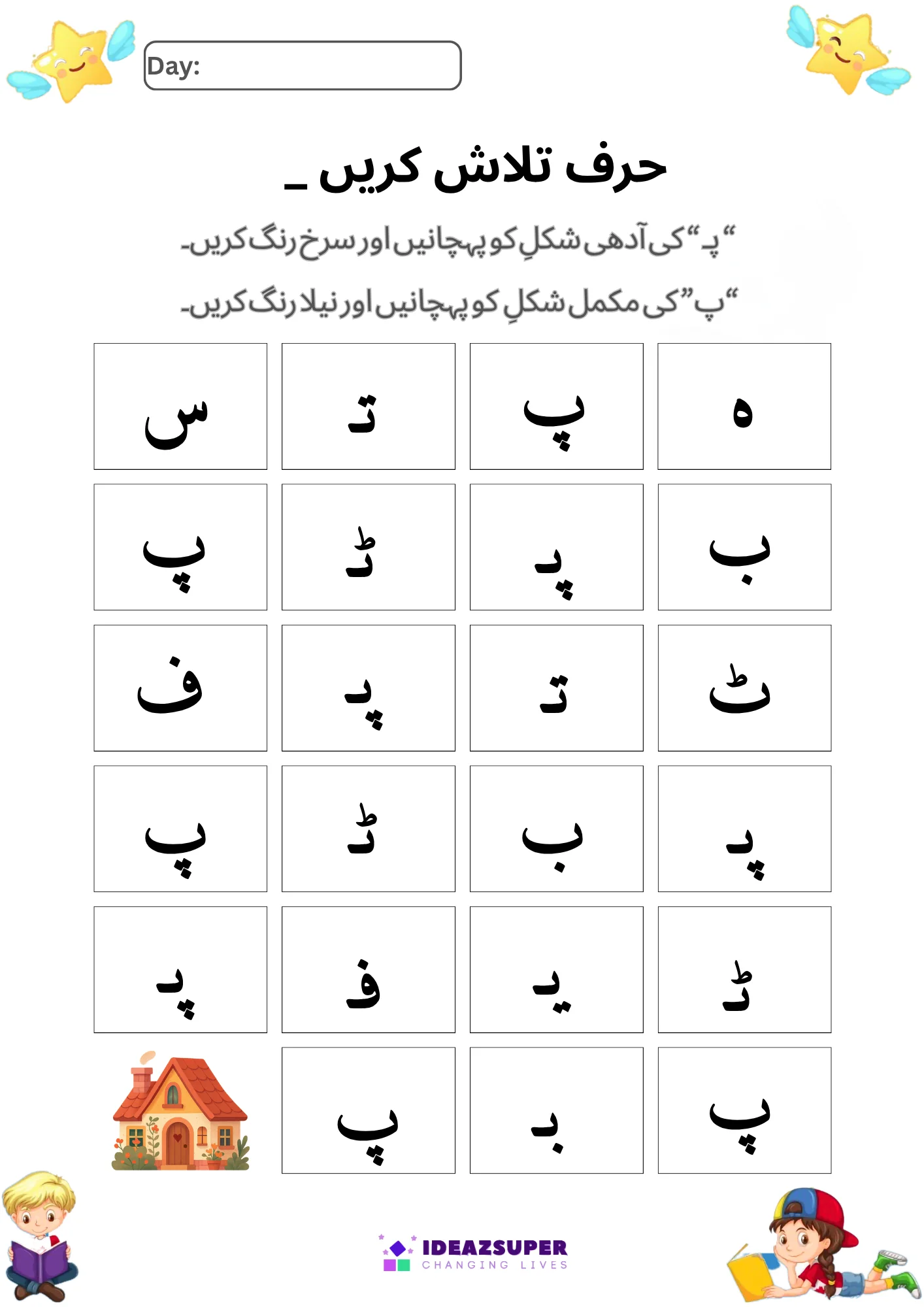
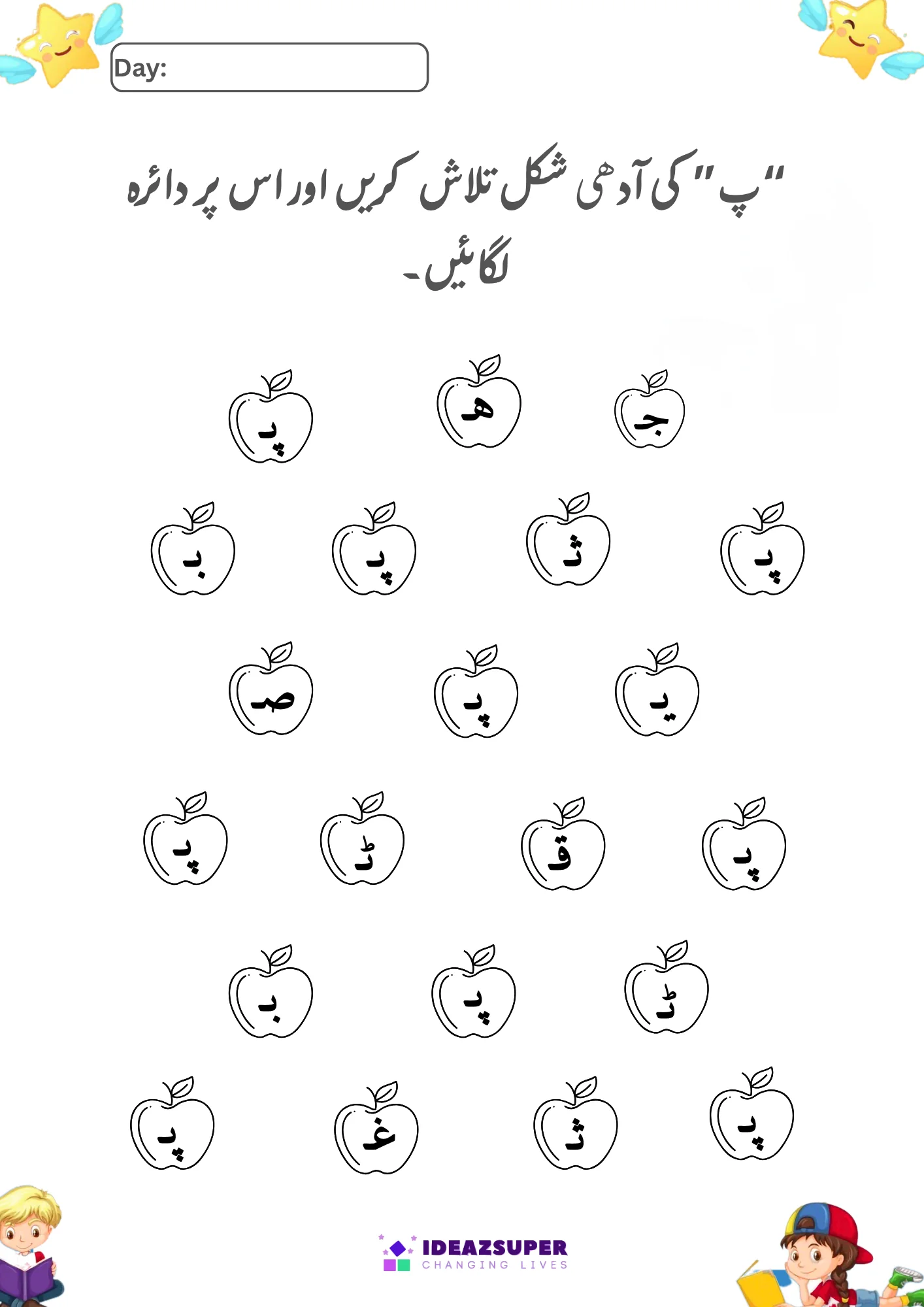
Pay shares its shape with Bay, Tay, and Say, distinguished by three dots placed below the letter. These activities ask your child to circle, find, or match the correct letter among similar-looking ones.
💡 Say it out loud
While your child works through the sheet, say: “Pay — Patang, Paani, Pankha.” Verbal repetition alongside the worksheet helps your child connect the letter, sound, and familiar words.
4 Connect
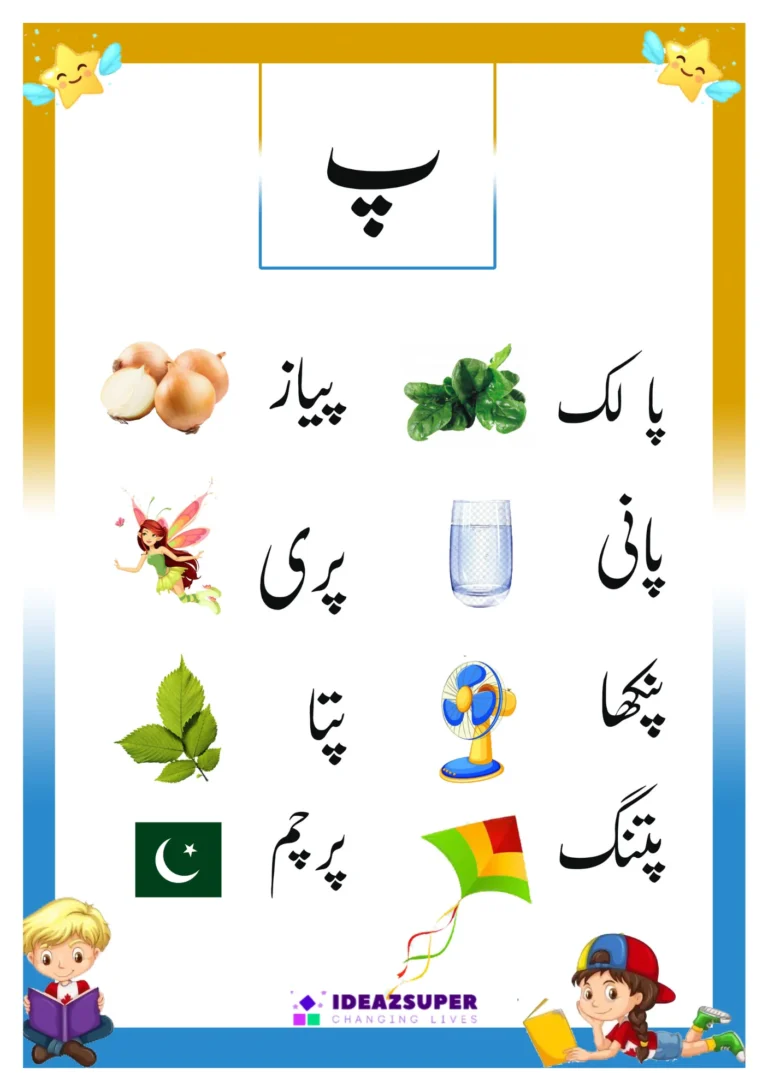
Pay says /p/ — پ
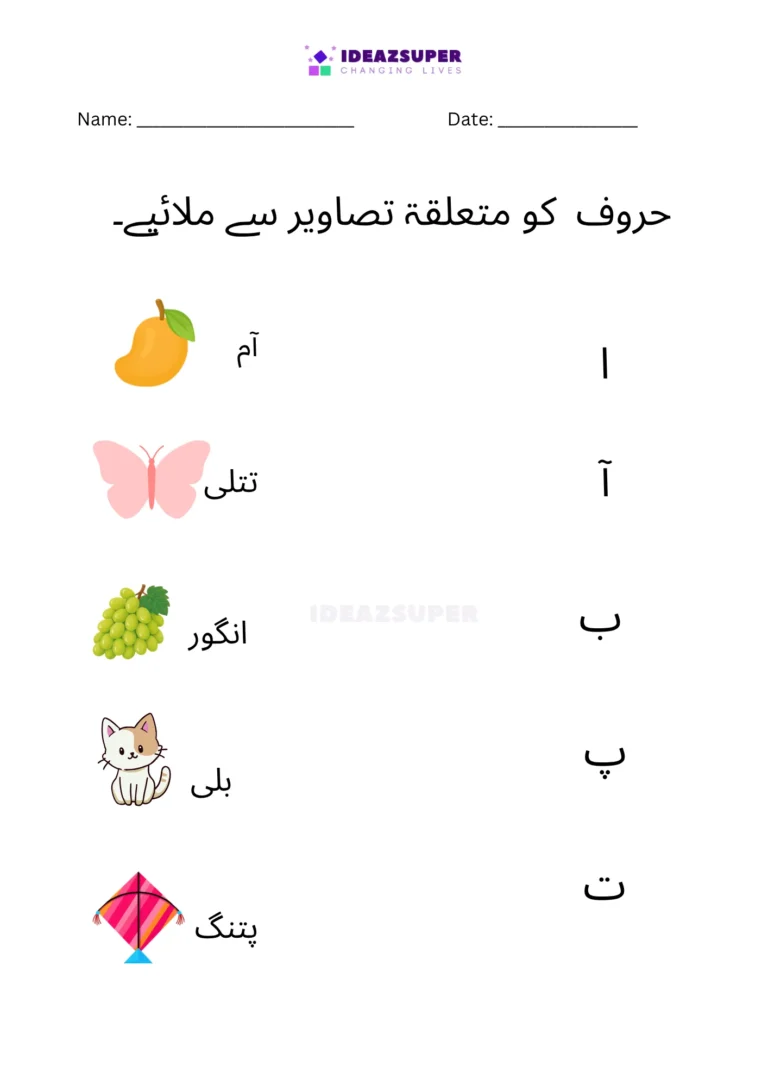
Pay represents a /p/ sound close to the English “p” — a sound that doesn’t exist in Arabic, which is why Pay was added specifically for Urdu and Persian. These activities connect the shape of the letter to its beginning sound using pictures your child already recognises.
5 Trace
Learn the Correct Stroke
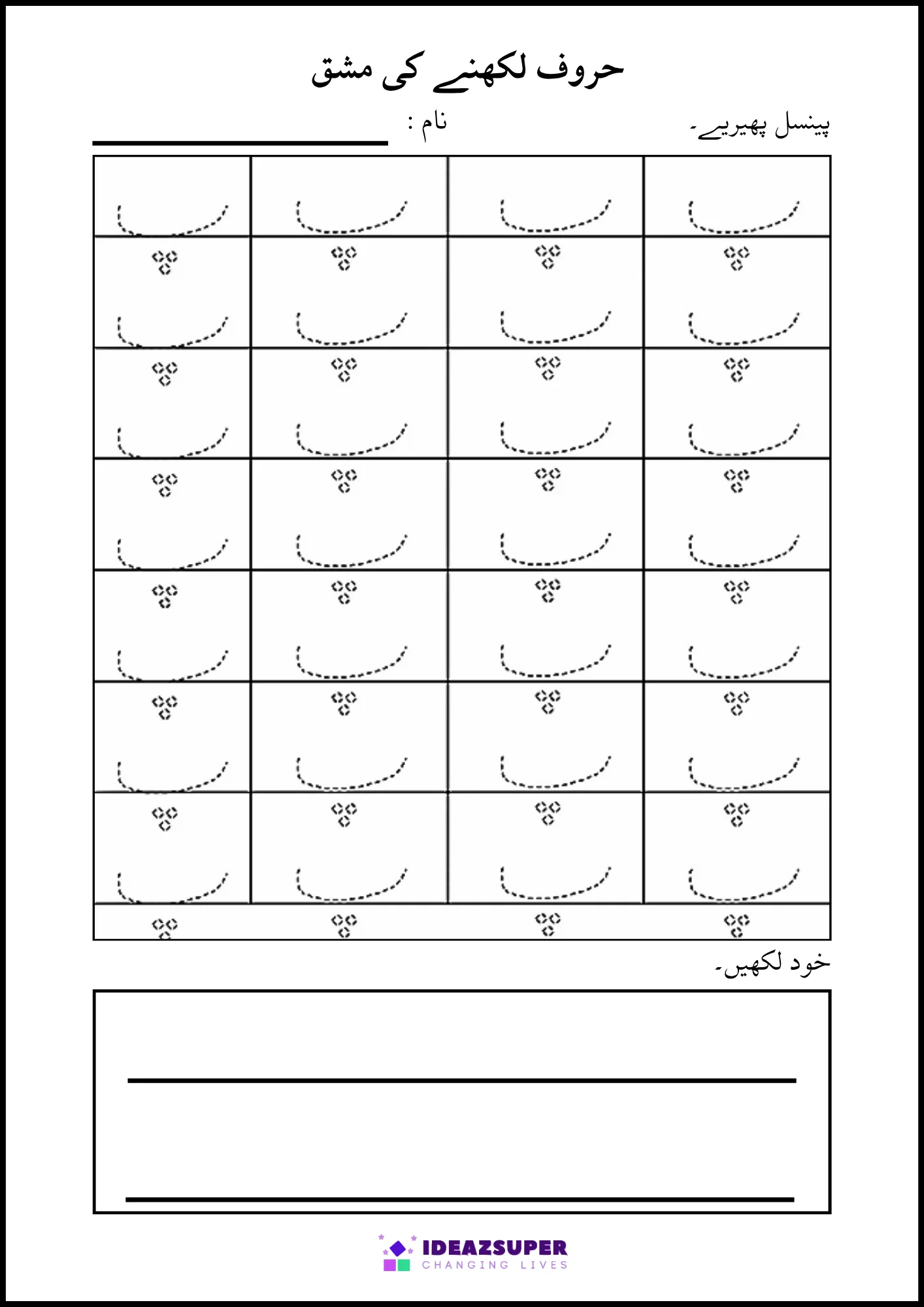
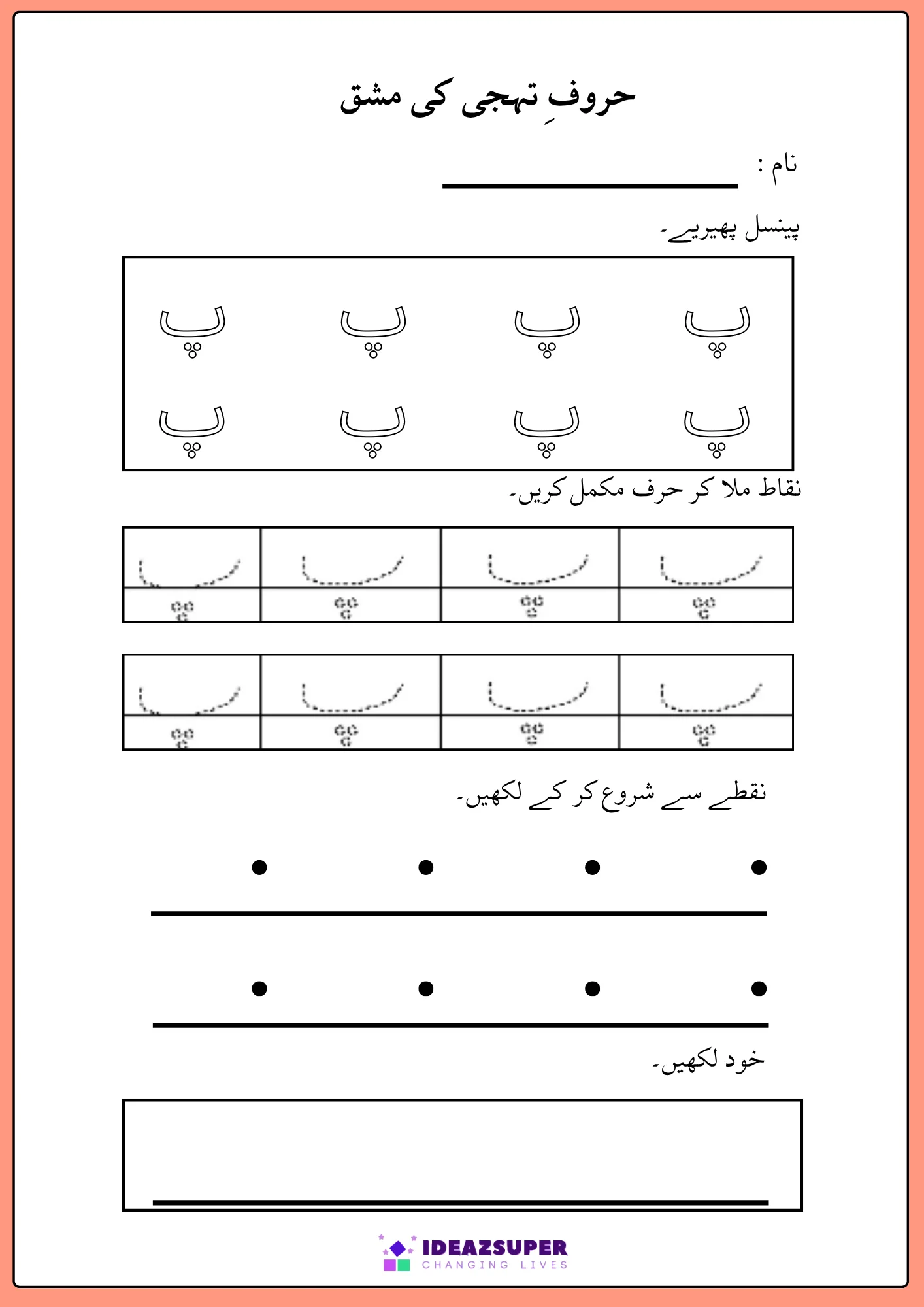
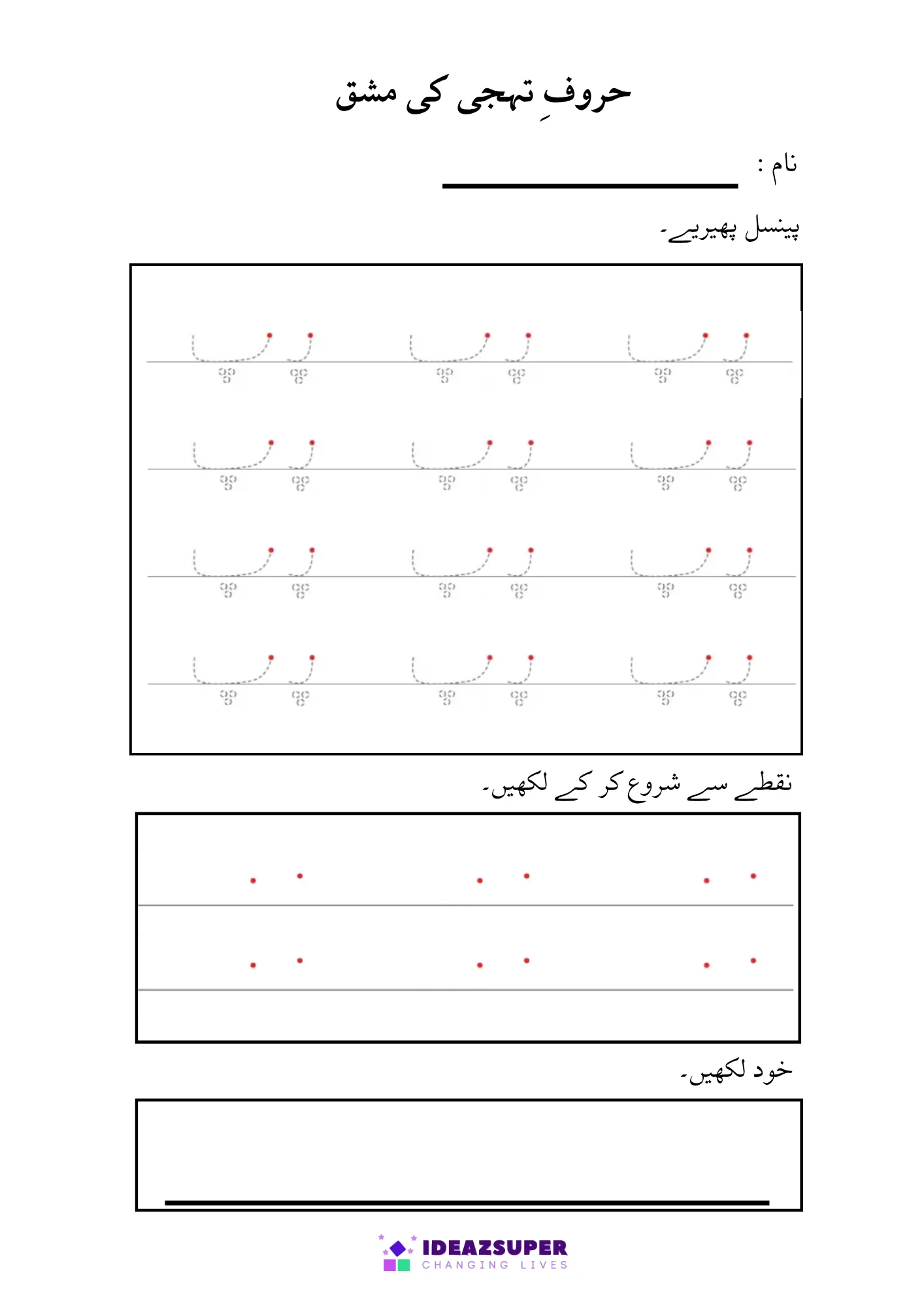
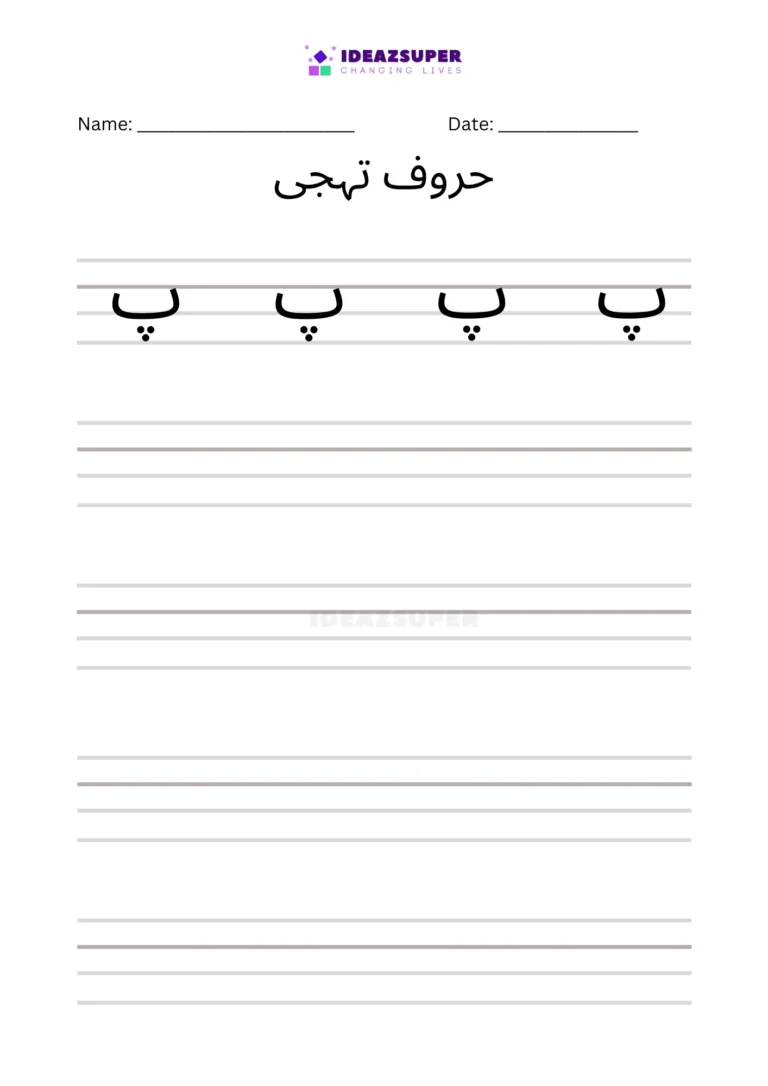
Pay is a joining letter, so its shape adjusts slightly depending on its position in a word — the isolated form practised here is the foundation for recognising those variations. Tracing helps your child build the correct starting point and stroke direction before attempting it freehand.
6 Write Independently
No Dotted Guide
Once tracing feels comfortable, move to writing ا without the guide. If it feels tricky at first, that’s a normal early stage — steady practice, not correction, is what builds it into muscle memory.
ℹ️ Only do this once 1–5 are solid
Blending is the payoff step, not a starting point. If your child hasn’t mastered identification and sound yet, come back to this after another week of practice.
7 Check
A short assessment lets you confirm your child recognises, sounds out, and writes پ confidently before moving on. This is designed to be completed after your child has worked through at least 3 of the activities above.
🏆 Celebrate
Letter Pay (پ) Certificate
Once your child passes the check, print this certificate together. It’s a small moment that makes them want to come back for Letter ث.
Click here to submit 3 completed worksheets and get a free printable certificate.
Frequently Asked Questions
Why does Pay have three dots?
The three dots below Pay distinguish it from Bay (one dot) within the same base letter shape. Urdu added Pay to the original Arabic-derived alphabet specifically because Arabic has no /p/ sound — it’s one of a handful of letters unique to Urdu and Persian.
Why does Urdu have a letter for "p" if Arabic doesn’t?
Arabic has no /p/ sound, so when Urdu (and Persian) borrowed the Arabic script, four extra letters — Pay, Chay, Zhay, and Gaaf — were added to cover sounds Arabic didn’t have. Pay is one of the most commonly used of these four.
How long should we spend on Pay before moving to the next letter?
2–3 days of focused practice is typical. If your child passes the Pay check comfortably, move on — don’t wait for perfection, since review happens naturally as later letters and words repeat earlier sounds.
How many activities does my child need to finish before getting the certificate?
Complete at least 3 activities from this page, then complete the assessment sheet to earn your certificate.