
9 (Nine)
Number 9 (Nine) — Preschool Math Learning
How to use this page
Work through the steps in order — watch, identify, hear the sound, colour, trace, write, then check. Most children finish in 10–15 minutes; some steps can be split across two days.
1 Watch
Start by watching a short video together. Seeing and hearing the number 9 (Nine) modelled first gives your child a reference point before any activity begins.
2 Colour
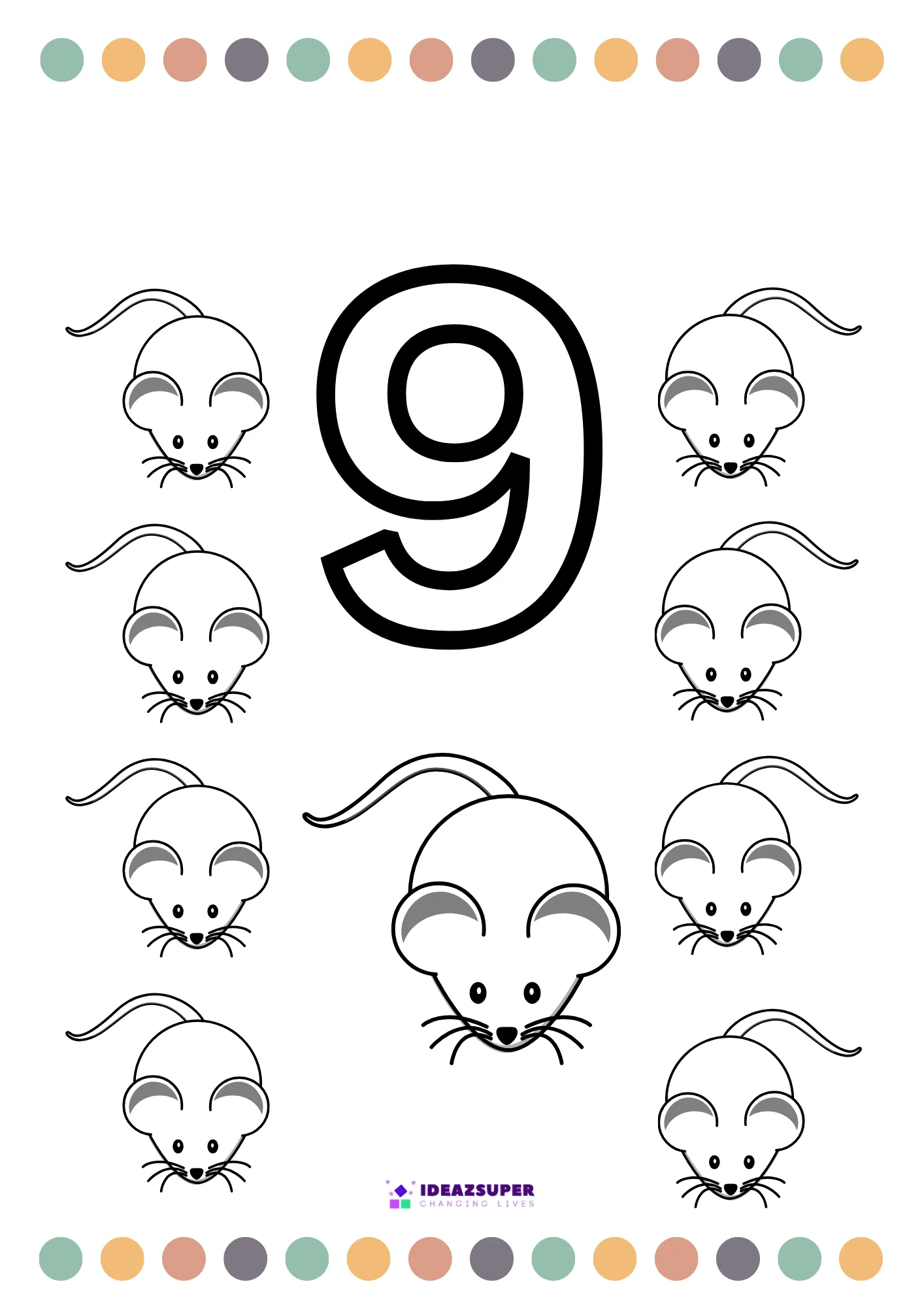
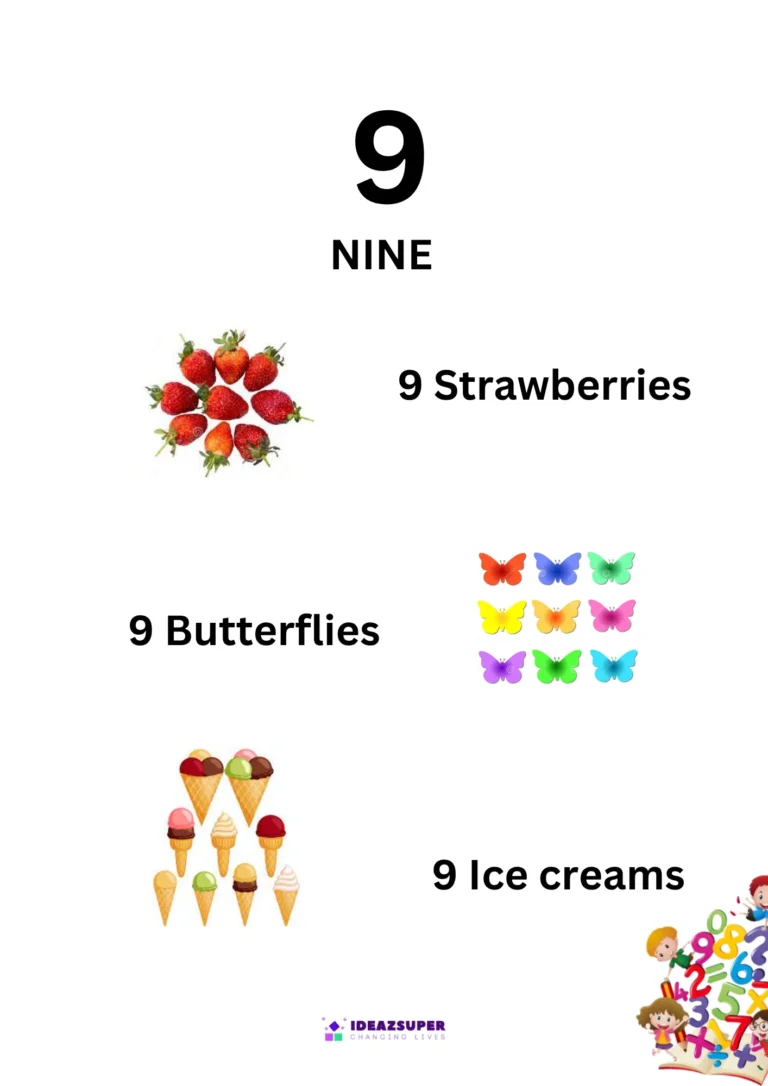
Colouring the number 9 helps your child spend relaxed, hands-on time with its shape while building fine motor control with a crayon or pencil. This page pairs the big numeral with 9 pictures to colour, so your child sees the quantity repeated as they work.
3 Identify
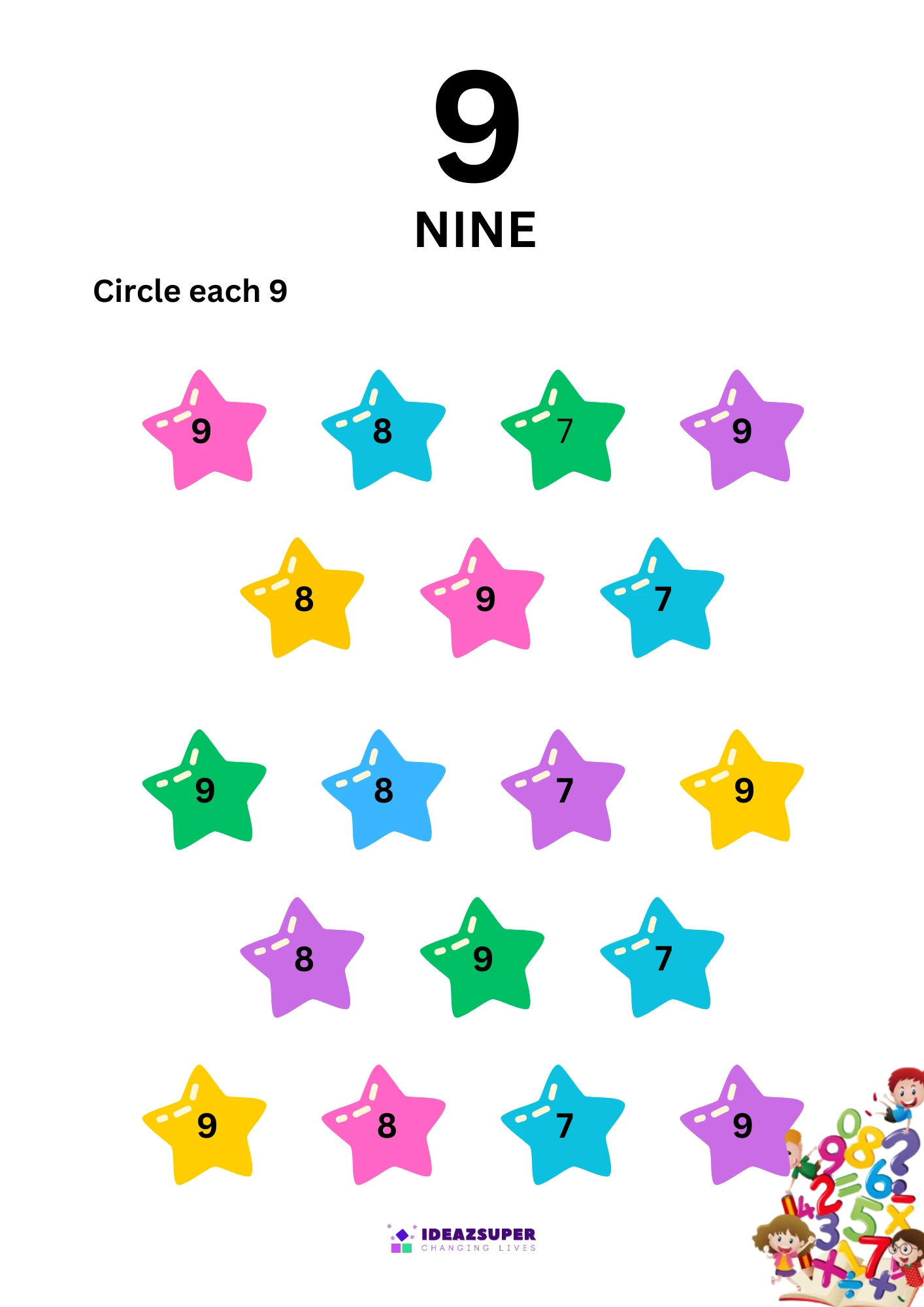
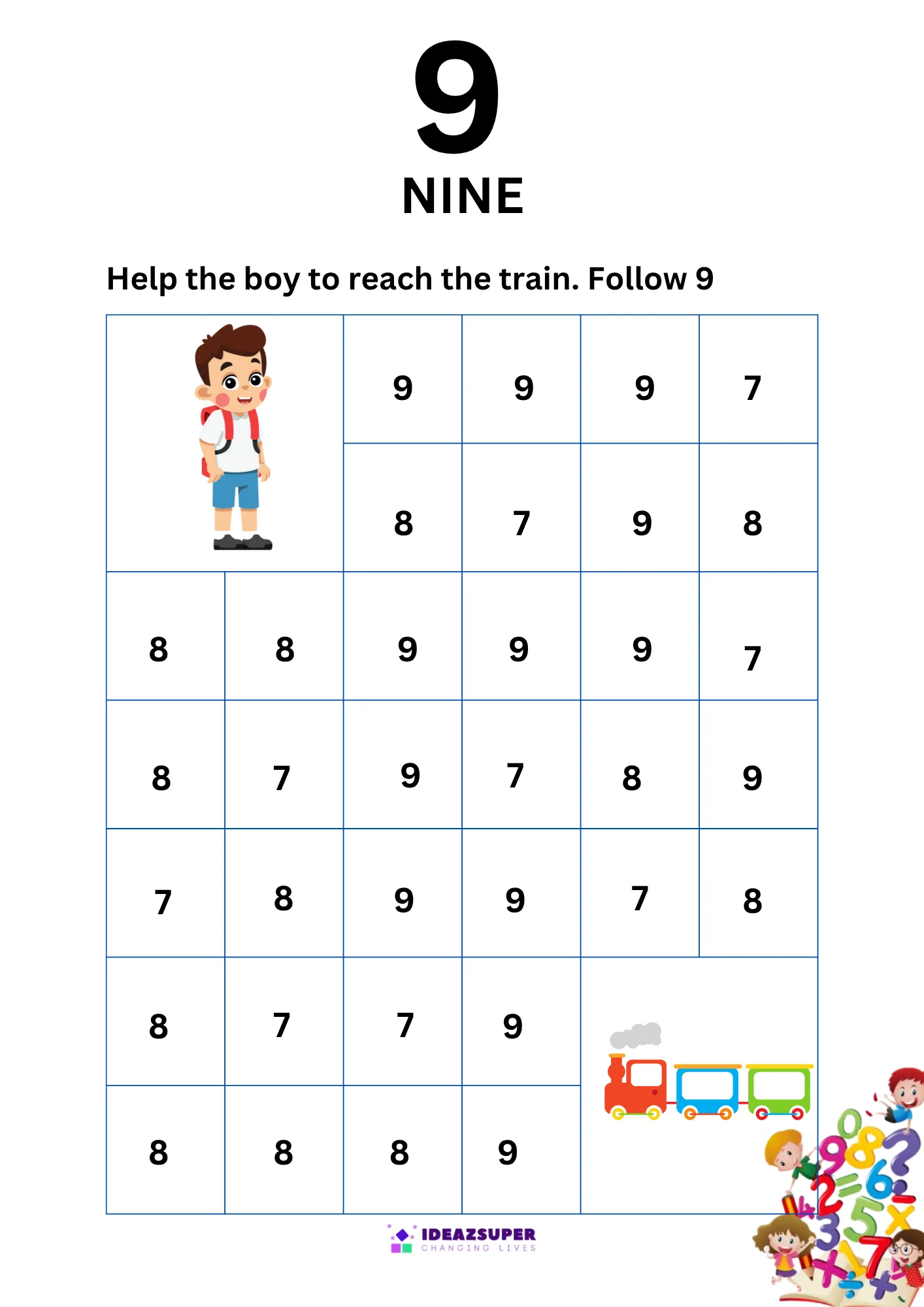
The numeral 9 is a mirror image of 6 — 9 has its circle at the top, 6 has its circle at the bottom — and the two are frequently confused. These activities ask your child to circle, find, or match the correct numeral among similar-looking ones.
For more practice, try our Circle the Number worksheets (1–20) or the Find the Path number mazes.
💡 Say it out loud
While your child works through the sheet, say: “9 — Nine.” Verbal repetition alongside the worksheet helps your child connect the number, name, and quantity.
4 Connect
Colouring the number 9 helps your child spend relaxed, hands-on time with its shape while building fine motor control with a crayon or pencil. This page pairs the big numeral with 9 pictures to colour, so your child sees the quantity repeated as they work.
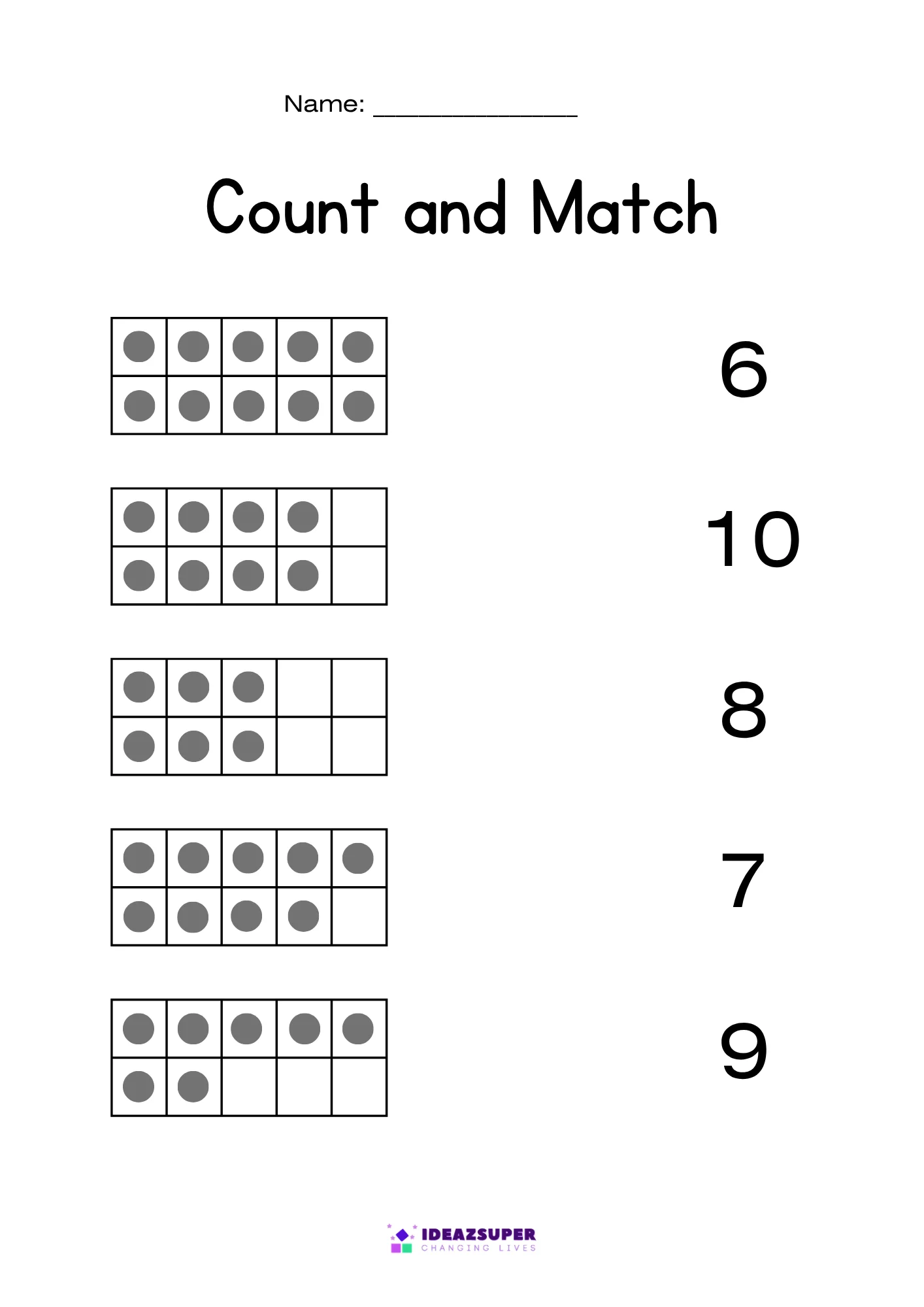
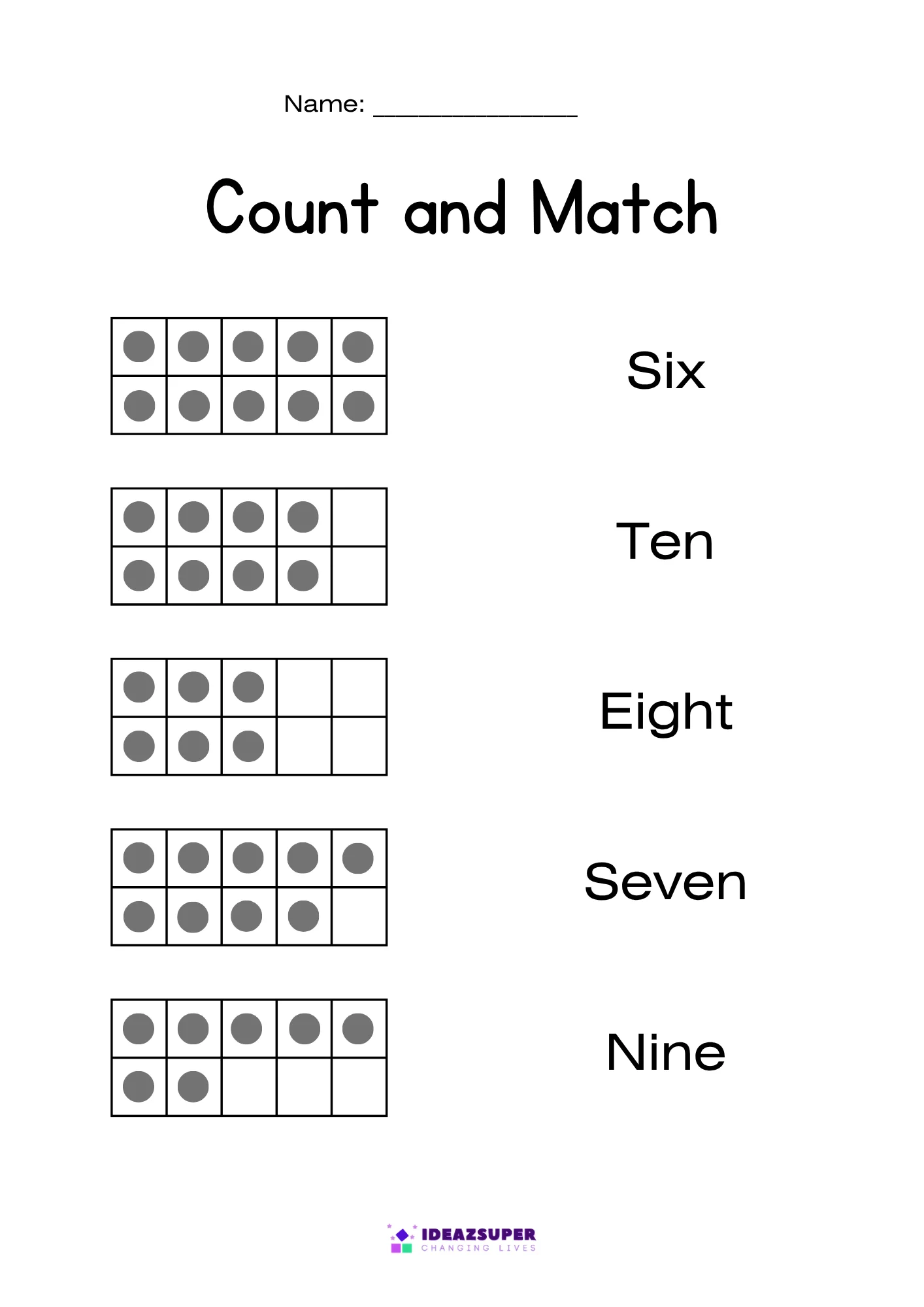
For more counting practice up to 10, see our Count and Match worksheets.
5 Trace
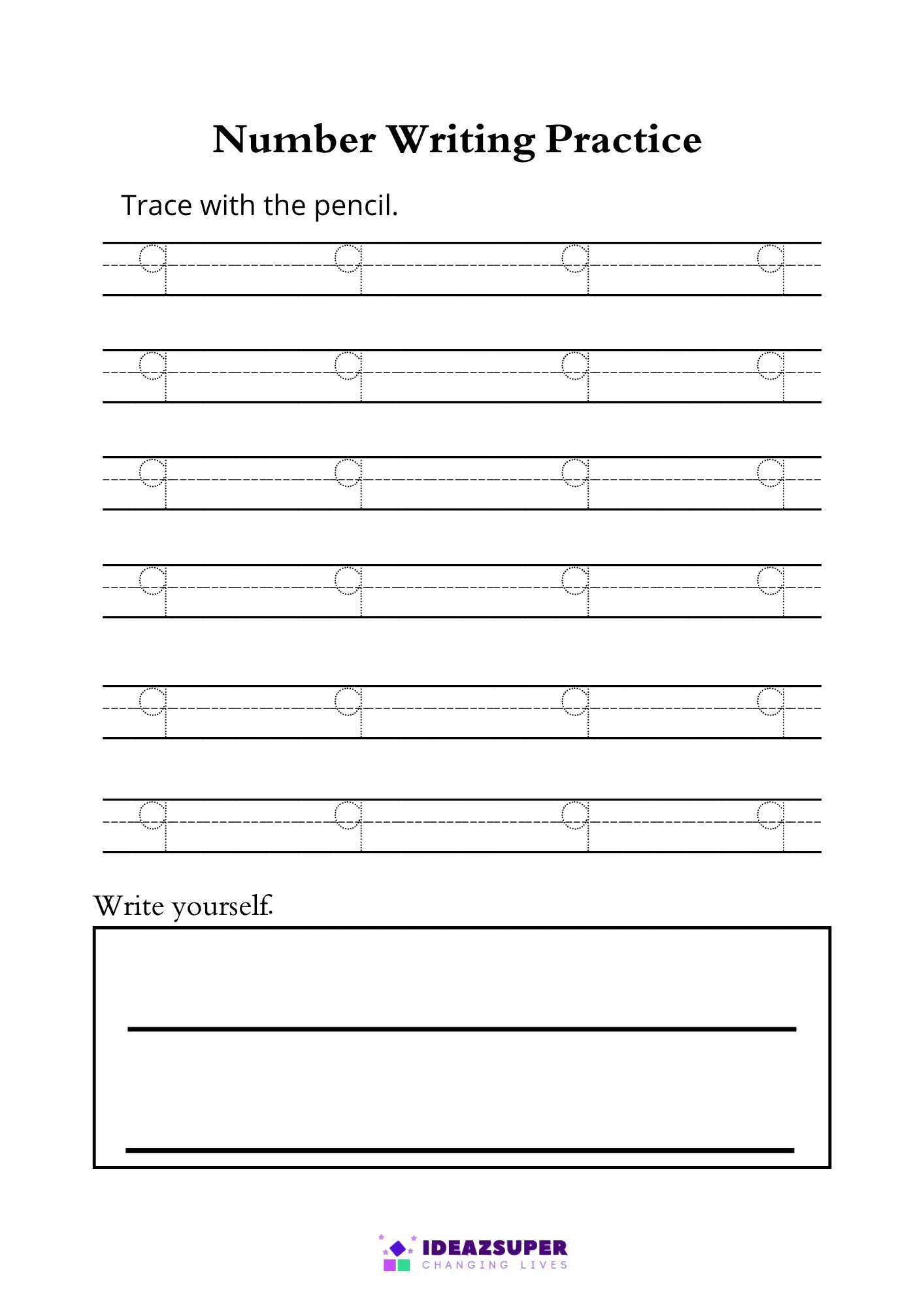
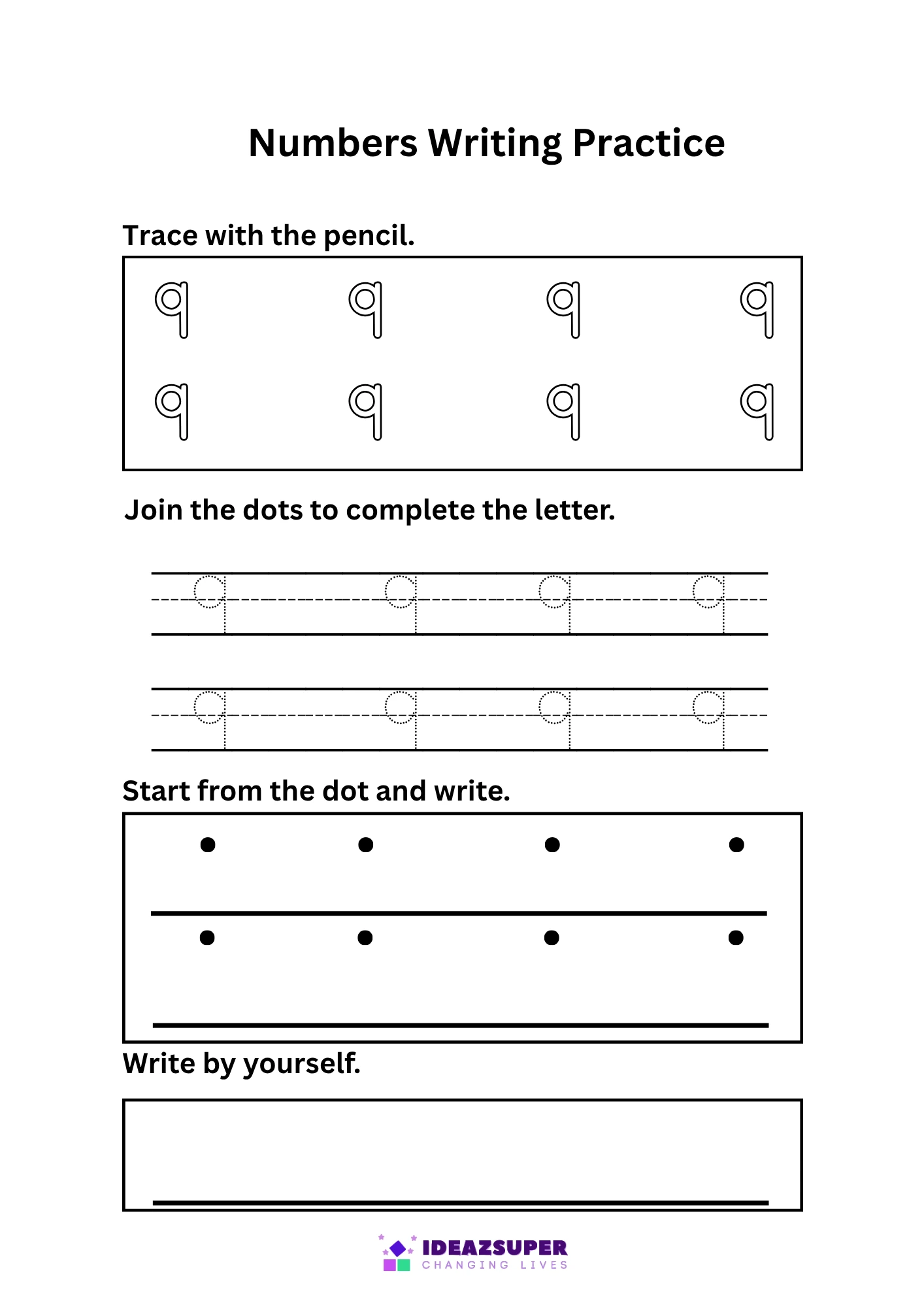
Trace 9 starting with a small loop at the top, then a straight or slightly curved stroke down. The loop sitting high is the key visual cue that separates it from 6.
6 Write Independently
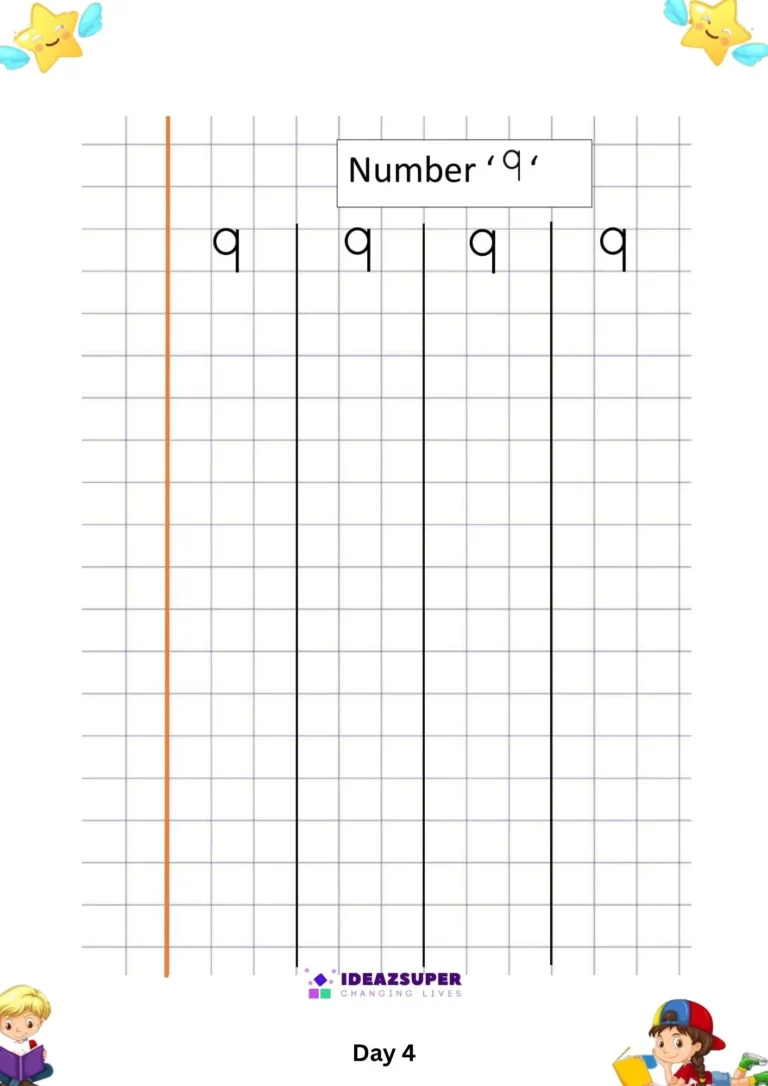
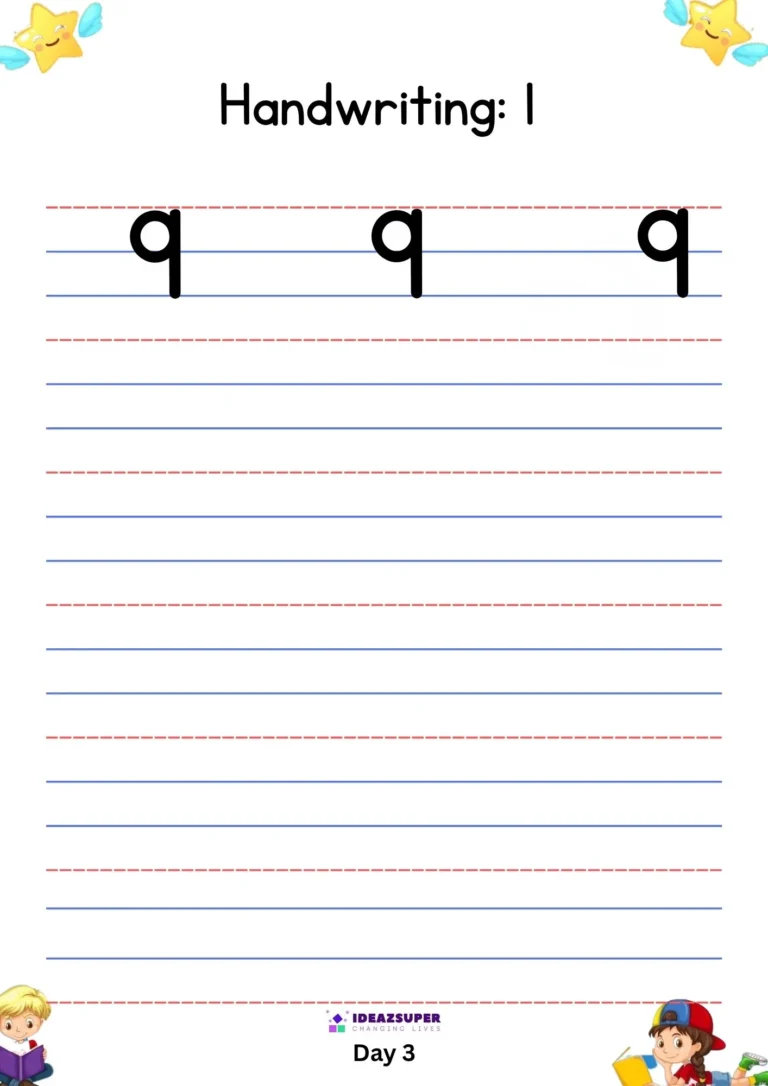
Once tracing feels comfortable, move to writing 9 without the guide. If it feels tricky at first, that’s a normal early stage — steady practice, not correction, is what builds it into muscle memory.
Ready for a full week of writing practice? Number Writing Week 9 practises 9 with a 2–7 review.
ℹ️ Only do this once 1–5 are solid
Blending is the payoff step, not a starting point. If your child hasn’t mastered identification and sound yet, come back to this after another week of practice.
7 Check
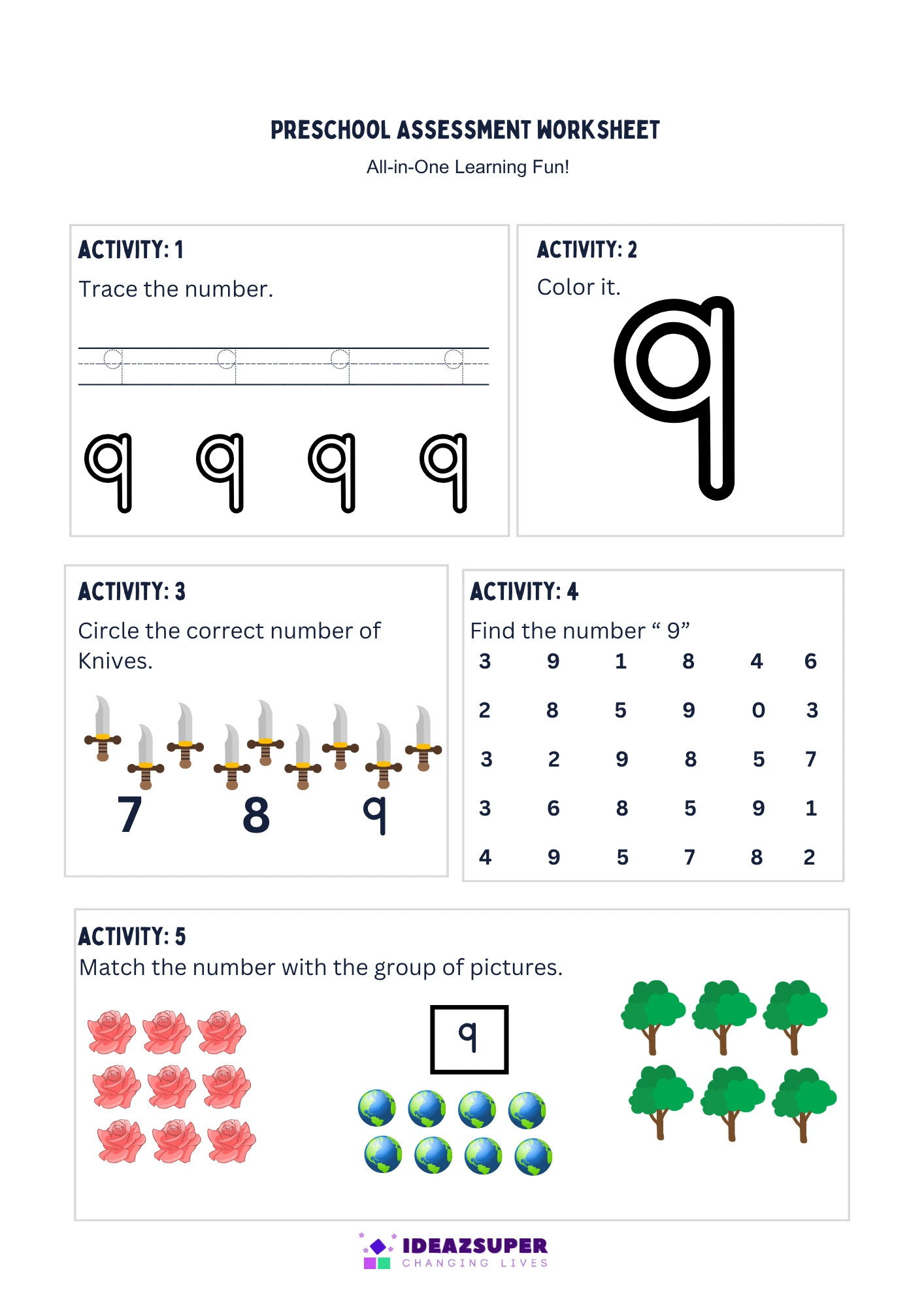
A short assessment lets you confirm your child recognises, counts to, and writes 9 confidently before moving on. This is designed to be completed after your child has worked through at least 3 of the activities above.
🏆 Celebrate
Number 9 Certificate
Once your child passes the check, print this certificate together. It’s a small moment that makes them want to come back for Number 10.
Click here to submit 3 completed worksheets and get a free printable certificate.
What’s next? Move on to the Number 10 (Ten) Learning Path. For daily practice of every number from 1 to 10, the Number 1–10 Identification & Writing Workbook gives your child a 5-day plan for each number. You can also browse all our free Math worksheets. Or see all Learning Paths for English letters and Urdu haroof.
Frequently Asked Questions
Should I teach 6 and 9 together or separately?
Teaching them close together, with the “circle at the bottom for 6, circle at the top for 9” rule stated explicitly, tends to work better than teaching them weeks apart — children build the contrast directly rather than learning two unrelated shapes that later turn out to be confusing.
Does 9 cause fewer problems than 6, or the same?
About the same — since the confusion runs both directions, most children mix up 6 and 9 with roughly equal frequency until the “circle position” rule becomes automatic.
At what age should a child start learning number 9?
Identification and counting can start from age 3. Tracing is appropriate once your child can hold a pencil with reasonable control, usually 3.5–4. Independent writing typically follows a few weeks after tracing feels easy.
How many activities does my child need to finish before getting the certificate?
Complete at least 3 activities from this page, then complete the assessment sheet to earn your certificate.