
3 (Three)
Number 3 (Three) — Preschool Math Learning
How to use this page
Work through the steps in order — watch, identify, hear the sound, colour, trace, write, then check. Most children finish in 10–15 minutes; some steps can be split across two days.
1 Watch
Start by watching a short video together. Seeing and hearing the number 3 (Three) modelled first gives your child a reference point before any activity begins.
2 Colour
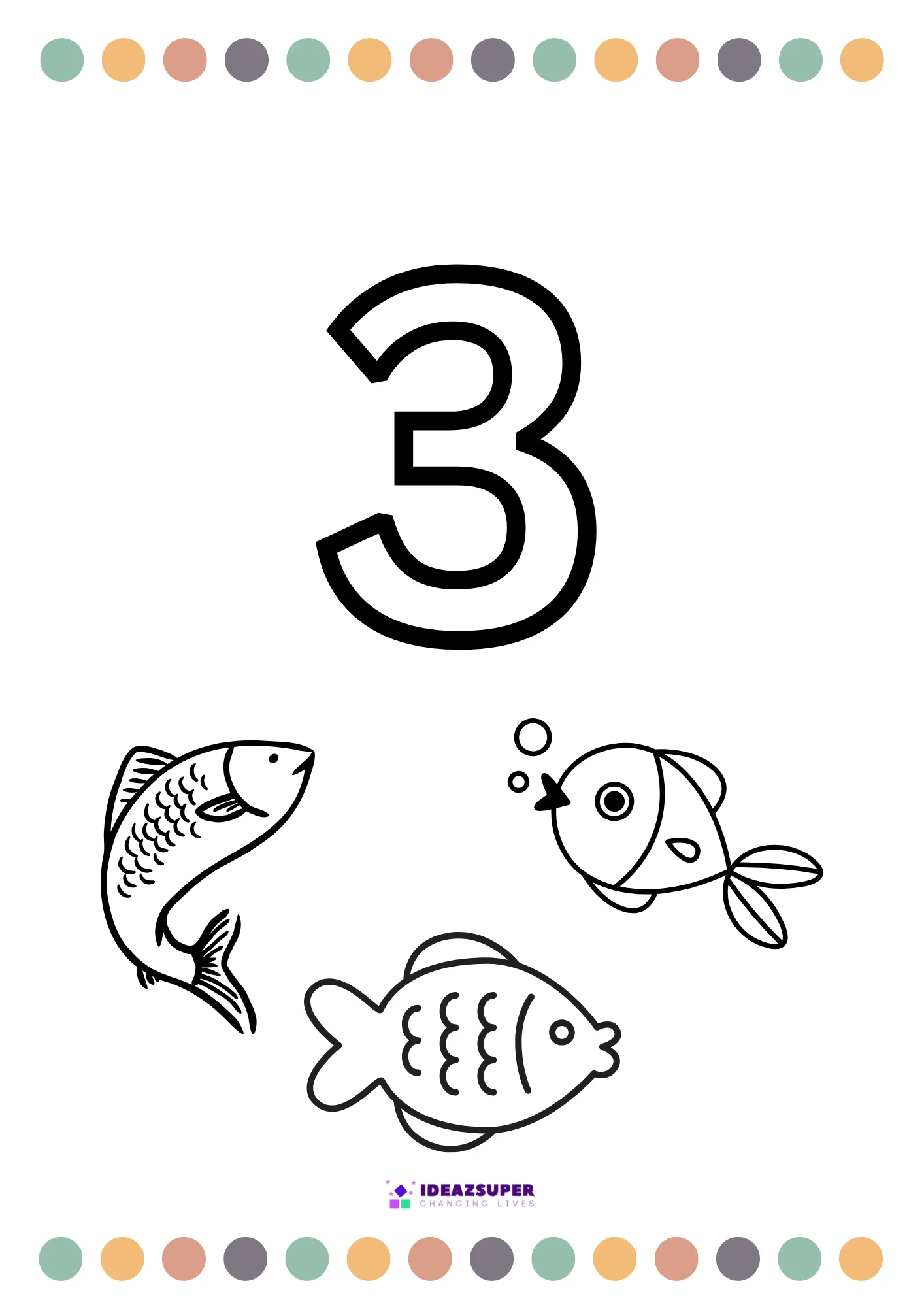
Colouring the number 3 helps your child spend relaxed, hands-on time with its shape while building fine motor control with a crayon or pencil. This page pairs the big numeral with 3 pictures to colour, so your child sees the quantity repeated as they work.
3 Identify
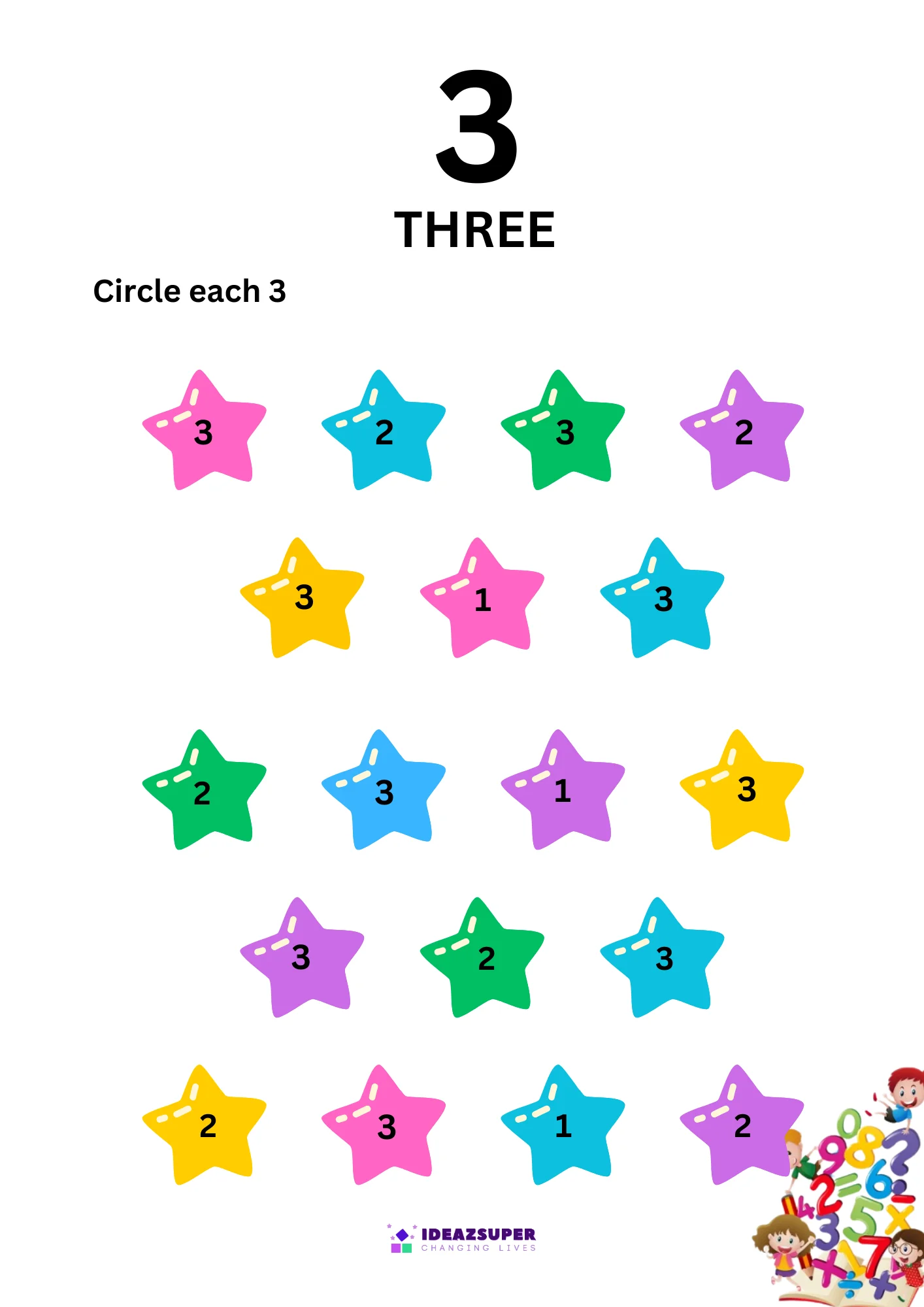
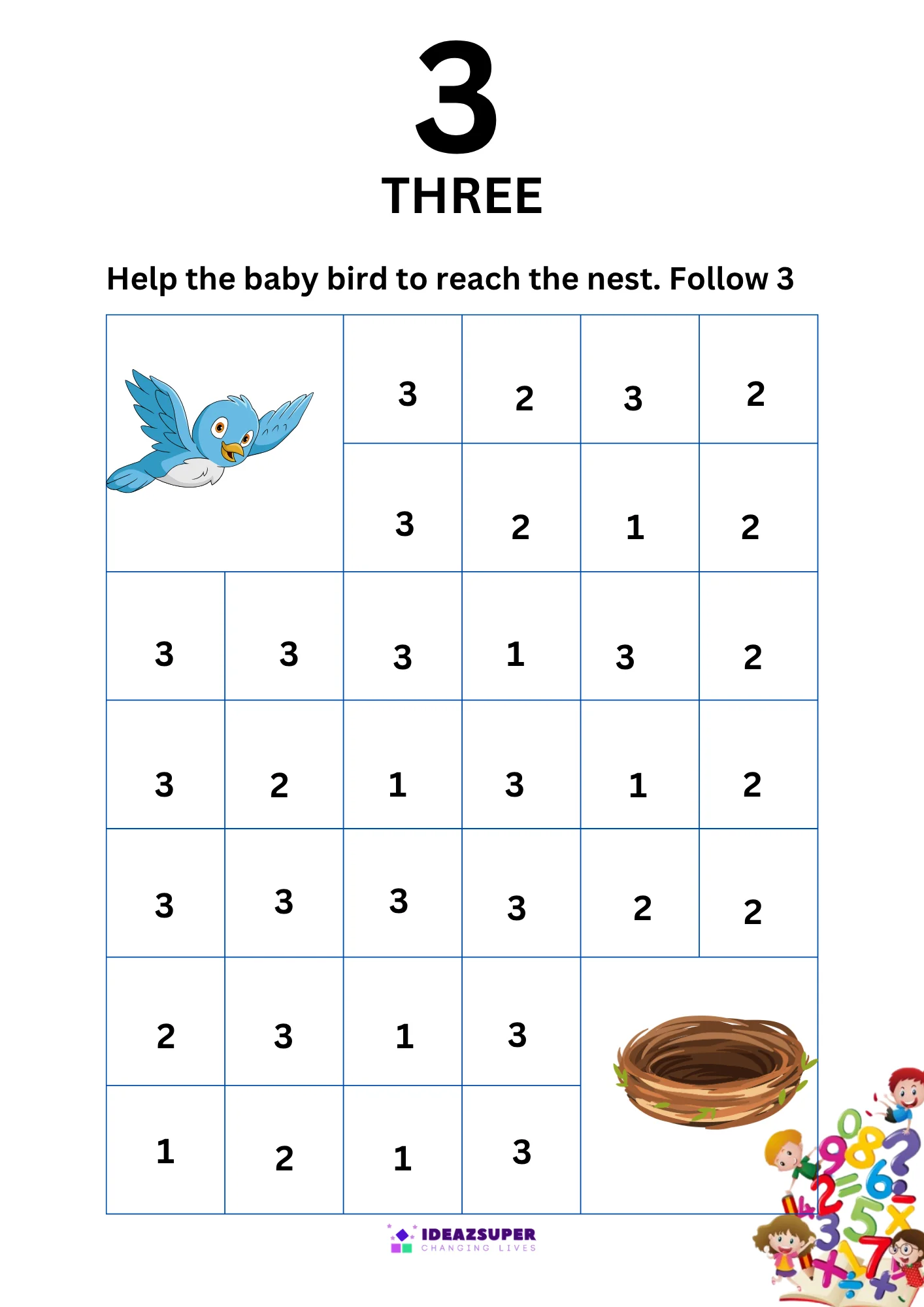
The numeral 3 is made of two stacked curves and is one of the most commonly reversed numerals, often flipped into a backward-facing shape. These activities ask your child to circle, find, or match the correct numeral among similar-looking ones.
💡 Say it out loud
While your child works through the sheet, say: “3 — Three.” Verbal repetition alongside the worksheet helps your child connect the number, name, and quantity.
4 Connect
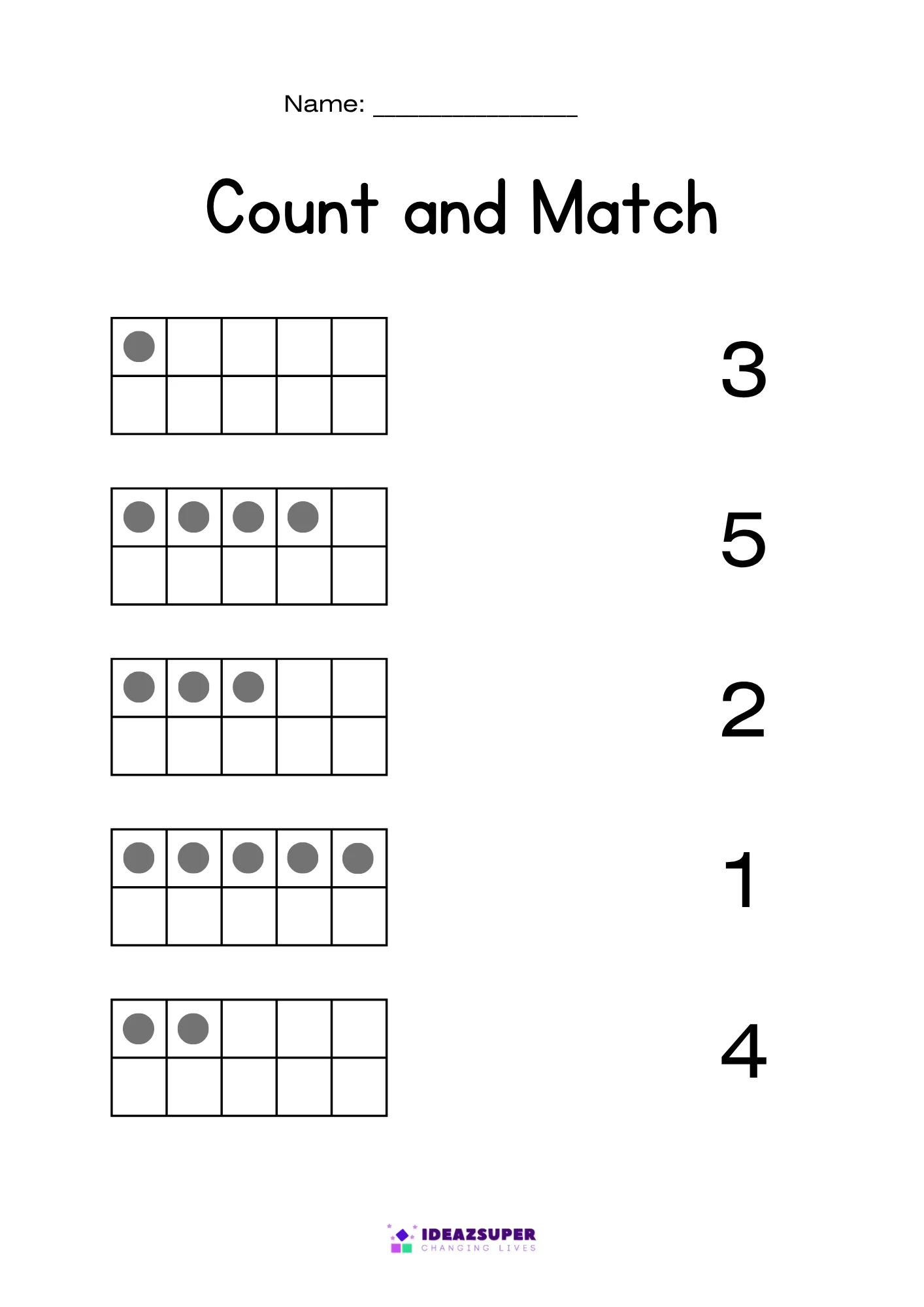
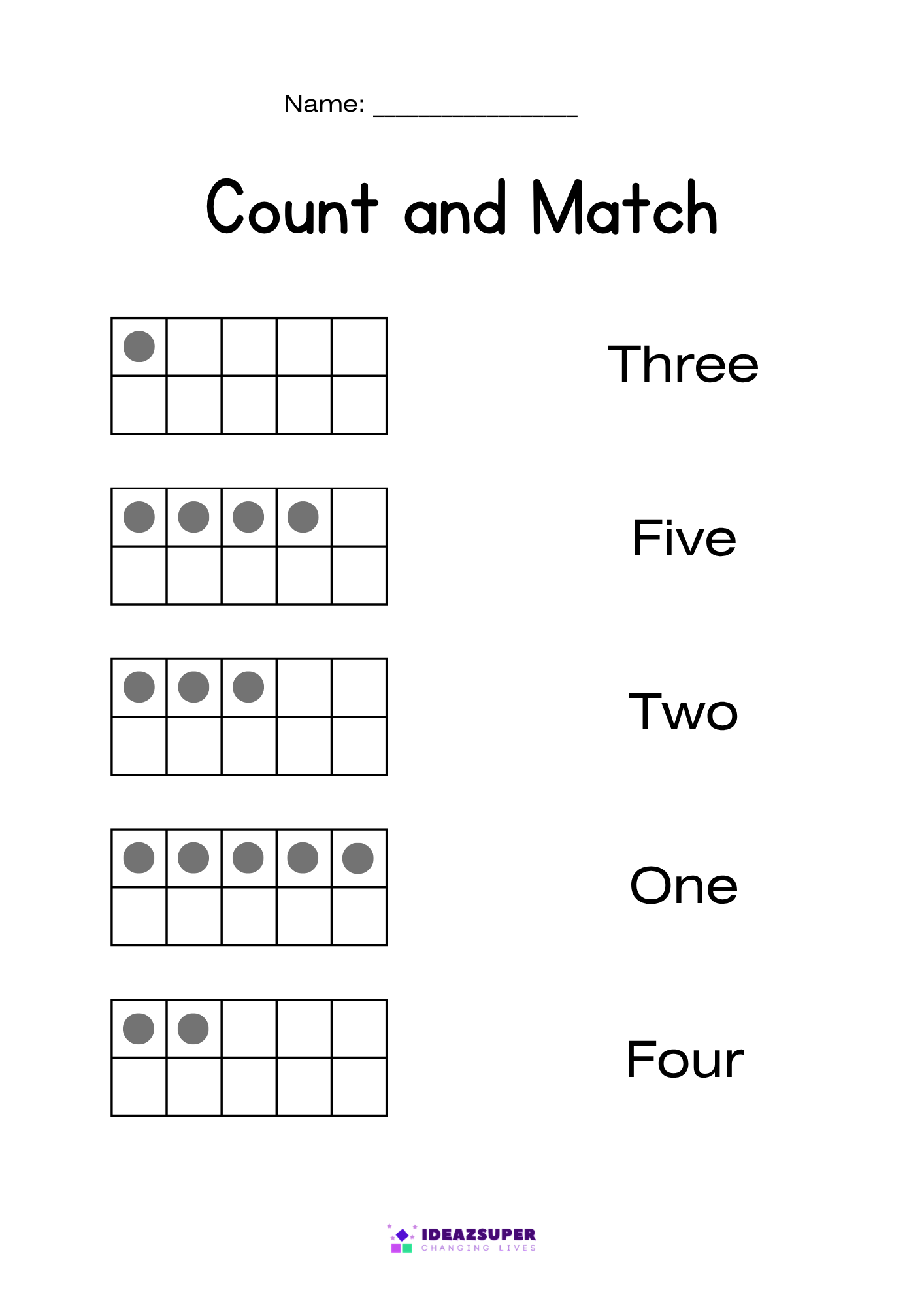
Counting three objects — three crayons, three biscuits — gives a concrete anchor for the quantity 3 represents. These activities connect the numeral to the quantity it represents by counting real objects and matching the total to the correct number.
5 Trace
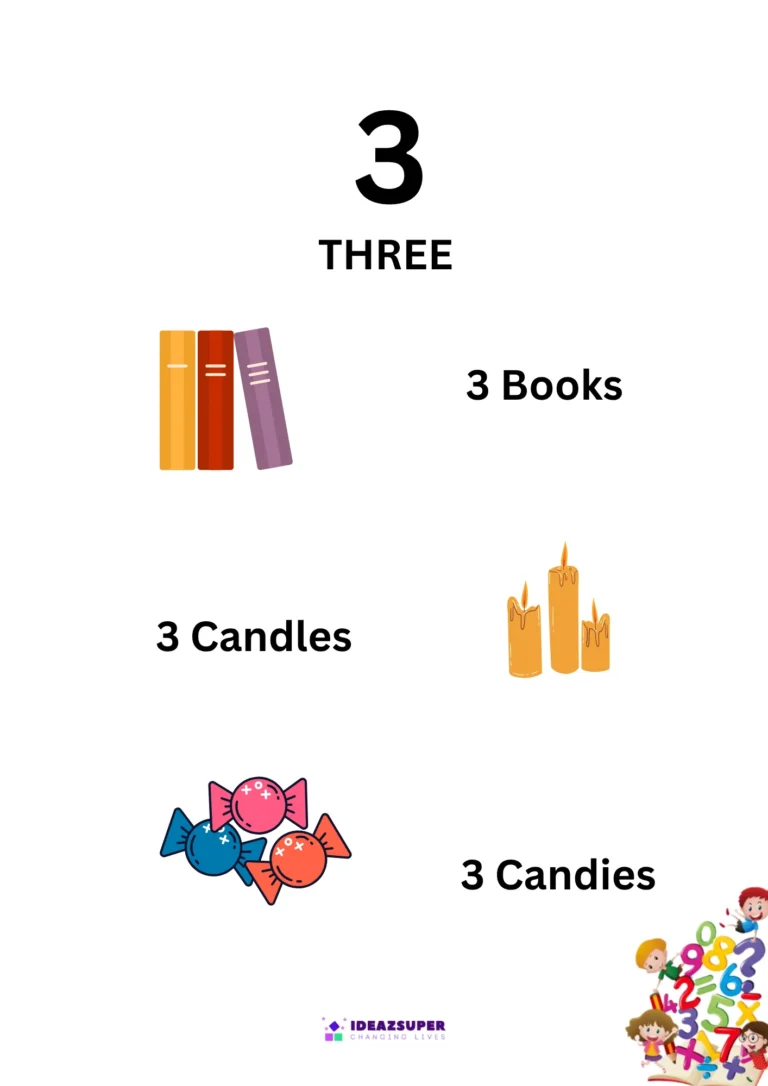
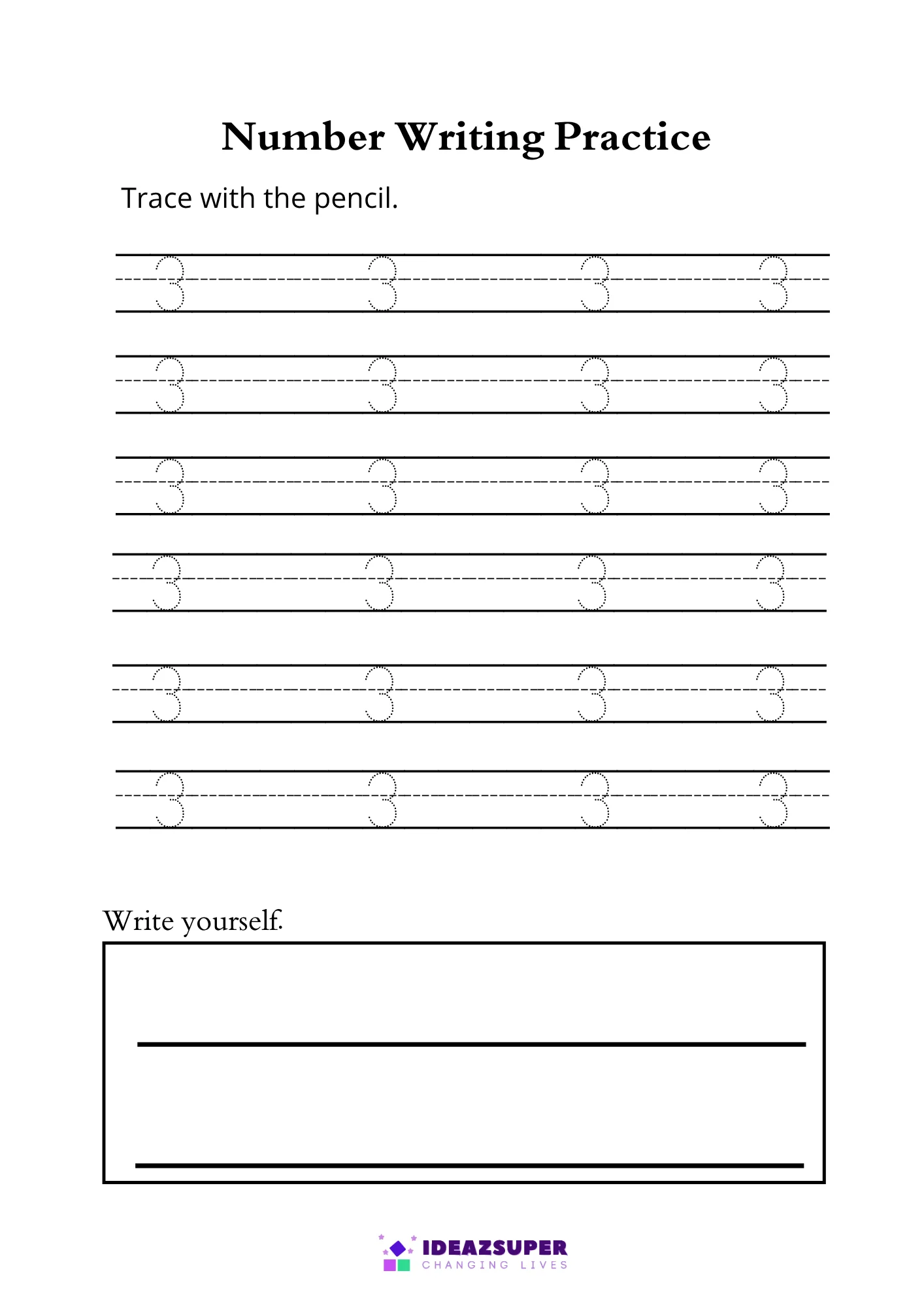
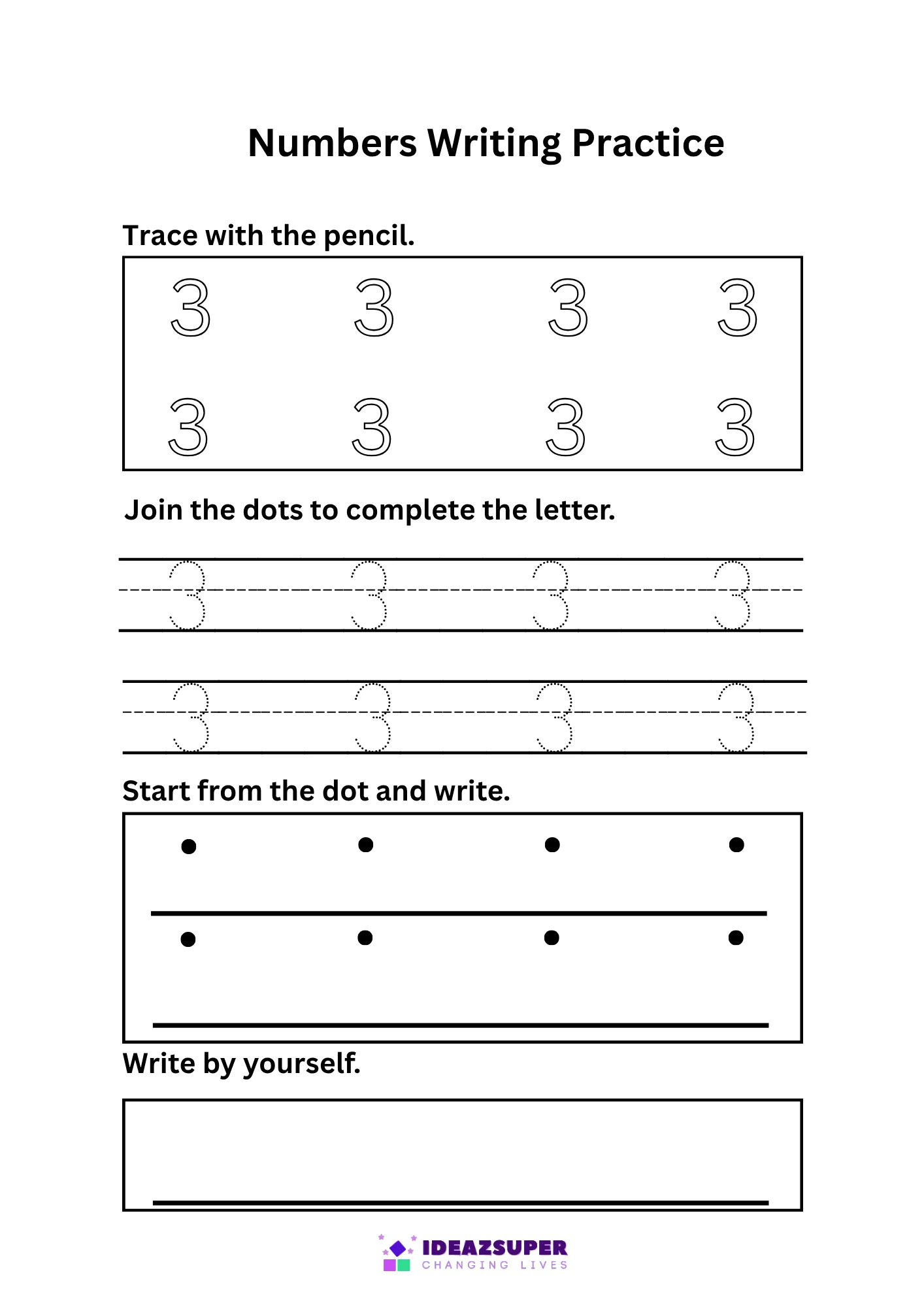
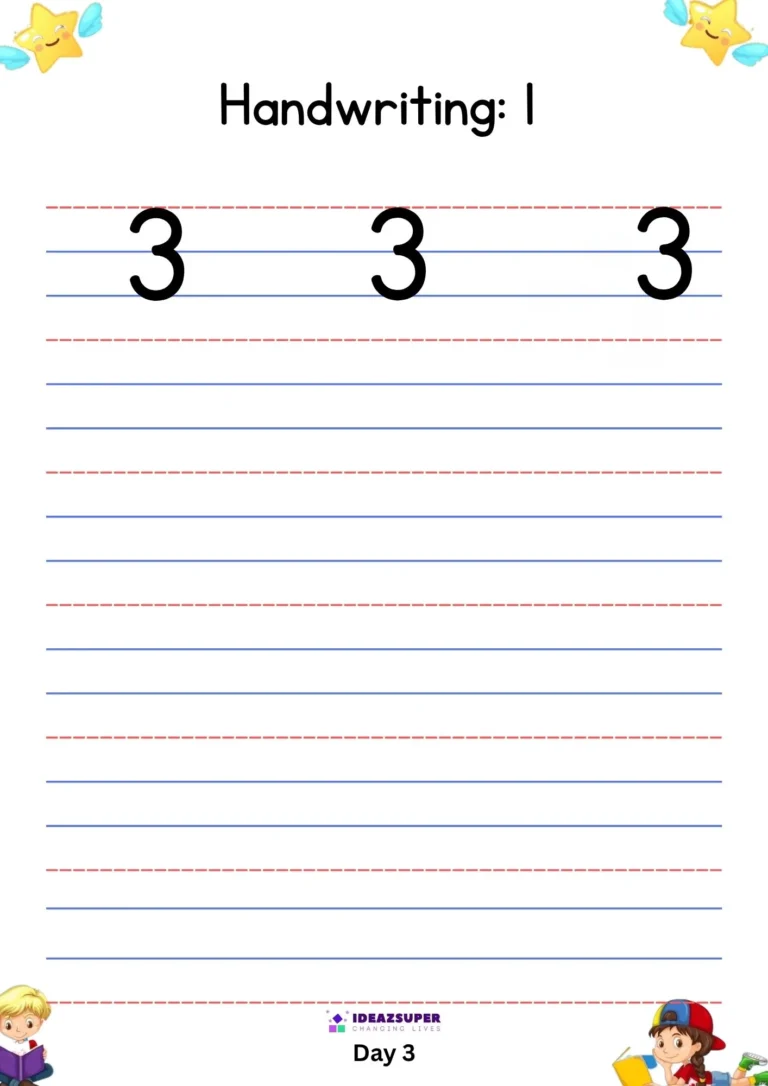
Trace 3 as two connected curves, both opening to the left, starting from the top. Reversal (a backward 3) is common and usually resolves with consistent directional tracing rather than correction.
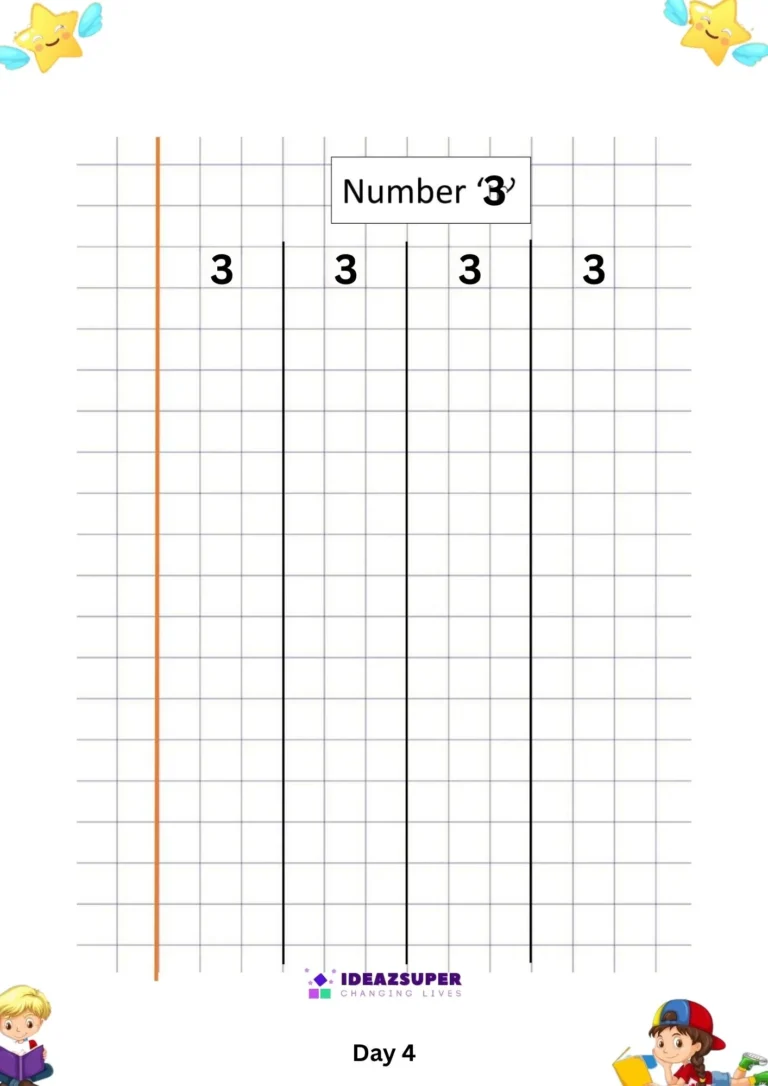
6 Write Independently
Once tracing feels comfortable, move to writing 3 without the guide. If it feels tricky at first, that’s a normal early stage — steady practice, not correction, is what builds it into muscle memory.
ℹ️ Only do this once 1–5 are solid
Number 3 builds on the first two numbers. Once your child can recognise 3, count three objects, and attempt to write 3, move on. Short, successful practice is better than repeating the same activity many times.
7 Check
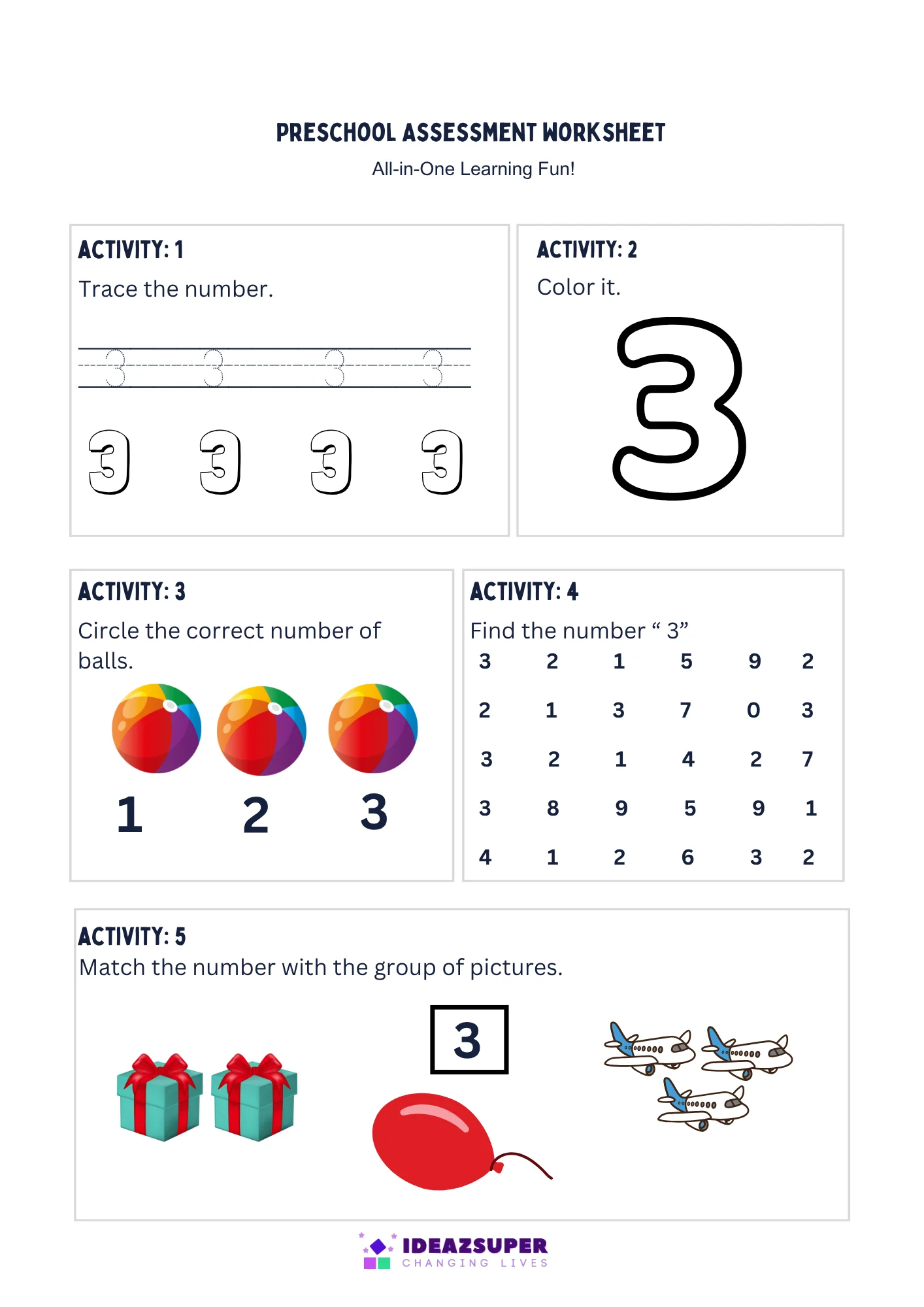
A short assessment lets you confirm your child recognises, counts to, and writes 3 confidently before moving on. This is designed to be completed after your child has worked through at least 3 of the activities above.
🏆 Celebrate
Number 3 Certificate
Once your child passes the check, print this certificate together. It’s a small moment that makes them want to come back for Number 2.
Click here to submit 3 completed worksheets and get a free printable certificate.
Frequently Asked Questions
Why does my child write 3 backwards?
Backward 3s are one of the most common numeral reversals in early writing, caused by the number’s two curved, direction-dependent strokes. Directional-arrow tracing that always starts at the top-left is the most effective fix, and it typically resolves on its own with practice.
At what age does 3-reversal usually stop?
Most children stop reversing 3 (and other curved numerals) somewhere between ages 5 and 7 as their visual-spatial processing matures — consistent tracing practice speeds this up, but occasional reversal before age 6 isn’t a cause for concern.
How long should we spend on Three before moving to the next number?
2–3 days of focused practice is typical. If your child passes the Three check comfortably, move on — don’t wait for perfection, since review happens naturally as later numbers build on earlier ones.
How many activities does my child need to finish before getting the certificate?
Complete at least 3 activities from this page, then complete the assessment sheet to earn your certificate.