
6 (six)
Number 6 (Six) — Preschool Math Learning
How to use this page
Work through the steps in order — watch, identify, hear the sound, colour, trace, write, then check. Most children finish in 10–15 minutes; some steps can be split across two days.
1 Watch
Start by watching a short video together. Seeing and hearing the number 6 (Six) modelled first gives your child a reference point before any activity begins.
2 Colour
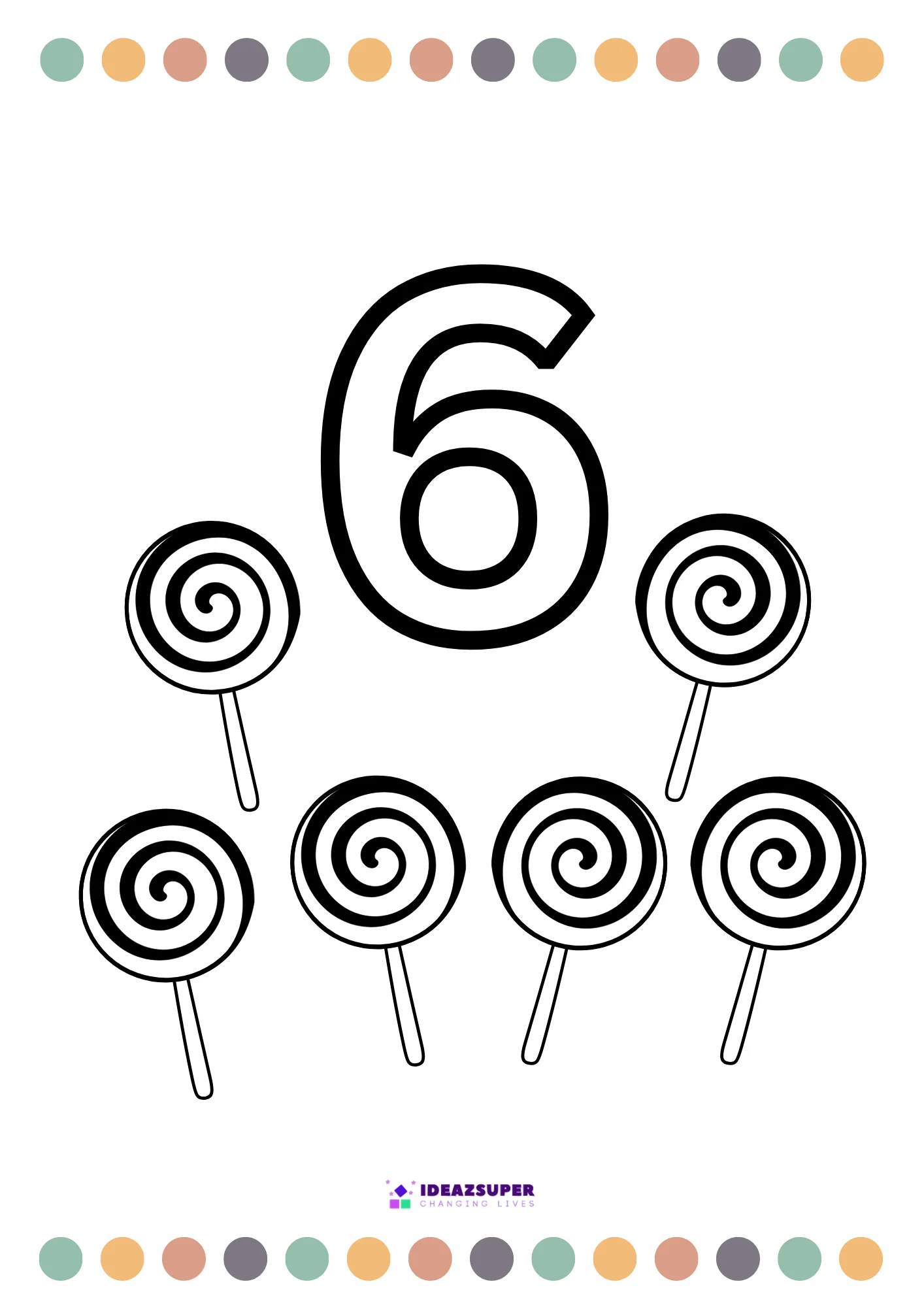
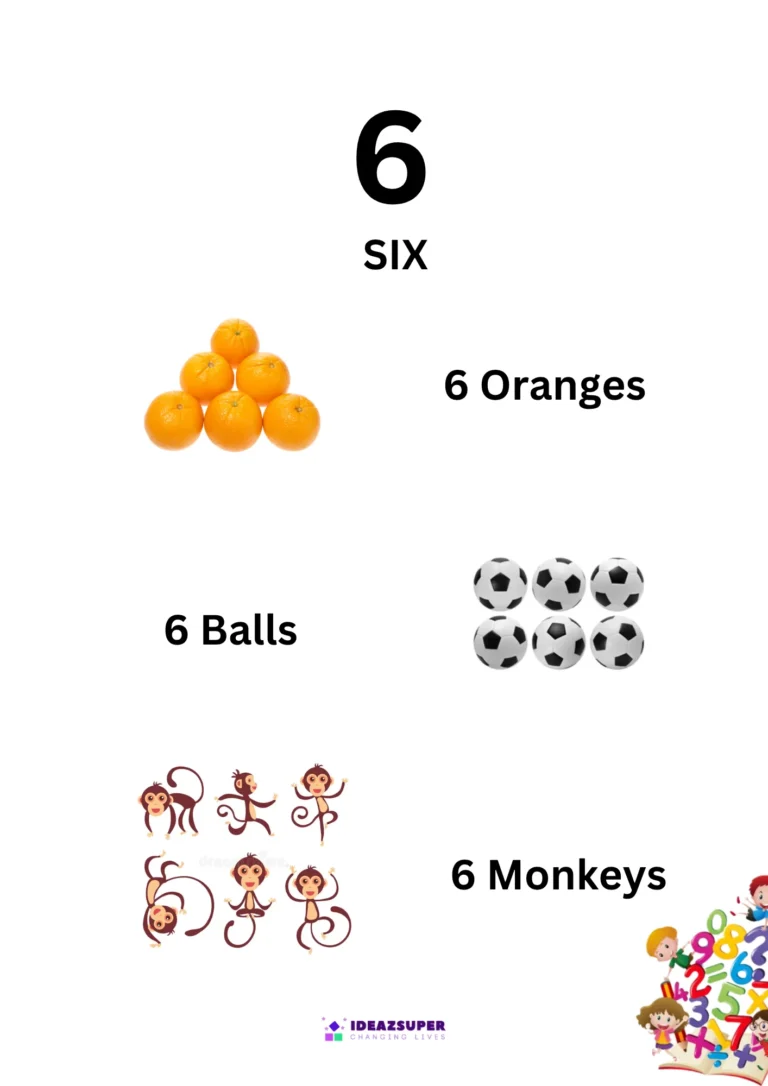
Colouring the number 6 helps your child spend relaxed, hands-on time with its shape while building fine motor control with a crayon or pencil. This page pairs the big numeral with 6 pictures to colour, so your child sees the quantity repeated as they work.
3 Identify
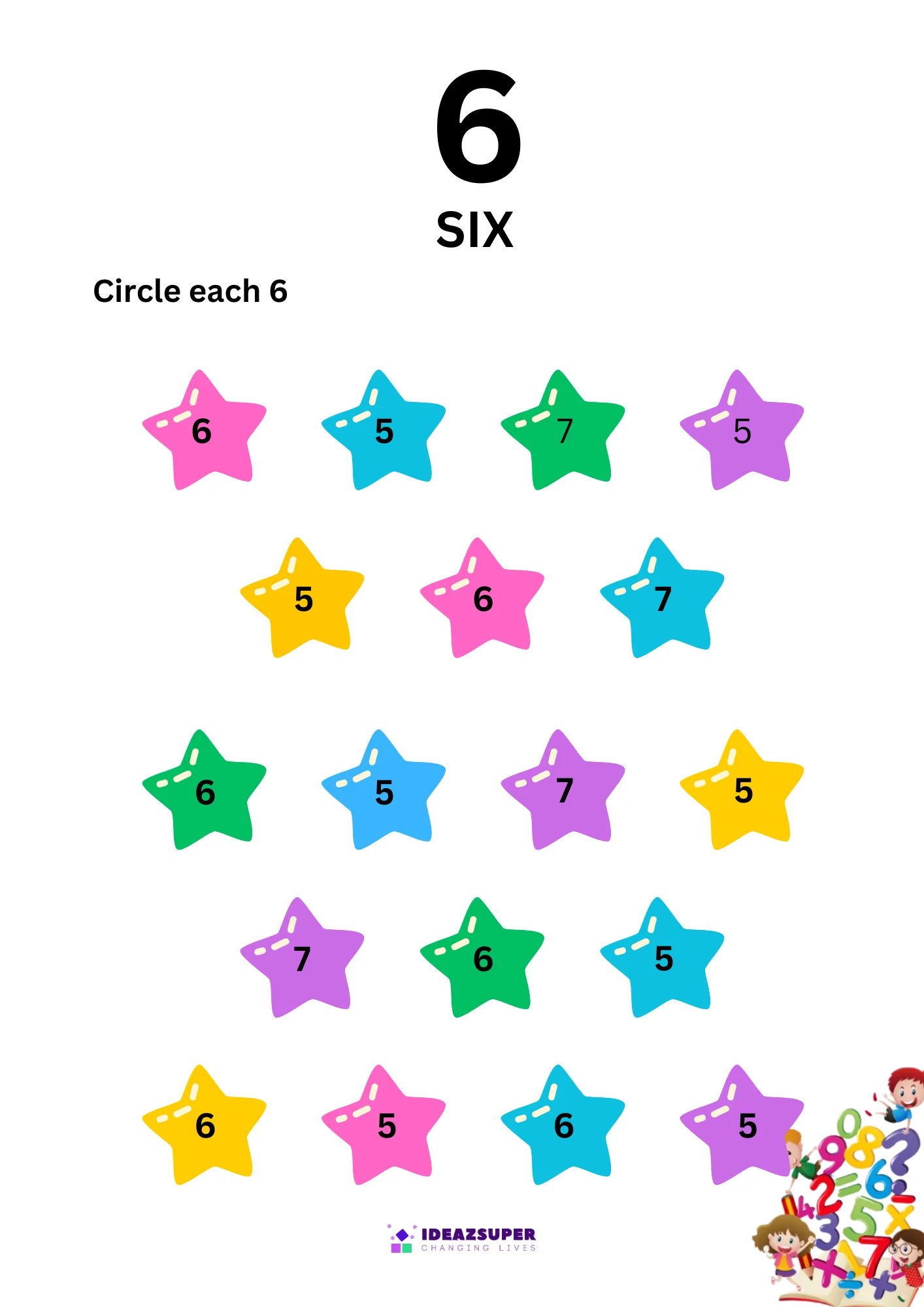
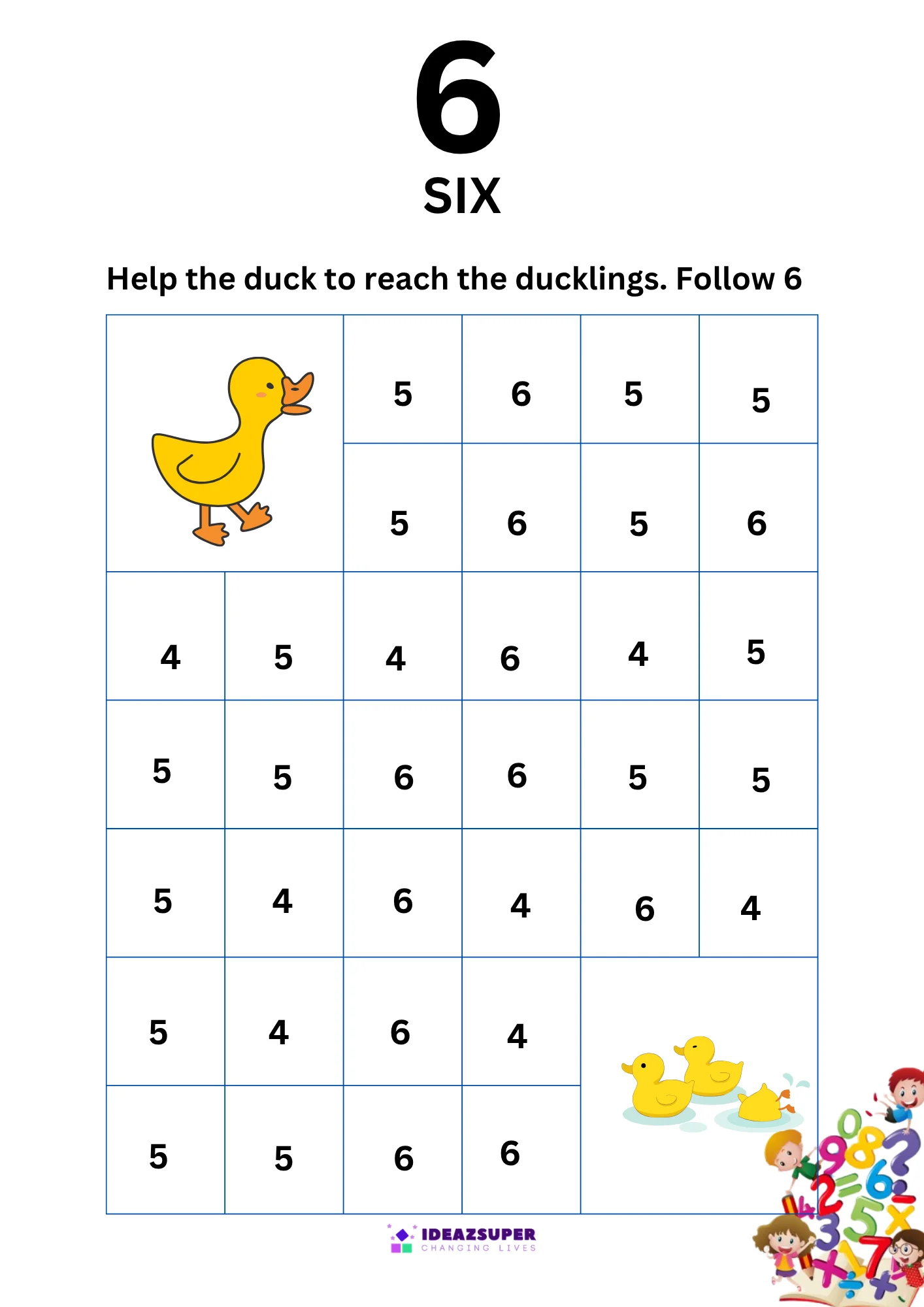
The numeral 6 is a mirror image of 9 — 6 has its circle at the bottom, 9 has its circle at the top — and the two are frequently confused. These activities ask your child to circle, find, or match the correct numeral among similar-looking ones.
Need extra recognition practice? Our Find the Path number mazes and Circle the Number worksheets mix 6 with other numerals.
💡 Say it out loud
While your child works through the sheet, say: “6 — Six.” Verbal repetition alongside the worksheet helps your child connect the number, name, and quantity.
4 Connect
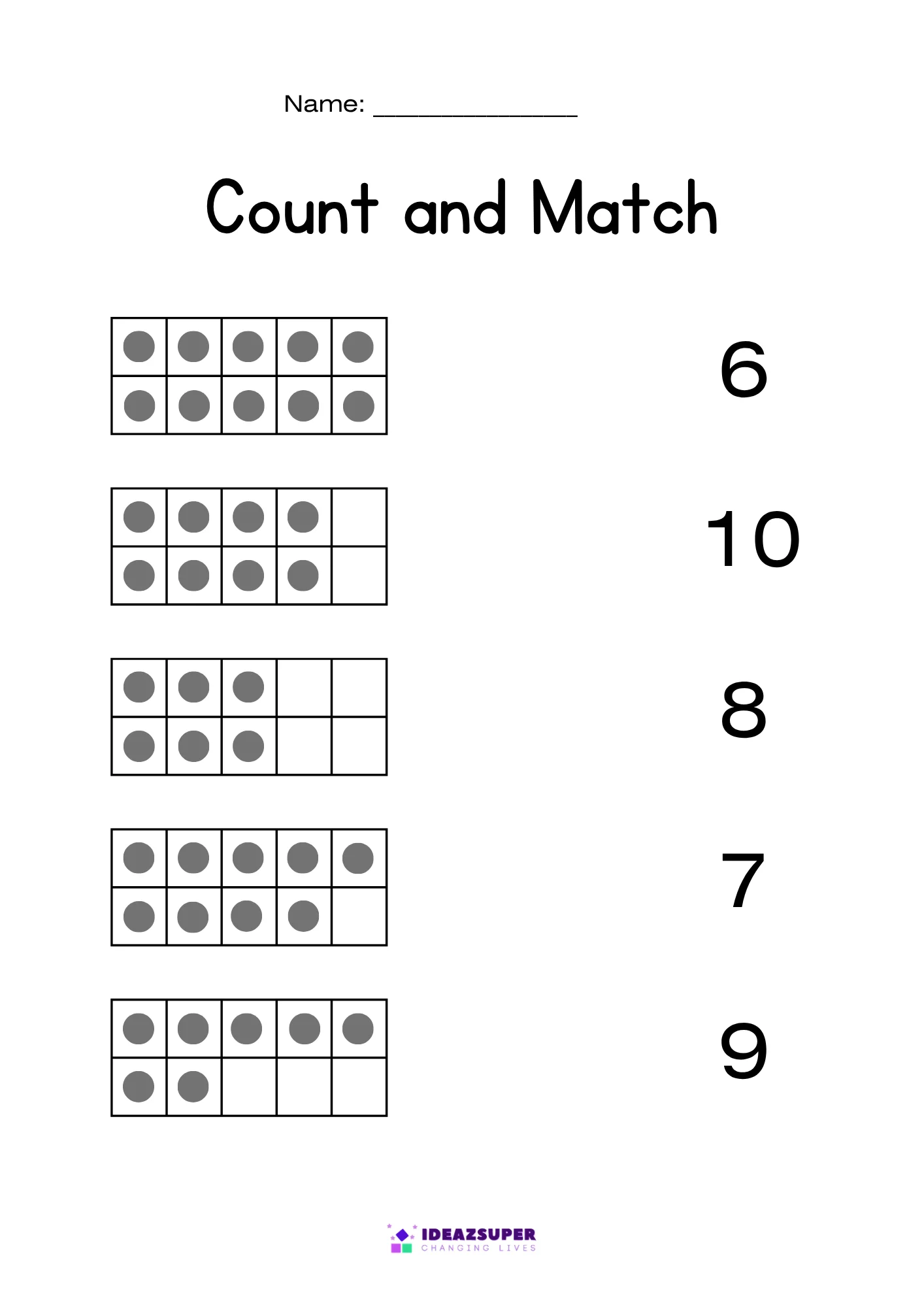
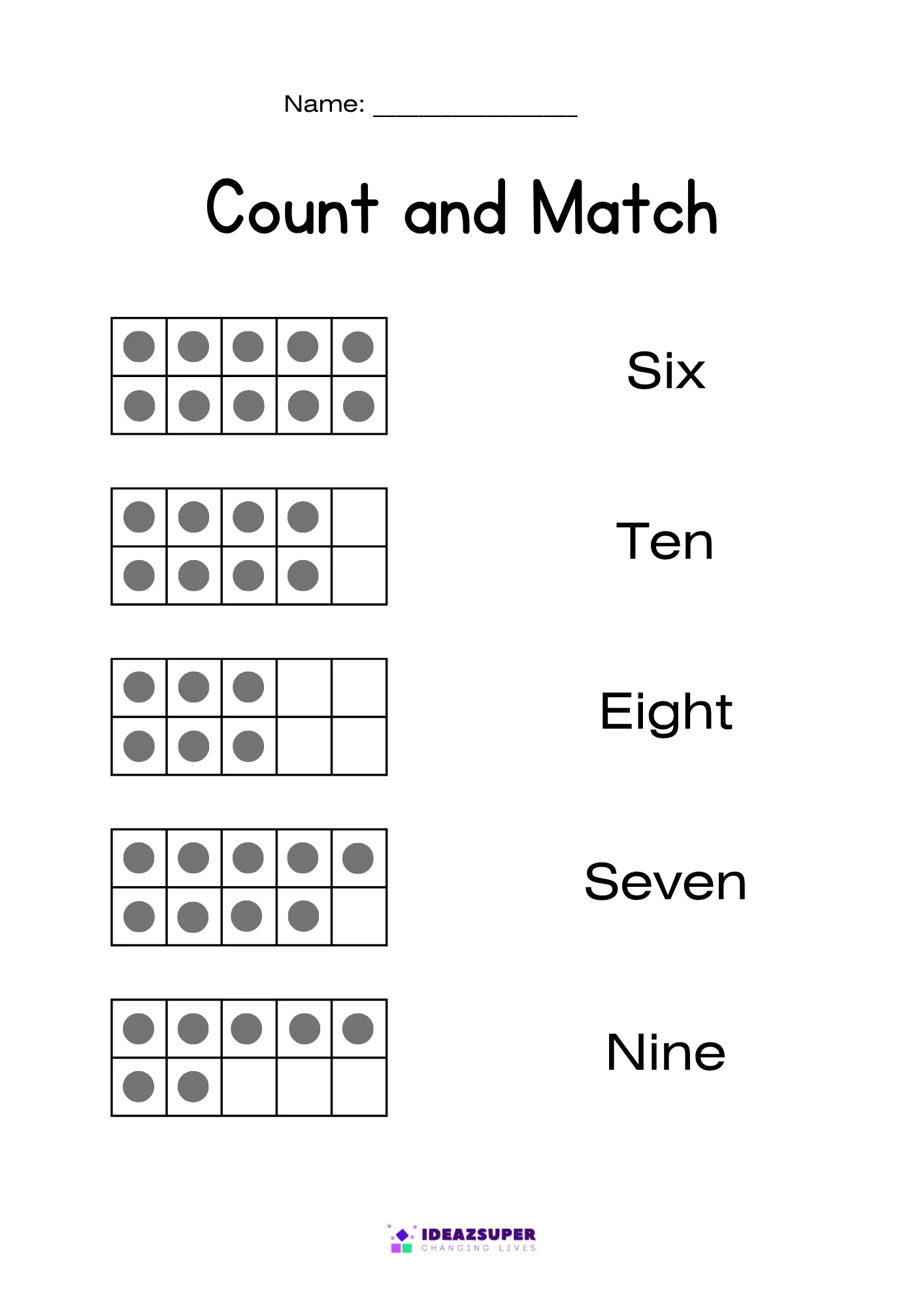
Counting six objects, then comparing to a group of nine, helps your child notice that 6 and 9 aren’t just visually similar — they represent genuinely different quantities. These activities connect the numeral to the quantity it represents by counting real objects and matching the total to
For more counting practice up to 10, see our Count and Match worksheets.
5 Trace
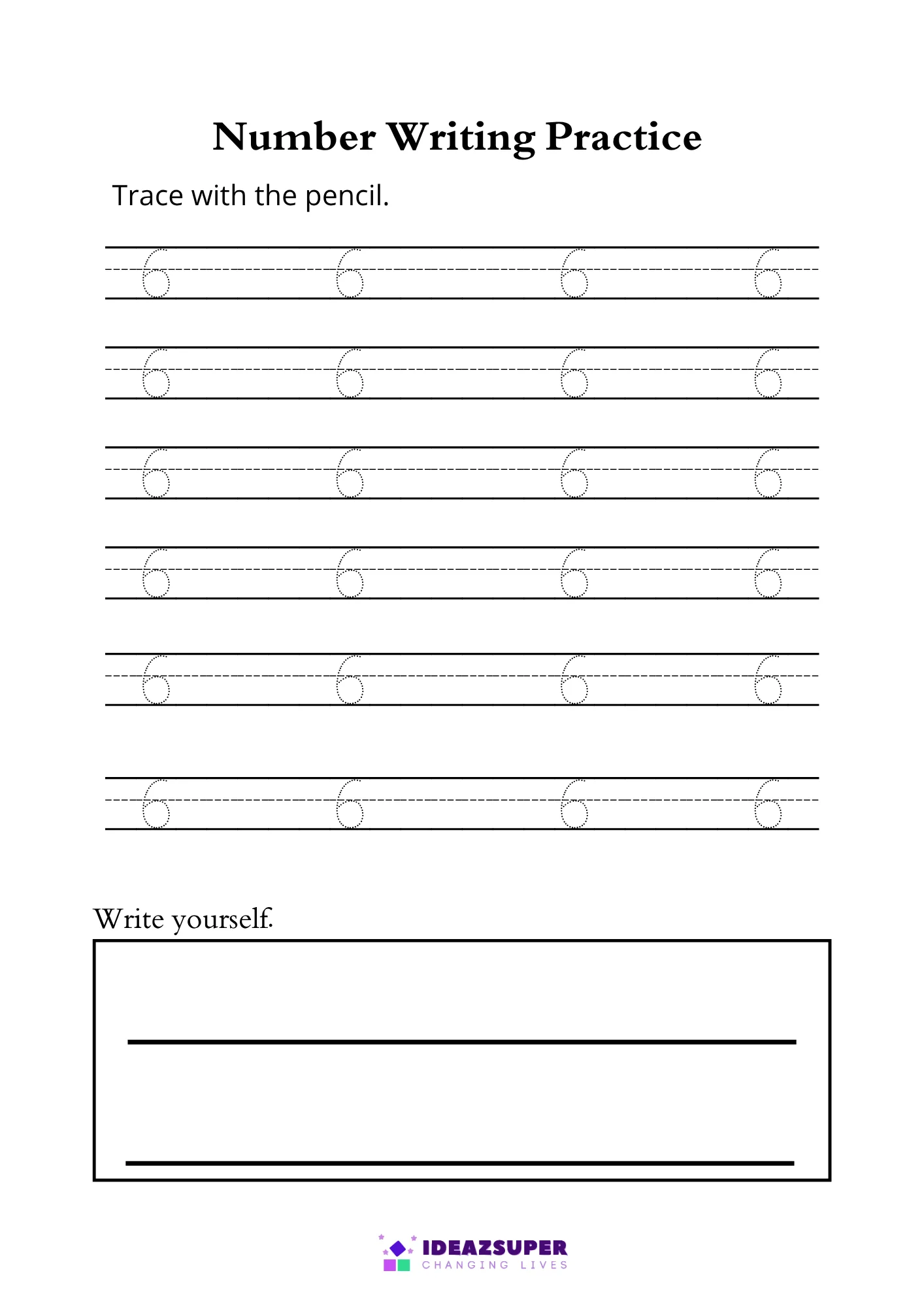
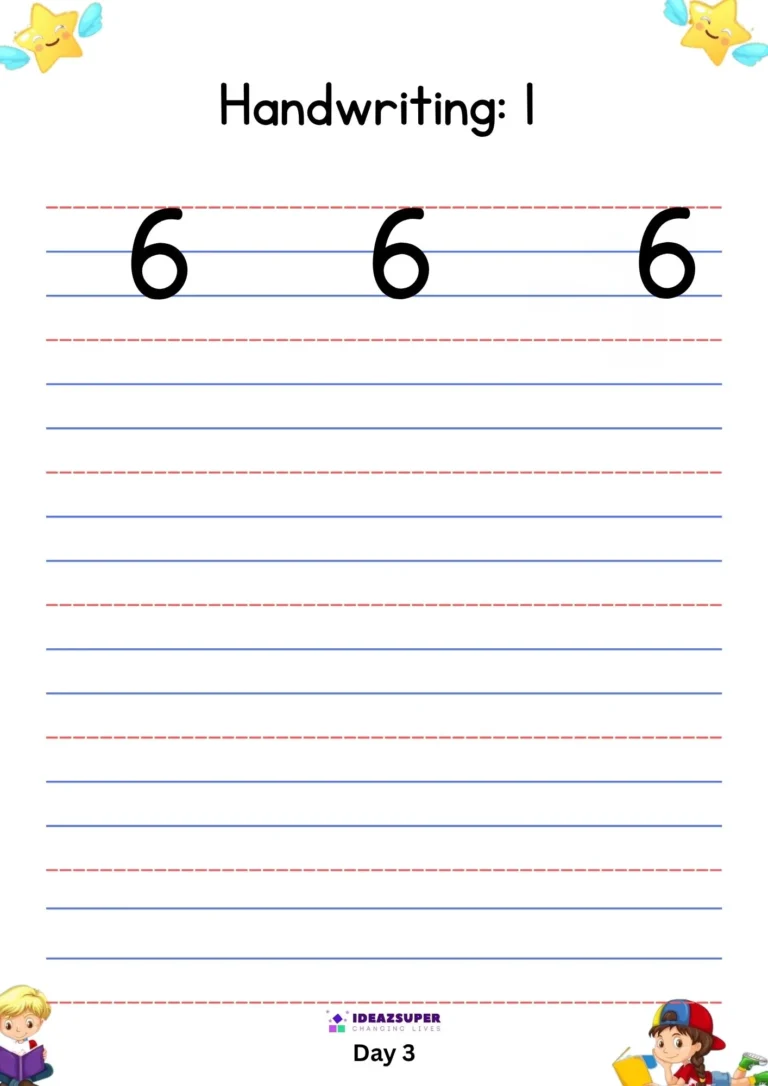
Trace 6 starting with a curved stroke from the top, curling down and around into a small loop at the bottom. The loop sitting low is the key visual cue that separates it from 9.
6 Write Independently
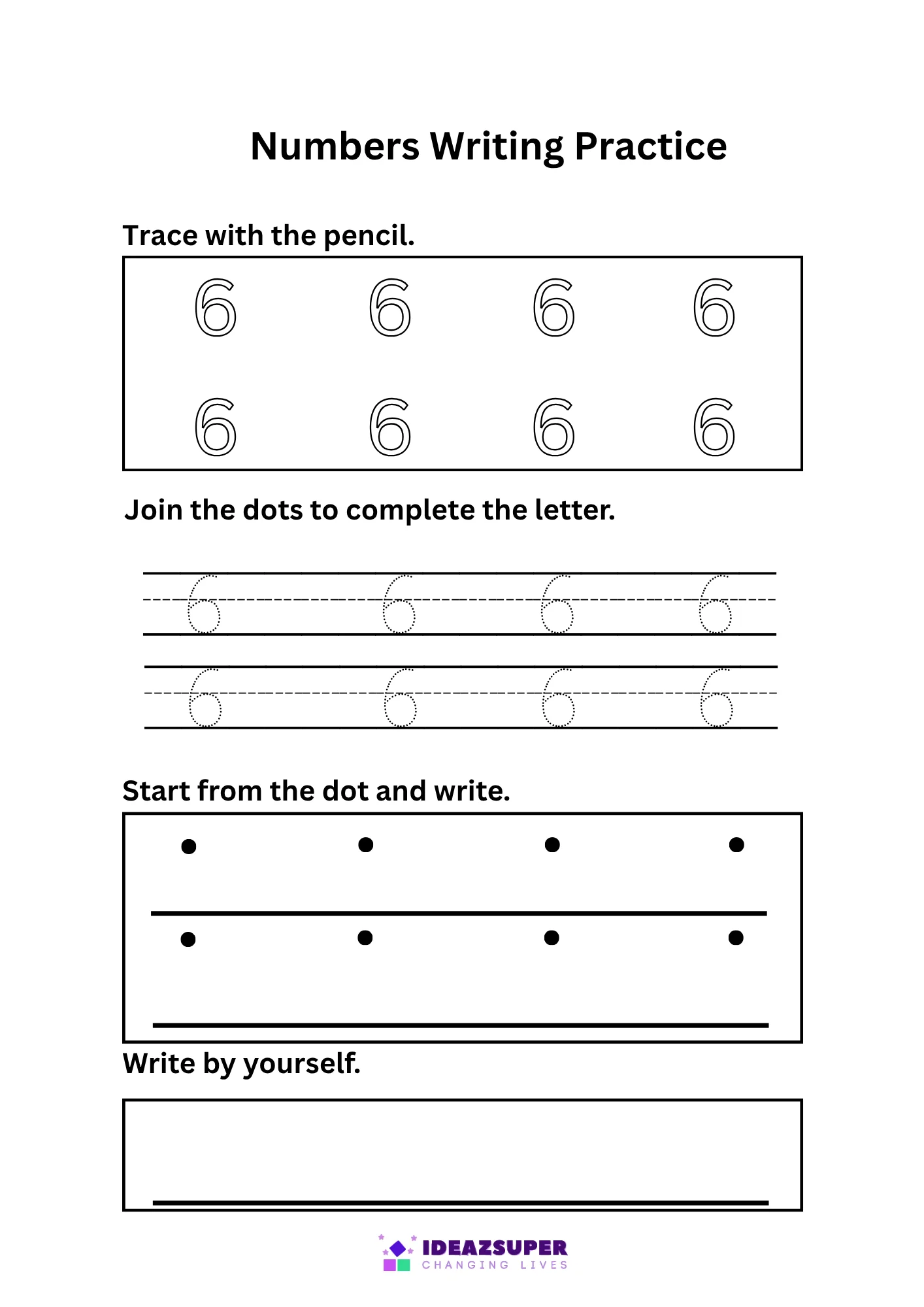
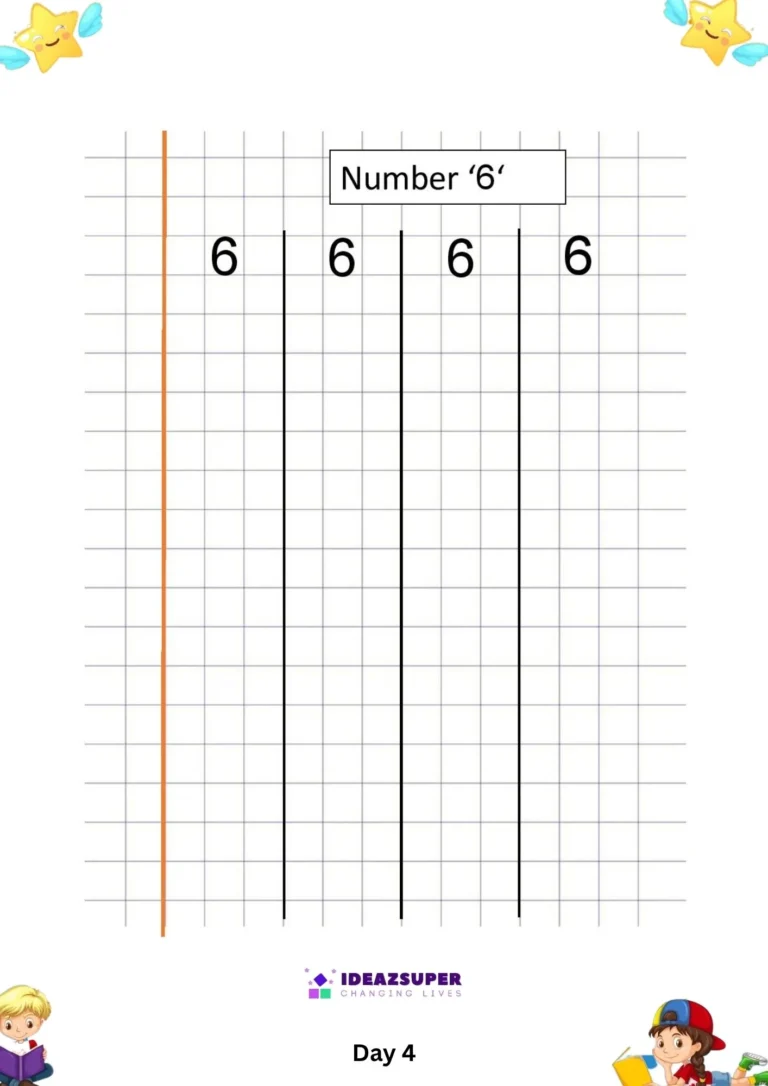
Once tracing feels comfortable, move to writing 6 without the guide. If it feels tricky at first, that’s a normal early stage — steady practice, not correction, is what builds it into muscle memory.
Ready for a full week of writing practice? Number Writing Week 6 practises 6, 1, 7 and 4.
ℹ️ Only do this once 1–5 are solid
Blending is the payoff step, not a starting point. If your child hasn’t mastered identification and sound yet, come back to this after another week of practice.
7 Check
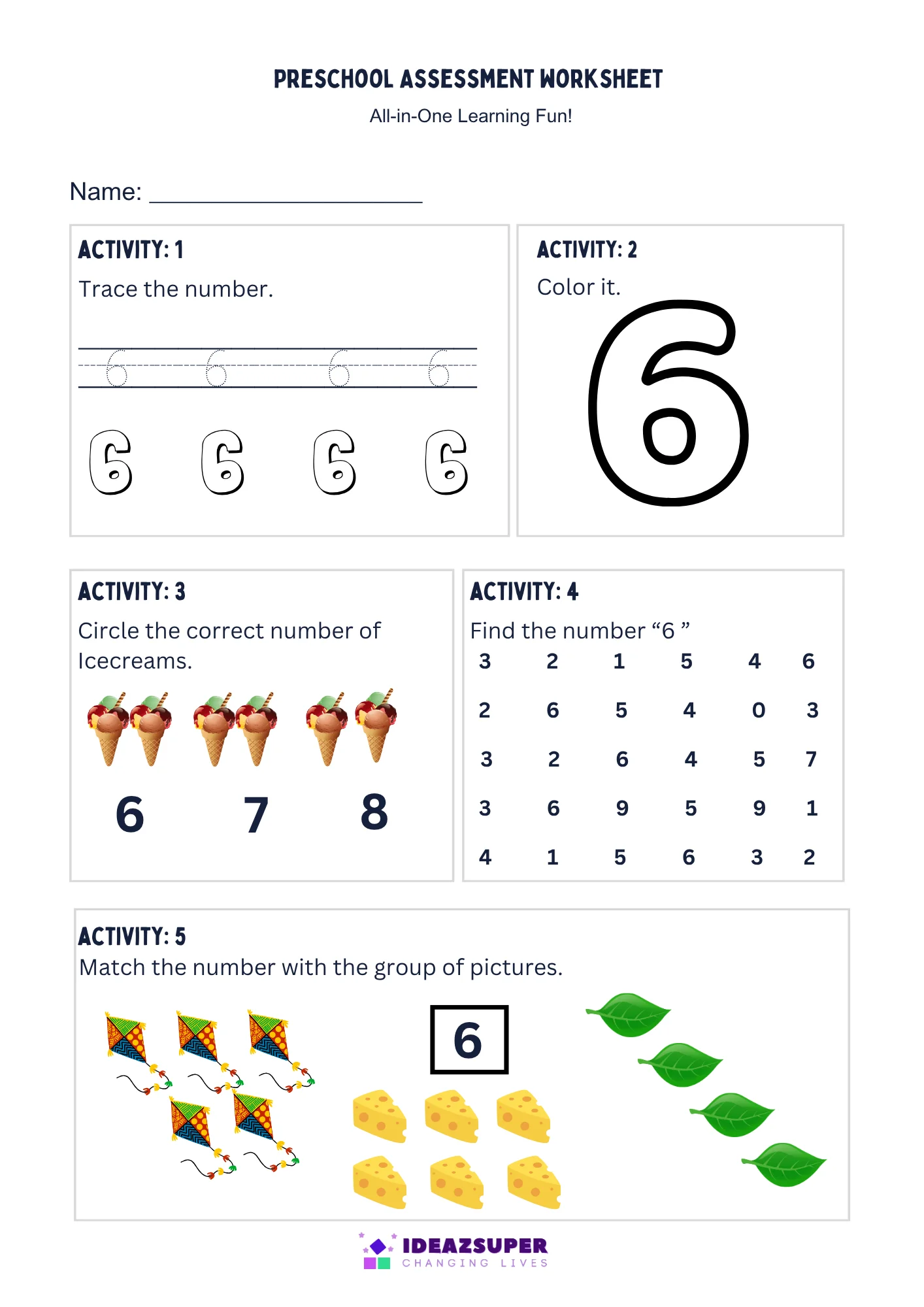
A short assessment lets you confirm your child recognises, counts to, and writes 6 confidently before moving on. This is designed to be completed after your child has worked through at least 3 of the activities above.
🏆 Celebrate
Number 6 Certificate
Once your child passes the check, print this certificate together. It’s a small moment that makes them want to come back for Number 7.
Click here to submit 3 completed worksheets and get a free printable certificate.
What’s next? Move on to the Number 7 (Seven) Learning Path. For daily practice of every number from 1 to 10, the Number 1–10 Identification & Writing Workbook gives your child a 5-day plan for each number. You can also browse all our free Math worksheets. Or see all Learning Paths for English letters and Urdu haroof.
Frequently Asked Questions
How do I help my child tell 6 and 9 apart?
The clearest rule: 6 has its circle at the bottom, 9 has its circle at the top. Pointing this out explicitly — rather than expecting the child to notice the mirror relationship on their own — is the fastest way to build the distinction.
Is confusing 6 and 9 a sign of a learning difficulty?
No — 6/9 confusion is extremely common in early numeracy and almost always resolves with practice by age 6–7. It only becomes worth mentioning to a teacher if it persists well beyond that age alongside other reversal patterns.
My child can count to 6 but doesn't recognise the written numeral — is that normal?
Yes, very common. Oral counting and numeral recognition are separate skills that develop at different rates. Go back to the Count & Match step and add verbal practice a few times a day until the written numeral becomes automatic.
How many activities does my child need to finish before getting the certificate?
Complete at least 3 activities from this page, then complete the assessment sheet to earn your certificate.